Showing posts with label Nonsensicalness. Show all posts

Monday, March 2, 2015

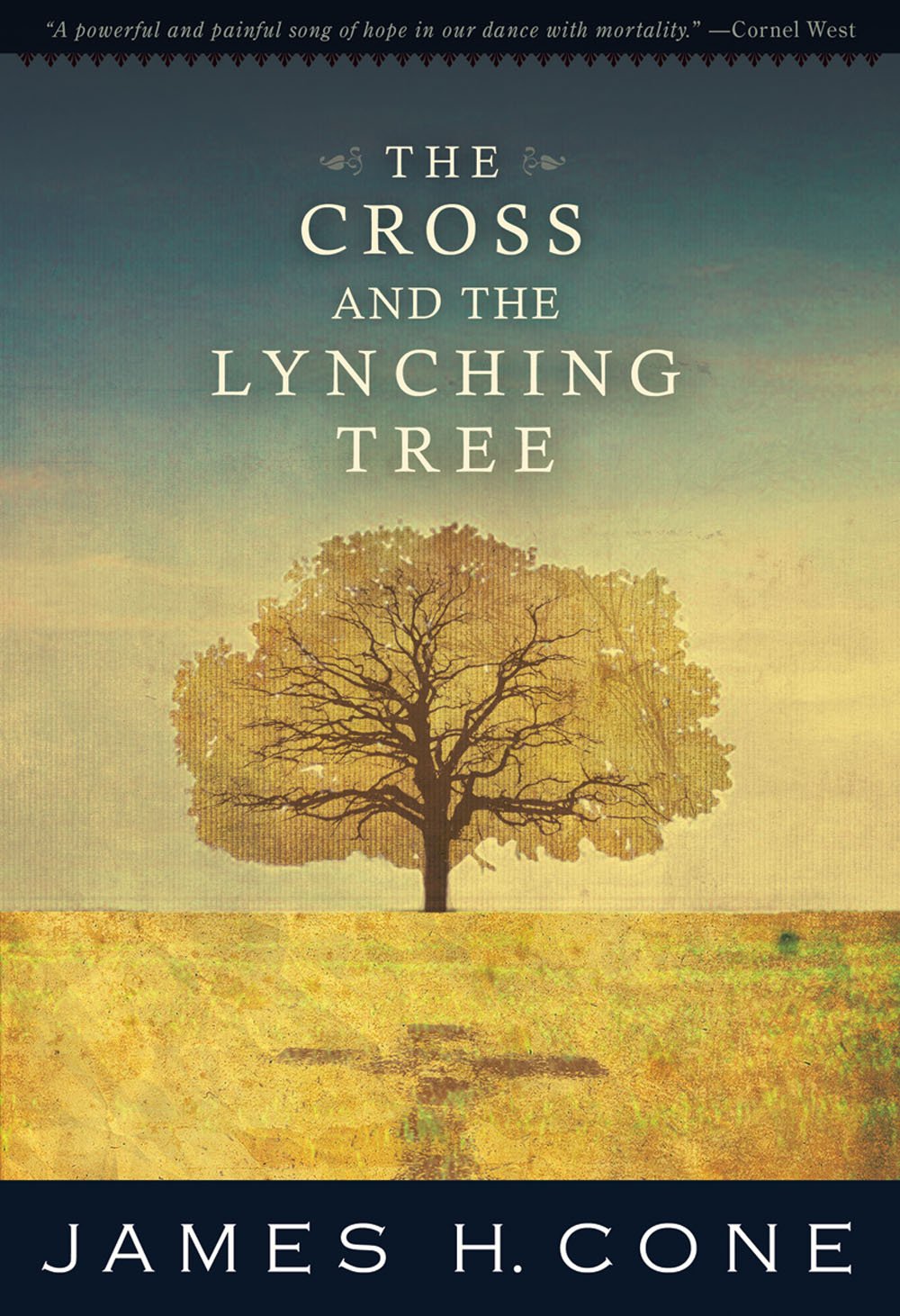
Lent 2015 - The Cross and the Lynching Tree - Chapter 1

NOTE: Throughout these blog posts, I will mostly be able to write through the narrow lens of my own experience. I am not well versed in critical theory, the study of race, or the discipline of history. Although I consider myself a practical theologian and a Christian, I would not say that I have the skill set of someone schooled in doctrinal, dogmatic or systematic theology or even ethics. I will probably stumble over ways of talking about what I am reading and my reactions to it. With these caveats, I would like to think that this is an appropriate place from which to engage this book. I would hope that this book would be read in churches and seminaries, classrooms and even homes, by people not well-versed in any of the disciplines I mentioned above. I am reading this book for the first time, and so my words, though I hope reflective and thoughtful, will be first time reactions. 

A general introduction to this blog series can be found here, and an index and schedule for the series can be found here.

*****

I have to admit that I'm struggling to write a blogpost about this first chapter. The main difficulty is that no words of mine could replace the experience of reading these stories of hope in the midst of lynching. And that is the point of this book. As Cone writes in the introduction:

"...my primary concern is to give voice to black victims, to let them and their families and communities speak to us, exploring the question: how did ordinary blacks, like my mother and father, survive the lynching atrocity and still keep together their families, their communities, and not lose their sanity? ... I believe that the cultural and religious resources in the black experience could help all Americans cope with the legacy of white supremacy and also deal more effectively with what is called the 'war on terror.' If white Americans could look at the terror they inflicted on their own black population—slavery, segregation, and lynching—then they might be able to understand what is coming at them from others. Black people know something about terror because we have been dealing with legal and extralegal white terror for several centuries." (xviii-xix)

Sunday, July 26, 2009

Puddleglum Theology Launched


Today I spent over seven hours doing something I've wanted to do for a while. With the help of google sites, I've created a central website for what I'm lovingly calling Puddleglum Theology.

What is Puddleglum Theology? If you've ever read The Chronicles of Narnia by C.S. Lewis, and especially the fourth book in the series The Silver Chair, you might have a clue. If you're completely in the dark about all of this, here's an excerpt from The Silver Chair and the introduction to the Puddleglum Theology website to shed some light:

"I'm a chap who always liked to know the worst and then put the best face I can on it. So I won't deny any of what you said. But there's one thing more to be said, even so. Suppose we have only dreamed, or made up, all those things--trees and grass and sun and moon and stars and Aslan himself. Suppose we have. Then all I can say is that, in that case, the made-up things seem a good deal more important than the real ones. Suppose this black pit of a kingdom of yours is the only world. Well, it strikes me as a pretty poor one. And that's a funny thing when you come to think of it. We're just babies making up a game, if you're right. But four babies playing a game can make a play-world which licks your real world hollow. That's why I'm going to stand by the play-world. I'm on Aslan's side even if there isn't any Aslan to lead it. I'm going to live as like a Narnian as I can even if there isn't any Narnia."
- Puddleglum, from The Chronicles of Narnia: The Silver Chair by C.S. Lewis

Welcome to Puddleglum Theology! The underlying ethos behind this website is contained in the above quote. I enjoy mystery and myth, beauty and brightness. I would rather take a stand for the world of story than suffer under the burden of mere fact. Not that facts are not useful, or reason an integral part of living and knowing. But, as Madeleine L'Engle expresses, "if we limit ourselves to the possible and provable...we render ourselves incapable of change and growth, and that is something that should never end." (The Rock That Is Higher, 100) She continues: "perhaps it is the child within us who is able to recognize the truth of story--the mysterious, the numinous, the unexplainable--and the grown-up within us who accepts these qualities with joy but understands that we also have responsibilities, that a promise is to be kept, homework is to be done, that we ow other people courtesy and consideration, and that we need help to care for our planet because it's the only one we've got." (TRTIH, 100) Perhaps my outlook on life can be more accurately portrayed by another quote from C.S. Lewis, this time from an essay on "Three Ways of Writing for Children," "When I was ten, I read fairy tales in secret and would have been ashamed if I had been found doing so. Now that I am fifty I read them openly. When I became a man I put away childish things, including the fear of childishness and the desire to be very grown up." (On Stories, 34)

I sincerely believe that there is more to life than we can accurately portray with mere facts, more to truth than statistics and analytical thinking can produce. I do not always live like a child, but I deeply desire that way of life. I want to wonder again, to be in awe more often, to wrestle with the unknown under a dark moon and somehow end up with both a blessing and a new name. I want to celebrate mystery, all the while seeking to understand. I want to be joyful, knowing full well how grim things truly are. I want to love indiscriminately, and fight injustice passionately. I hope that you'll join me.

On this website you'll find a page that reproduces my blog: There Is No Fear In Love, a growing compendium of quotes from my favorite authors and a discussion page where I'll post questions/thoughts for discussion. And, hopefully, more things in the future. So, again, welcome to Puddleglum Theology!

So, there you have it! Puddleglum Theology has been launched. If you are interested in Puddleglum Theology and would like to submit quotes relevant to the themes presented, e-mail them to me at marchon2884@google.com and I'll try to add them to our growing list of Wiggle Wisdom in the Wigwam Word Archive. Or, if you've written an article or blogpost relating to Puddleglum Theology, I can add that to Respectobiggle Research. Make sure to check out other quotes and articles on the Puddleglum Theology website. Here's the address:


Or you can just click on any of the times I've listed Puddleglum Theology in this post.

Thanks for sticking with me, faithful reader!

Saturday, February 21, 2009

The...er...Vampire...is in the details.


I'm currently reading Stephenie Meyer's Twilight for my Children's Fantasy Literature and Moral Formation class.  If you haven't heard of it, it's the tale of a clumsy girl (Bella) and the "too-perfect" vampire (Edward) for whom she pines.  It's an exercise in overtly difficult abstinence, written by a Mormon mom.  You see, Edward is attracted to Bella, more specifically, her blood, but he is a "vegetarian" vampire.  He only drinks the blood of animals, not humans.  He saves her life several times and wants to spend time with her, but constantly tells her that he's dangerous and she shouldn't be around him.  

It's actually not as bad as I had anticipated, especially considering the fact that I'm not exactly the romance-novel type.  The plot is decent and some of Meyer's imagery is fairly evocative.

What bothers me as I thumb through the sap is not the quality of Meyer's writing, but the lack of effort on the part of her editor.  Meyer has a spark of talent.  She can create visual scenes in the mind, and has an effective "romantic" tone to her writing.  Her novel could have been better served with more careful editing.  Here's an example:

The following scene is a bit of dialogue between Edward and Bella.  The story is written from Bella's perspective, so the I in the non-spoken text is her.  It's raining and they are walking to class.  Edward begins.

His eyes were wickedly amused.  "Will you please allow me to finish?"
I bit my lip and clasped my hands together, interlocking my fingers, so I couldn't do anything rash.
"I heard you say you were going to Seattle that day, and I was wondering if you wanted a ride."
That was unexpected.
"What?"  I wasn't sure what he was getting at.
"Do you want a ride to Seattle?"
"With who?" I asked, mystified.
"Myself, obviously."  He enunciated every syllable, as if he were talking to someone mentally handicapped.
I was still stunned.  "Why?"

First of all, my writing professors always advocated "showing," as opposed to "telling."  Meyer tells.  Second of all, the imagery of her clasping her hands together seems rather awkward.  Is she walking with her hands clasped together in front of her?  Wouldn't that be a little obvious? Perhaps it would be better behind her back.  Here's my "editing" of her text.

His eyes were wickedly amused.  "Will you please allow me to finish?"
I bit my lip and clasped my hands together behind me, interlocking my fingers, so I couldn't do anything rash.
"I heard you say you were going to Seattle that day, and I was wondering if you wanted a ride."
"What?"
"Do you want a ride to Seattle?"
"With who?"
"Myself, obviously."  He enunciated every syllable, as if talking to someone mentally handicapped.
"Why?"

I eliminated every duplicate turn of phrase and unnecessary word.  The meaning still gets across.  Bella's confused.  Edward is offering her a ride.  Now, this isn't very good writing.  It's quite choppy.  More like a play than a novel.  Instead, I could direct Meyer to add in more subtle, more descriptive writing that doesn't simply say what the dialogue could express on its own, but instead highlights it.  Also, I would encourage her to make every word count, and thus to use these descriptive additions to build tension, evoke emotion, tell scenery, and add pacing.  I would also use more powerful words with more physical force.  Then, perhaps, it would read like this:

His eyes were wickedly amused.  "Will you please allow me to finish?"
I bit my lip and clasped my hands together behind me, interlocking my fingers, so I couldn't slap him.
"I heard you say you were going to Seattle that day, and I was wondering if you wanted a ride."
I nearly tripped into a puddle.
"What?"
"Do you want a ride to Seattle?"
The rain pattering on my hood muddled my thoughts.
"With who?"
"Myself, obviously."  He lingered on every syllable, as if talking to someone mentally handicapped.
"Why?"

Now, I'm not exactly the best writer in the world.  I'm sure someone else would use words that packed even more punch.  Nevertheless, I see a marked improvement here.  Instead of just saying that she was going to do "something" rash, I specified that something and used a word with onomatopoeic pizzazz.  Also, Bella is known as a klutz.  So I used that to my advantage, having her trip into a puddle to evoke her surprise, rather than just saying that she was surprised.  I added the line about the rain pattering to show her confusion, add to the scenery, and pace the dialogue to allow for the reader to imagine that she is thinking before her response.  Instead of the word "enunciate," which makes me think MY-SELF OB-VI-OUS-LY, I used "linger," which actually makes his comment smoother (he's a pretty cool character) and more sarcastic (which he also seems to be...seriously, read the rest of the book).

Anyway, I guess the devil...er...vampire...is in the details.  Maybe instead of a writer I should be an editor.  

Or maybe I'm completely wrong and I should be lucky that I even entice people to read my blog.

Thanks, faithful reader.  


Sunday, October 5, 2008

In Which I Confess My Utter Lack of Sense


My wife and I have spent the last hour and a half trying to figure out how to change text from the internet into a printable book format.  Here's the story:

So, I have to read Anselm of Canterbury's Cur Deus Homo - Why God Became Human - for my Systematic Theology Class.  Although I am very adept at reading blogs and news articles online, I hate reading works of theology online.  Go figure.  Our professor decided to save us money by having us read the text on the internet.  I was grateful for the saving of money, but dreading reading nearly 100 pages of a dense, theological text off of a bright computer screen.  This afternoon, while steeling myself to spend hours staring at a screen, I hit upon the idea of turning the text into a book.  After all, the text was in an online, printable format, and the copyright information said that it could be printed and used for educational purposes, just not for sale.  Perfect!  So, I went to our campus's nearby computer lab and downloaded the text into Microsoft Word.  Now, I could have just printed it as it was, but I'm also a stickler for durability, portability, readability and paper-saving.  So, I spent an hour and a half formatting the text into "book format," which, conveniently, Microsoft Office for Windows XP on the school computers/printers has readily available.  Anyway, I ended up printing the text on 55 pieces of paper, front and back, two "pages" per side, meaning that it looked like the pages of a regular paperback book.  Then I took it to Staples, where my wife was working this afternoon, had her cut the pages in half and then put them together with a card stock cover and spiral-binding.  All for only $2.50.  Not bad.

Now, there are a few other things that I would like to read/turn into books, such as old public domain hymn texts online, christian classics online, etc.  All in the public domain, no copyright.  I decided I wanted to work at home and try to format it all on my Mac.  No dice.  The Mac did not have the pleasant "book format" option.  So, I tried to emulate it with formatting.  No Dice.  And that was how I spent the last hour and a half.  Sigh.  All of that time when I should have been reading the book that I so nicely formatted and had bound this afternoon.  Welcome to my nonsensical life.

Other than that, life is good.  I'm busy and a little sleepy now, but I'm good.  Sigh.  Cur Deus Homo here I come!