Showing posts with label racism. Show all posts
Thursday, August 27, 2015
Psalm 11: When The Foundations Are Destroyed
This is a lightly edited version of a sermon I delivered last year at the opening worship gathering for Koinonia, the fellowship for Princeton Theological Seminary's PhD students. From 2011-2015, I served as Chaplain for the Koinonia fellowship. I felt urged to post it today, because not much has changed in the last twelve months, and my words convict me more than ever.
*****
If the foundations are destroyed, what can the righteous do?
In the Lord I take refuge; how can you say to me,
“Flee like a bird to the mountains;
for look, the wicked bend the bow,
they have fitted their arrow to the string,
to shoot in the dark at the upright in heart.
If the foundations are destroyed,
what can the righteous do?”
The Lord is in his holy temple;
the Lord’s throne is in heaven.
His eyes behold, his gaze examines humankind.
The Lord tests the righteous and the wicked,
and his soul hates the lover of violence.
On the wicked he will rain coals of fire and sulfur;
a scorching wind shall be the portion of their cup.
For the Lord is righteous;
he loves righteous deeds;
the upright shall behold his face.
Saturday, August 8, 2015
God's Own Heart
![]() |
| Image found at: http://blogs.crikey.com.au/ culture-mulcher/files/2010/09/my-son1.jpg |
Monday, March 23, 2015
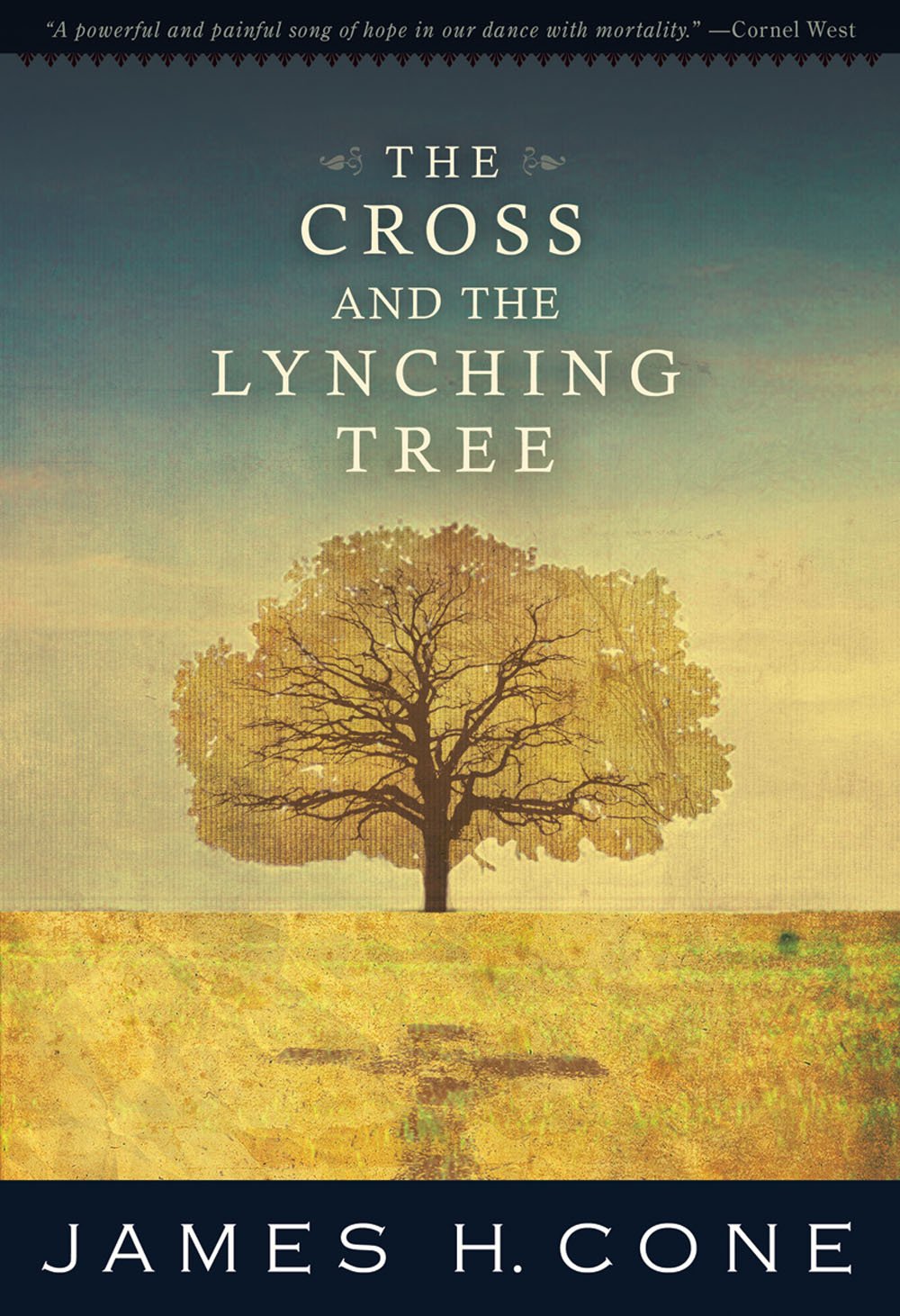
Lent 2015 - The Cross and the Lynching Tree - Chapter 4
NOTE: Throughout these blog posts, I will mostly be able to write through the narrow lens of my own experience. I am not well versed in critical theory, the study of race, or the discipline of history. Although I consider myself a practical theologian and a Christian, I would not say that I have the skill set of someone schooled in doctrinal, dogmatic or systematic theology or even ethics. I will probably stumble over ways of talking about what I am reading and my reactions to it. With these caveats, I would like to think that this is an appropriate place from which to engage this book. I would hope that this book would be read in churches and seminaries, classrooms and even homes, by people not well-versed in any of the disciplines I mentioned above. I am reading this book for the first time, and so my words, though I hope reflective and thoughtful, will be first time reactions. A general introduction to this blog series can be found here, and an index and schedule for the series can be found here.
*****
It is a miracle that black Americans still believe in Jesus Christ. "It was not easy for blacks to find a language to talk about Christianity publicly because the Jesus they embraced was also, at least in name, embraced by whites who lynched black people. Indeed, it was white slaveholders, segregationists, and lynchers who defined the content of the Christian gospel." (118) Racism has so damaged the image of Christ in our country that Langston Hughes could write:
Listen, Christ,
You did alright in your day, I reckon—
But that day's gone now.
They ghosted you up a swell story, too,
Called it Bible—
But it's dead now.
The popes and the preachers've
Made too much money from it.
They've sold you to many
Kings, generals, robbers, and killers—
Even to the Tzar and the Cossacks,
Even to Rockefeller's Church,
Even to THE SATURDAY EVENING POST.
You ain't no good no more.
They've pawned you
Till you've done wore out. (116, quoted from Arnold Rampersad, Life of Langston Hughes, vol. 1 pp. 252-53)
When Hughes wrote this, he was shamed for blasphemy by both black and white church-going people. But perhaps we should not be discomfited so much by his "blasphemy" as by the sordid history which gave it birth, a history that has obscured the good news of Jesus Christ. Indeed, "Artists force us to see things we do not want to look at because they make us uncomfortable with ourselves and the world we have created." (117)
Yet, James Cone argues in this fourth chapter, it is precisely the artistic imagination that also enabled black slaves, "Cut off from their African religious traditions...to carve out a religious meaning for their lives with white Christianity as the only resource to work with. They ignored white theology, which did not affirm their humanity, and went straight to stories in the Bible, interpreting them as stories of God siding with little people just like them. They identified God's liberation of the poor as the central message of the Bible, and they communicated this message in their songs and sermons [and, as this chapter affirms, poems and short stories]." (118)
This poetic imagination operates differently from "abstract reasoning" that encourages us to "think about the cross as a theological concept or as a magical talisman of salvation." (108) It involves "spiritual wrestling...enduring and confronting the reality of inexplicable suffering." (108) It is a paradoxical imagination, which holds together contradiction, as in the writings of W.E.B. Du Bois (106). It holds together profound doubt and powerful faith, the cross and the resurrection, a dead Jewish man in Rome and black bodies swinging from trees—killed by the followers of that crucified savior.
It is this same poetic imagination that must be employed in living into God's justice and reconciliation today. For those of us who claim to be God's people, we cannot move toward living into our identity of children of God, as Christians without the Holy Spirit's gift of this poetic imagination. It is something we must receive.
But because this imagination sees more clearly than abstract reasoning, it holds before us truths we would rather not see, and sings the grating songs of grief, lament and contrition we would rather not hear. We would rather not believe "the plain facts," as Du Bois presents them, that "The church aided and abetted the Negro slave trade...and the church today is the strongest seat of racial and color prejudice. If one hundred of the best and purest colored folk of the United States should seek to apply for membership in any white church in this land tomorrow, 999 out of every 1,000 ministers would lie to keep them out." (101, quoted from "The Church and the Negro, " Crisis 6, no. 6 [October 1913]). We would rather not consider that, one hundred years after these facts were presented, racism is alive and well and black people are still actively excluded. We want to believe we live in some "post-racial society," or that things are getting better. They aren't. Admitting this can open us to receive the gift of the Spirit's poetic imagination.
It can also help us to listen to that lively imagination as it ignites us to live out our Christian calling as ambassadors of reconciliation. "From now on, therefore, we regard no one from a human point of view [Greek: according to the flesh]; even though we once knew Christ from a human point of view [according to the flesh], we know him no longer in that way. So if anyone is in Christ, there is a new creation: everything old has passed away; see, everything has become new! All this is from God, who reconciled us to himself through Christ, and has given us the ministry of reconciliation; that is, in Christ God was reconciling the world to himself, not counting their trespasses against them, and entrusting the message of reconciliation to us." (2 Corinthians 5:16-19) Of course, none of this is known apart from the cross, "for the love of Christ urges us on, because we are convinced that one has died for all; therefore all have died. And he died for all, so that those who live might live no longer for themselves, but for him who died and was raised for them." (2 Corinthians 5:14-15) It is by looking to the cross that we can see the new creation. And Cone reminds us that our poetic imaginations see rightly when they look to the cross within our present, to those still dying, to Jesus in the lost, the least, the imprisoned, the oppressed, the dying (Matthew 25). Paul commends to the Corinthians a ministry that comes "through great endurance, in afflictions, hardships, calamities, beatings, imprisonments, riots, labors, sleepless nights, hunger...in honor and dishonor, in ill repute and good repute. We are treated as impostors, and yet are true; as unknown, and yet are well known; as dying, and see—we are alive; as punished, and yet not killed; as sorrowful, yet always rejoicing; as poor, yet making many rich; as having nothing, and yet possessing everything." (2 Corinthians 6:4-10) I can think of no better description of the black experience in the United States.
The miracle of the gospel is not only that black Americans still believe in Jesus Christ after "the obstacle" that is the "fault" of Christian ministry under white supremacy in the United States (2 Corinthians 6:3); but also that out of that damaged witness would emerge the vibrant witness of black poetry, story, sermon and song. As Cone has been claiming all along, it is incumbent upon those of us who call ourselves Christians in the United States to confront white supremacy with the truth of black experience, to challenge our racism with the power of the gospel, to listen to those who are witnessing to the gospel in our midst—the oppressed, marginalized, poor, of ill repute and dishonor—and to hear the voice of Christ in them; for without doing so, we will not be able to "explain the meaning of Christian identity" to a watching world. (xvii)
In this book, Cone writes, like Paul, "frankly," with a "wide open" heart (2 Corinthians 6:11). In this book, as uncomfortable as it might make those of us who cannot hear the poetic imagination yet, Cone is writing "with no restriction in [his] affection, but only in yours. In return—I speak as to children—open wide your hearts also." (2 Corinthians 6:12-13)
*****
NOTE: I encourage thoughtful, impassioned conversation in the comments below. I do not say, "civil," because I think this sometimes connotes "dispassionate." But I would ask that those who comment attempt to engage with thought and reflection. I do reserve the right to delete any comment that I consider harmful. The point is a passionate and meaningful conversation, which means, for me, neither stilted dialogue nor combative debate.
Monday, March 16, 2015
Lent 2015 - The Cross and the Lynching Tree - Chapter Three
NOTE: Throughout these blog posts, I will mostly be able to write through the narrow lens of my own experience. I am not well versed in critical theory, the study of race, or the discipline of history. Although I consider myself a practical theologian and a Christian, I would not say that I have the skill set of someone schooled in doctrinal, dogmatic or systematic theology or even ethics. I will probably stumble over ways of talking about what I am reading and my reactions to it. With these caveats, I would like to think that this is an appropriate place from which to engage this book. I would hope that this book would be read in churches and seminaries, classrooms and even homes, by people not well-versed in any of the disciplines I mentioned above. I am reading this book for the first time, and so my words, though I hope reflective and thoughtful, will be first time reactions.
A general introduction to this blog series can be found here, and an index and schedule for the series can be found here.
*****
What does it mean to bear a cross?
I spent this past week with my extended family in North Carolina. My eldest nephew has an arsenal of Nerf guns and loves to play Nerf wars. We shoot harmless styrofoam bullets at each other while running around my parents' large basement. He is over five feet tall and is solidly built. Despite my sister’s heroic efforts to get him to wear denim and a polo shirt, he also most often heads out of the house in black sweats and a black hoodie. He is 12. This is the same age as Tamir Rice. Until this year, our silly Nerf games and his fashion sense meant little to me. Now I’m doing everything to encourage him to wear jeans and a polo shirt and I don’t really want him to play Nerf outside (even though the weather was beautiful).
The reality that Tamir Rice could have been either of my nephews spurred me to begin making major changes to how I engage race. But that my thought was about my nephews and that I have never thought the same about myself demonstrates the difference in experience between those who benefit from white privilege and those who suffer from it.
A general introduction to this blog series can be found here, and an index and schedule for the series can be found here.
*****
What does it mean to bear a cross?
I spent this past week with my extended family in North Carolina. My eldest nephew has an arsenal of Nerf guns and loves to play Nerf wars. We shoot harmless styrofoam bullets at each other while running around my parents' large basement. He is over five feet tall and is solidly built. Despite my sister’s heroic efforts to get him to wear denim and a polo shirt, he also most often heads out of the house in black sweats and a black hoodie. He is 12. This is the same age as Tamir Rice. Until this year, our silly Nerf games and his fashion sense meant little to me. Now I’m doing everything to encourage him to wear jeans and a polo shirt and I don’t really want him to play Nerf outside (even though the weather was beautiful).
The reality that Tamir Rice could have been either of my nephews spurred me to begin making major changes to how I engage race. But that my thought was about my nephews and that I have never thought the same about myself demonstrates the difference in experience between those who benefit from white privilege and those who suffer from it.
Monday, March 9, 2015
Lent 2015 - The Cross and the Lynching Tree - Chapter 2

NOTE: Throughout these blog posts, I will mostly be able to write through the narrow lens of my own experience. I am not well versed in critical theory, the study of race, or the discipline of history. Although I consider myself a practical theologian and a Christian, I would not say that I have the skill set of someone schooled in doctrinal, dogmatic or systematic theology or even ethics. I will probably stumble over ways of talking about what I am reading and my reactions to it. With these caveats, I would like to think that this is an appropriate place from which to engage this book. I would hope that this book would be read in churches and seminaries, classrooms and even homes, by people not well-versed in any of the disciplines I mentioned above. I am reading this book for the first time, and so my words, though I hope reflective and thoughtful, will be first time reactions.
A general introduction to this blog series can be found here, and an index and schedule for the series can be found here.
*****
Near the beginning of this second chapter, James Cone forcefully underlines the deep connections between crucifixion and lynching in a searing and convicting passage that must be quoted in full:
"As Jesus was an innocent victim of mob hysteria and Roman imperial violence, many African Americans were innocent victims of white mobs, thirsting for blood in the name of God and in defense of segregation, white supremacy, and the purity of the Anglo-Saxon race. Both the cross and the lynching tree were symbols of terror, instruments of torture and execution, reserved primarily for slaves, criminals, and insurrectionists—the lowest of the low in society. Both Jesus and blacks were publicly humiliated, subjected to the utmost indignity and cruelty. They were stripped, in order to be deprived of dignity, then paraded, mocked and whipped, pierced, derided and spat upon, tortured for hours in the presence of jeering crowds for popular entertainment. In both cases, the purpose was to strike terror in the subject community. It was to let people know that the same thing would happen to them if they did not stay in their place." (31)
He ends this litany with a quote from NT scholar Paula Frederickson, "The point of the exercise was not the death of the offender as such, but getting the attention of those watching. Crucifixion first and foremost is addressed to an audience." (31) Then he makes the crucial and convicting statement for this chapter: "The crucifixion of Jesus by the Romans in Jerusalem and the lynching of blacks by whites in the United States are so amazingly similar that one wonders what blocks the American Christian imagination from seeing the connection." (31, emphasis mine)
The implication of all of this is that, though lynching was a "public spectacle" with "an audience," the vast majority of people in the United States have turned a blind eye to its reality. Even worse, those of us who call ourselves Christians have failed to ignite our imaginations on behalf of those suffering, in prison, hungry, naked and poor—those in whose midst we find Jesus (Matthew 25).
Monday, March 2, 2015
Lent 2015 - The Cross and the Lynching Tree - Chapter 1
NOTE: Throughout these blog posts, I will mostly be able to write through the narrow lens of my own experience. I am not well versed in critical theory, the study of race, or the discipline of history. Although I consider myself a practical theologian and a Christian, I would not say that I have the skill set of someone schooled in doctrinal, dogmatic or systematic theology or even ethics. I will probably stumble over ways of talking about what I am reading and my reactions to it. With these caveats, I would like to think that this is an appropriate place from which to engage this book. I would hope that this book would be read in churches and seminaries, classrooms and even homes, by people not well-versed in any of the disciplines I mentioned above. I am reading this book for the first time, and so my words, though I hope reflective and thoughtful, will be first time reactions. A general introduction to this blog series can be found here, and an index and schedule for the series can be found here.
*****
I have to admit that I'm struggling to write a blogpost about this first chapter. The main difficulty is that no words of mine could replace the experience of reading these stories of hope in the midst of lynching. And that is the point of this book. As Cone writes in the introduction:
"...my primary concern is to give voice to black victims, to let them and their families and communities speak to us, exploring the question: how did ordinary blacks, like my mother and father, survive the lynching atrocity and still keep together their families, their communities, and not lose their sanity? ... I believe that the cultural and religious resources in the black experience could help all Americans cope with the legacy of white supremacy and also deal more effectively with what is called the 'war on terror.' If white Americans could look at the terror they inflicted on their own black population—slavery, segregation, and lynching—then they might be able to understand what is coming at them from others. Black people know something about terror because we have been dealing with legal and extralegal white terror for several centuries." (xviii-xix)
Subjects:
blues,
faith,
fear,
history,
honesty,
hope,
Lent 2015,
life,
misunderstandings,
Nonsensicalness,
racism,
solidarity,
spirituals,
the cross,
The Cross and the Lynching Tree,
Thoughts,
world events
Monday, February 23, 2015
Lent 2015 - The Cross and the Lynching Tree - Introduction
NOTE: Throughout these blog posts, I will mostly be able to write through the narrow lens of my own experience. I am not well versed in critical theory, the study of race, or the discipline of history. Although I consider myself a practical theologian and a Christian, I would not say that I have the skill set of someone schooled in doctrinal, dogmatic or systematic theology or even ethics. I will probably stumble over ways of talking about what I am reading and my reactions to it. With these caveats, I would like to think that this is an appropriate place from which to engage this book. I would hope that this book would be read in churches and seminaries, classrooms and even homes, by people not well-versed in any of the disciplines I mentioned above. I am reading this book for the first time, and so my words, though I hope reflective and thoughtful, will be first time reactions.
A general introduction to this blog series can be found here, and an index and schedule for the series can be found here.
*****
Take a moment to read this NYtimes article and these responsive letters. Sit with them for awhile.
Okay. Now gauge your response. Are you shocked? Outraged? Numbed? Unsurprised? What emotions does this information evoke in you? Guilt? Anger? Sadness? Pity? In some ways, your response will be shaped by the extent to which the history of lynching in the United States has been taken up as a part of your own history.
A general introduction to this blog series can be found here, and an index and schedule for the series can be found here.
*****
Take a moment to read this NYtimes article and these responsive letters. Sit with them for awhile.
Okay. Now gauge your response. Are you shocked? Outraged? Numbed? Unsurprised? What emotions does this information evoke in you? Guilt? Anger? Sadness? Pity? In some ways, your response will be shaped by the extent to which the history of lynching in the United States has been taken up as a part of your own history.
Monday, November 3, 2008
The Margins
Hebrews 11: 13-16 “All of these died in faith without having received the promises, but from a distance they saw and greeted them. They confessed that they were strangers and foreigners on the earth, or people who speak in this way make it clear that they are seeking a homeland. If they had been thinking of the land that they had left behind, they would have had opportunity to return. But as it is, they desire a better country, that is, a heavenly one. Therefore God is not ashamed to be called their God; indeed, he has prepared a city for them."
I have found myself to be a man on the margins, a member of a small minority taken from a large majority, on a sojourn in a foreign land. I am an Asian man, a minority in the United States, only 4.2% according to the latest census. Yet, considering the whole world, Asian people are in the majority, they are the largest growing group. India and China alone make up almost 1/3 of the world’s population. I am a member of a small minority, taken from a large majority, on a sojourn in a foreign land. While I was living in Salt Lake City, UT, I was in the minority as a Christian. The majority of people in Salt Lake are members of the Church of Jesus Christ of the Latter Day Saints. Yet, considering the United States as a whole, Christians are in the majority (at least for now). I am a member of a small minority, taken from a large majority, on a sojourn in a foreign land.
Because of this I find great comfort in the affirmation that our God chooses the least and the lost, the outcast, the marginalized and the outsider. God chose a small nation, beaten down by many, the slave and servant and vassal state of a rotating who’s who of nations – Egypt, Babylon, Assyria, Greece, Rome – to be the purveyors of glory and salvation and the word of God. God chose to come as a Jewish man from the backwards town of Nazareth (“what good could ever come from there?” Philip asks). God chose fishermen and tax collectors and sinners and lepers as friends and disciples. Christianity, lest we forget, was once the minority. Christianity, lest we forget, was once persecuted because it was not tied to any national identity, because it was a kingdom not of this world.
In fact, I believe that this has been one of Christianity's core problems. Once Christianity became THE state religion, the majority, the world power, things went utterly wrong with it. The Inquisition, the Crusades, Slavery – absolute power corrupting absolutely. The Church is not free from corruption. As much as this may sound un-American (come on, McCarthy) I can't wait for the day when Christianity is no longer the dominant religion in America. It scares me how Christians like James Dobson and his group Focus on the Family can put out letters like this.
Although the writer of this letter insists that Christians should not hope for persecution or for these things to happen, I say: BRING IT ON. I want to remember what it was like to be a child of a God of outcasts, members of a kingdom not of this world, sojourners looking for a better home.
So that is why, for me, the lyrics of a modern-day prophet hit so hard and so true:
A King and a Kingdom
Derek Webb
Appears on: Mockingbird
Who’s your brother, who’s your sister
You just walked past him, I think you missed her
As we’re all migrating to a place where our Father lives
‘Cause we married into a family of immigrants
[Chorus] So my first allegiance is not to a flag, a country or a man
My first allegiance is not to democracy or blood
It’s to a King and a Kingdom
There are two great lies that I’ve heard
The day you eat of the fruit of that tree you will not surely die
And that Jesus Christ was a white, middle class Republican
And if you wanna be saved you have to learn to be like him
How can we realize that we are part of a family of immigrants, part of Abraham’s family who left home, part of the Israelites who traversed the desert, part of all of those wanderers who never saw the things that they had been promised? How can we reclaim our identity as a wandering people, as sojourners in a foreign land, children of a God who is the God of the outcast, co-heirs of a kingdom not of this world?
Subjects:
a better country,
faith,
family,
fear,
hate,
history,
hope,
life,
marginality,
racism,
Thoughts,
world events
Wednesday, October 15, 2008
Hi everyone. I just wanted to get out on the front page a conversation started by my latest blog post. I think it's a good one to have. My friend Laurie posted a wonderful, balancing response to my post yesterday and I again responded to her. Be safe, everyone, and watch the debate tonight! May we live in love and not fear.
What I can't fathom is how the supporters of both candidates can let their fervor turn so ugly. The recent McCain rally was well-covered, and we're both familiar with that, but I found this article that identifies some ugly, sad and scary behaviors of Senator Obama's supporters:
Townhall Article, Obama Supporter's Rage
No politician, no president, can change this. Other than just being good and decent people ourselves, how do we and our friends change this?
My Response:
Laurie,
Thank you for adding some levity and balance to the post. Those actions by Obama's supporters were NOT well covered and I hadn't found anything about them. So again, thank you.
I think I see a different fault in this situation in both men. I would like to make a slight nuance of a difference between what you perceived me saying about John McCain and what i would really like to say, and then to make a comment about the difference between this and the fault that I see Obama having. I think that I didn't clearly state what I see McCain doing wrong. I honestly don't think that he's trying to put a wedge in, or trying to divide people and spread hate. I think he's a much better man than that. I do think, however, that in trying to win this political election, he has done some things, I believe, without as much foresight as they needed, that have stoked the fires of hate that were already there. People already questioned Obama's patriotism, people already wondered whether Obama was Muslim, people wondered about whether or not Obama was born in the United States, people wondered whether or not they should fear him. By using this specific line of attack, which might have an arguably viable point about Obama's judgment, McCain, I hope unwittingly, added fire to these flames. If you watch the add on McCain's website about Ayers and Obama, it calls Obama dangerous, and constantly has pictures of him next to someone that they call a terrorist. That word-picture association sends a strong, subliminal message that, perhaps, Obama could be a terrorist, especially when coupled with Sarah Palin's remarks that Obama was "palling around with terrorists," and McCain's remarks that Obama had started his campaign in the living room of a terrorist. It also makes the subtle assumption that Barack Obama approves of these terrorist actions, and, in fact, this is what McCain's question of "judgment" is asking. This would make Obama seem like a person who would want to bomb the Pentagon, making him seem like a terrorist. Again, I don't think that this was McCain's intent, and I hope that it wasn't, but what I worry about is the foresight that was lacking in approving and condoning the use of those images and specific rhetoric to attack Obama. It also makes me worry about McCain, who, as an honorable man, once said that he would rather lose the election than lose the Iraq war. But now, he's pulling out all the stops to win the election (as anyone extremely desirous to win would). This, however, I think has led to some missteps that are potentially harmful and stoke the fire of hatred.
Obama, on the other hand, obviously hasn't reined in these supporters of his who are doing these horrible things. Now, people are hard to control, and people on all sides of the political spectrum get crazy over their politics. So I do not fully fault either candidate for the action of their constituents. Obama should definitely react and try to calm down his supporters. However, as far as I can tell (and I tried to read as many speeches of both men and watch as many ads as possible), Obama's rhetoric has not added kindling to the misguided actions of his supporters. He has not implied anything about Sarah Palin's stance on abortion. He has not linked Palin or McCain to anyone that should be stoned for any action. While, again, I think Obama should be more proactive about making sure that things like this don't happen and that he should apologize for what his supporters have done, Obama's rhetoric has not supported their actions. McCain's rhetoric was not thought through enough for it not to support hateful actions.
Regardless, both men have said very partisan things. Both men have bashed the other's political party. Both men have told untruths about each other. And I think this is where we come in. Not only can we lead decent lives, but we can also spread the word about the truths of the campaign. I highlighted McCain's arguments against Barack Obama because I saw them as potentially dangerous and they were the thing, obviously, that was being covered in the news and that i had the most access to. But we can tell the truth about both Candidates. We can talk about how both are good men. We can look at the way they deal with issues and with other people as a way of discerning between them. We can spread love as opposed to hate. I regret that possibly my previous post was construed as saying something overly negative about McCain. I didn't not mean it to be that way. I do believe that he is a good, noble man at heart, and that's what is so sad to me, that his campaign has come to the point where his rhetoric could be misconstrued rather easily as supporting hateful things. So. All that to say, thank you for your post, again, and for adding to the conversation.
Thank you for adding some levity and balance to the post. Those actions by Obama's supporters were NOT well covered and I hadn't found anything about them. So again, thank you.
I think I see a different fault in this situation in both men. I would like to make a slight nuance of a difference between what you perceived me saying about John McCain and what i would really like to say, and then to make a comment about the difference between this and the fault that I see Obama having. I think that I didn't clearly state what I see McCain doing wrong. I honestly don't think that he's trying to put a wedge in, or trying to divide people and spread hate. I think he's a much better man than that. I do think, however, that in trying to win this political election, he has done some things, I believe, without as much foresight as they needed, that have stoked the fires of hate that were already there. People already questioned Obama's patriotism, people already wondered whether Obama was Muslim, people wondered about whether or not Obama was born in the United States, people wondered whether or not they should fear him. By using this specific line of attack, which might have an arguably viable point about Obama's judgment, McCain, I hope unwittingly, added fire to these flames. If you watch the add on McCain's website about Ayers and Obama, it calls Obama dangerous, and constantly has pictures of him next to someone that they call a terrorist. That word-picture association sends a strong, subliminal message that, perhaps, Obama could be a terrorist, especially when coupled with Sarah Palin's remarks that Obama was "palling around with terrorists," and McCain's remarks that Obama had started his campaign in the living room of a terrorist. It also makes the subtle assumption that Barack Obama approves of these terrorist actions, and, in fact, this is what McCain's question of "judgment" is asking. This would make Obama seem like a person who would want to bomb the Pentagon, making him seem like a terrorist. Again, I don't think that this was McCain's intent, and I hope that it wasn't, but what I worry about is the foresight that was lacking in approving and condoning the use of those images and specific rhetoric to attack Obama. It also makes me worry about McCain, who, as an honorable man, once said that he would rather lose the election than lose the Iraq war. But now, he's pulling out all the stops to win the election (as anyone extremely desirous to win would). This, however, I think has led to some missteps that are potentially harmful and stoke the fire of hatred.
Obama, on the other hand, obviously hasn't reined in these supporters of his who are doing these horrible things. Now, people are hard to control, and people on all sides of the political spectrum get crazy over their politics. So I do not fully fault either candidate for the action of their constituents. Obama should definitely react and try to calm down his supporters. However, as far as I can tell (and I tried to read as many speeches of both men and watch as many ads as possible), Obama's rhetoric has not added kindling to the misguided actions of his supporters. He has not implied anything about Sarah Palin's stance on abortion. He has not linked Palin or McCain to anyone that should be stoned for any action. While, again, I think Obama should be more proactive about making sure that things like this don't happen and that he should apologize for what his supporters have done, Obama's rhetoric has not supported their actions. McCain's rhetoric was not thought through enough for it not to support hateful actions.
Regardless, both men have said very partisan things. Both men have bashed the other's political party. Both men have told untruths about each other. And I think this is where we come in. Not only can we lead decent lives, but we can also spread the word about the truths of the campaign. I highlighted McCain's arguments against Barack Obama because I saw them as potentially dangerous and they were the thing, obviously, that was being covered in the news and that i had the most access to. But we can tell the truth about both Candidates. We can talk about how both are good men. We can look at the way they deal with issues and with other people as a way of discerning between them. We can spread love as opposed to hate. I regret that possibly my previous post was construed as saying something overly negative about McCain. I didn't not mean it to be that way. I do believe that he is a good, noble man at heart, and that's what is so sad to me, that his campaign has come to the point where his rhetoric could be misconstrued rather easily as supporting hateful things. So. All that to say, thank you for your post, again, and for adding to the conversation.
Subjects:
Blogging,
fear,
hate,
hope,
life,
love,
misunderstandings,
openness,
politics,
racism,
Thoughts,
world events,
writing
Sunday, October 12, 2008
To Disobey One's Conscience Is Neither Just Nor Safe.
I'd like to talk about the following videos and articles. If you want the post that follows to make full and complete sense, please watch them and read them before you read the rest of the post.
I'm sorry. I'm sure that's a lot to digest. I know it was a lot for me. I've been haunted by these things for the past two days. It's been hard for me to continue with homework, hard for me to work with all of this weighing on my mind.
I've resisted stating my opinions on this political race for a long time. Here and there, I've scattered seeds of how it might relate to fear and love and how we ought to act. But my conscience calls me to do more. And, as Martin Luther (the monk-turned reformer) once said: "To disobey one's conscience is neither just nor safe. God help me. Amen."
I am afraid. I will tell you that truth right now. I am afraid of our fear. Fear can do horrible things, can cause horrible things. And fear leading to hatred is even worse. As Martin Luther King Jr. once said:
Like an unchecked cancer, hate corrodes the personality and eats away its vital unity. Hate destroys a man's sense of values and his objectivity. It causes him to describe the beautiful as ugly and the ugly as beautiful, and to confuse the true with the false and the false with the true. Power at its best is love implementing the demands of justice. Justice at its best is love correcting everything that stands against love.
-Strength to Love, 1963
What I read in these articles, what I see in these videos, is fear turned to hate. I readily admit that many of the writers and videographers of these pieces are probably biased. I readily admit that I might be biased. But I cannot ignore the plain fact that the people in these articles and videos, yelling "terrorist," and "kill him," and "commie @3$*$#@" and a whole host of other things have been scared into hate.
It is the unfortunate nature of elections to divide us. But when that division turns to hate, people get hurt. I'm worried.
As a biracial child, the uncle of two beautiful quadri-racial boys (I think I just coined that term; their father is African American and Central American, their mother Chinese and Dutch) I am struggling against an overwhelming fear.
I cannot, in good conscience, support John McCain because of his lack of good judgment, and the rhetoric of his campaign. Let me clarify that I am not starry-eyed over Barack Obama either. He has made many mistakes, and told many half-lies and untruths and has said many partisan things. But the tenor of his arguments and the driving force that I see in his campaign is one of hope and not anger, calm and not strife, unifying and not dividing. Over the last few weeks, however, I have become more and more convinced that John McCain, a good man, a strong man, an honorable man, has been corrupted by his own campaign. As much as he has a right to say that he has been a maverick (and he has truly reached across the aisles and bucked the system), I think that he is no longer. The nasty politics of Washington have tainted him. More than this, I think that he lacks foresight.
I question his judgment because of what has happened recently in his campaign. Could he not have foreseen that relating Obama to a Terrorist, questioning if we know who Obama is, playing down his patriotism and calling him "that one," during the debate could lead to hate? Could he not have foreseen that using a William Ayers line of attack on a presidential candidate who is mistakenly called a muslim and whose name is often linked to a known terrorist, simply by the changing of one letter, would lead to people wondering if Obama is a terrorist, fearing him, hating him, calling for his death? Could he not have foreseen, or at least controlled the rhetoric of the people who surround him, who pray that God would protect God's honor by defeating Obama, who tangentially relate Obama to "bad guys," who "pal around with terrorists," who send smear after smear against Obama, who incite crowds by linking Obama to Osama with bombing the Pentagon? McCain, in his ads, has called on the American people to question the judgment of his opponent. It has only caused me to question McCain's.
And even though I applaud McCain for trying to tone down the rhetoric, it obviously hasn't worked, and he still, a day later, uses the same tactics. His running mate uses the same tactics. Other people in his party use the same tactics. And McCain has the audacity to mention that he doesn't want to tone down his constituents' ferocity, just ask them for more respect? It's the ferocity that scares me.
I worry for Obama and his family, and my family. In a world where racism still lives, where some jump at any chance to condemn and fear and hate and kill, I fear. I do not think that everyone is acting in fear. I do not believe that most people would kill out of hate. But it only takes a few people with a desire to kill to cause incomprehensible damage in this world.
For those of you reading this blog who are questioning who Barack Obama is, whether he is related to terrorists, whether he was actually born in the United States, whether he is secretly trying to ruin the U.S., I've collected some facts for you. If you've received a chain e-mail linking Obama to any number of questionable people and questionable things, I've covered that for you too. Here are a few links:
All of these links are to Factcheck.org, a wonderful website that has a whole host of articles that (as impartially as possible) seek to debunk lies about both candidates. Believe me, there are a lot of things that Barack Obama has said that are misleading or downright false, and FactCheck.org calls him out on them. As far as I can tell, this website (recommended by many magazines and websites, both liberal and conservative and everything in between) is trying to get to the real truth behind the half-truths and political meanderings.
I'm not asking you to vote for Barack Obama. This post is not a political endorsement of any kind. Please, follow the issues, find out what qualities you respect in a leader, make sure you really know what's going on and then vote for the candidate in whom you believe. But I am calling you to search out your own heart, to look at the rhetoric that you have been listening to, to re-read the e-mails you've probably been sent. I'm asking you to consider what those e-mails do to you, whether they make you angry and afraid. I'm asking you to try to conquer your fear, as I am trying, with love. I'm asking you to make an effort, every day, to learn the truth, and more importantly, to spread the truth. I'm asking you to stop others when they spew forth hate, about either candidate. I'm asking you to start standing up for those who have been oppressed. I'm asking you to put a stop to the downward moral and ethical spiral that seems to be taking over our nation and our world. It stops with us. It stops now. Here I stand; I can do no other; I cannot and will not recant. God Help me, Amen.
Subscribe to:
Posts (Atom)