
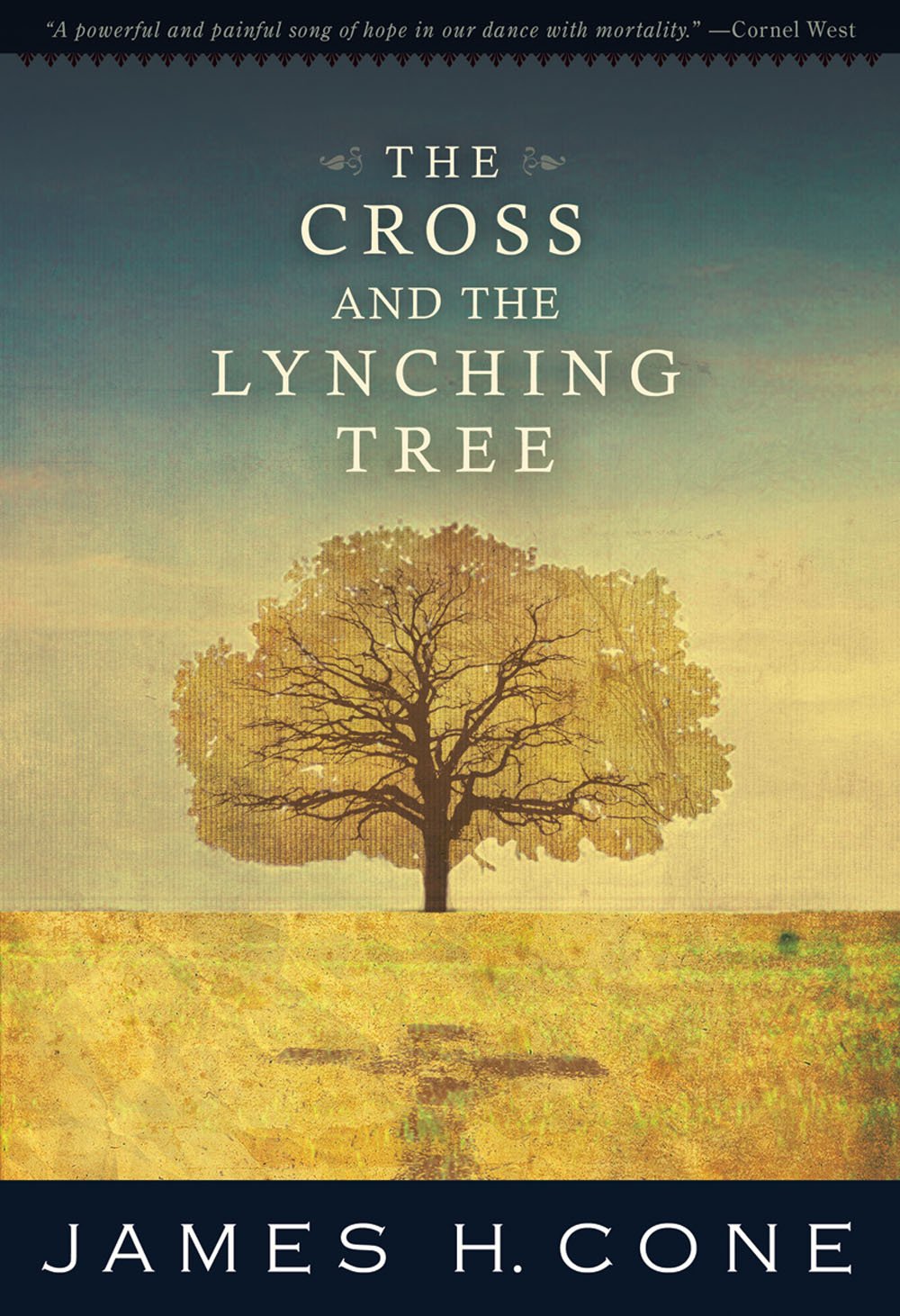
 NOTE: Throughout these blog posts, I will mostly be able to write through the narrow lens of my own experience. I am not well versed in critical theory, the study of race, or the discipline of history. Although I consider myself a practical theologian and a Christian, I would not say that I have the skill set of someone schooled in doctrinal, dogmatic or systematic theology or even ethics. I will probably stumble over ways of talking about what I am reading and my reactions to it. With these caveats, I would like to think that this is an appropriate place from which to engage this book. I would hope that this book would be read in churches and seminaries, classrooms and even homes, by people not well-versed in any of the disciplines I mentioned above. I am reading this book for the first time, and so my words, though I hope reflective and thoughtful, will be first time reactions.
 A general introduction to this blog series can be found here, and an index and schedule for the series can be found here.
*****
It is a miracle that black Americans still believe in Jesus Christ. "It was not easy for blacks to find a language to talk about Christianity publicly because the Jesus they embraced was also, at least in name, embraced by whites who lynched black people. Indeed, it was white slaveholders, segregationists, and lynchers who defined the content of the Christian gospel." (118) Racism has so damaged the image of Christ in our country that Langston Hughes could write:
Listen, Christ,
You did alright in your day, I reckon—
But that day's gone now.
They ghosted you up a swell story, too,
Called it Bible—
But it's dead now.
The popes and the preachers've
Made too much money from it.
They've sold you to many
Kings, generals, robbers, and killers—
Even to the Tzar and the Cossacks,
Even to Rockefeller's Church,
Even to THE SATURDAY EVENING POST.
You ain't no good no more.
They've pawned you
Till you've done wore out. (116, quoted from Arnold Rampersad, Life of Langston Hughes, vol. 1 pp. 252-53)
When Hughes wrote this, he was shamed for blasphemy by both black and white church-going people. But perhaps we should not be discomfited so much by his "blasphemy" as by the sordid history which gave it birth, a history that has obscured the good news of Jesus Christ. Indeed, "Artists force us to see things we do not want to look at because they make us uncomfortable with ourselves and the world we have created." (117)
Yet, James Cone argues in this fourth chapter, it is precisely the artistic imagination that also enabled black slaves, "Cut off from their African religious traditions...to carve out a religious meaning for their lives with white Christianity as the only resource to work with. They ignored white theology, which did not affirm their humanity, and went straight to stories in the Bible, interpreting them as stories of God siding with little people just like them. They identified God's liberation of the poor as the central message of the Bible, and they communicated this message in their songs and sermons [and, as this chapter affirms, poems and short stories]." (118)
This poetic imagination operates differently from "abstract reasoning" that encourages us to "think about the cross as a theological concept or as a magical talisman of salvation." (108) It involves "spiritual wrestling...enduring and confronting the reality of inexplicable suffering." (108) It is a paradoxical imagination, which holds together contradiction, as in the writings of W.E.B. Du Bois (106). It holds together profound doubt and powerful faith, the cross and the resurrection, a dead Jewish man in Rome and black bodies swinging from trees—killed by the followers of that crucified savior.
It is this same poetic imagination that must be employed in living into God's justice and reconciliation today. For those of us who claim to be God's people, we cannot move toward living into our identity of children of God, as Christians without the Holy Spirit's gift of this poetic imagination. It is something we must receive.
But because this imagination sees more clearly than abstract reasoning, it holds before us truths we would rather not see, and sings the grating songs of grief, lament and contrition we would rather not hear. We would rather not believe "the plain facts," as Du Bois presents them, that "The church aided and abetted the Negro slave trade...and the church today is the strongest seat of racial and color prejudice. If one hundred of the best and purest colored folk of the United States should seek to apply for membership in any white church in this land tomorrow, 999 out of every 1,000 ministers would lie to keep them out." (101, quoted from "The Church and the Negro, " Crisis 6, no. 6 [October 1913]). We would rather not consider that, one hundred years after these facts were presented, racism is alive and well and black people are still actively excluded. We want to believe we live in some "post-racial society," or that things are getting better. They aren't. Admitting this can open us to receive the gift of the Spirit's poetic imagination.
It can also help us to listen to that lively imagination as it ignites us to live out our Christian calling as ambassadors of reconciliation. "From now on, therefore, we regard no one from a human point of view [Greek: according to the flesh]; even though we once knew Christ from a human point of view [according to the flesh], we know him no longer in that way. So if anyone is in Christ, there is a new creation: everything old has passed away; see, everything has become new! All this is from God, who reconciled us to himself through Christ, and has given us the ministry of reconciliation; that is, in Christ God was reconciling the world to himself, not counting their trespasses against them, and entrusting the message of reconciliation to us." (2 Corinthians 5:16-19) Of course, none of this is known apart from the cross, "for the love of Christ urges us on, because we are convinced that one has died for all; therefore all have died. And he died for all, so that those who live might live no longer for themselves, but for him who died and was raised for them." (2 Corinthians 5:14-15) It is by looking to the cross that we can see the new creation. And Cone reminds us that our poetic imaginations see rightly when they look to the cross within our present, to those still dying, to Jesus in the lost, the least, the imprisoned, the oppressed, the dying (Matthew 25). Paul commends to the Corinthians a ministry that comes "through great endurance, in afflictions, hardships, calamities, beatings, imprisonments, riots, labors, sleepless nights, hunger...in honor and dishonor, in ill repute and good repute. We are treated as impostors, and yet are true; as unknown, and yet are well known; as dying, and see—we are alive; as punished, and yet not killed; as sorrowful, yet always rejoicing; as poor, yet making many rich; as having nothing, and yet possessing everything." (2 Corinthians 6:4-10) I can think of no better description of the black experience in the United States.
The miracle of the gospel is not only that black Americans still believe in Jesus Christ after "the obstacle" that is the "fault" of Christian ministry under white supremacy in the United States (2 Corinthians 6:3); but also that out of that damaged witness would emerge the vibrant witness of black poetry, story, sermon and song. As Cone has been claiming all along, it is incumbent upon those of us who call ourselves Christians in the United States to confront white supremacy with the truth of black experience, to challenge our racism with the power of the gospel, to listen to those who are witnessing to the gospel in our midst—the oppressed, marginalized, poor, of ill repute and dishonor—and to hear the voice of Christ in them; for without doing so, we will not be able to "explain the meaning of Christian identity" to a watching world. (xvii)
In this book, Cone writes, like Paul, "frankly," with a "wide open" heart (2 Corinthians 6:11). In this book, as uncomfortable as it might make those of us who cannot hear the poetic imagination yet, Cone is writing "with no restriction in [his] affection, but only in yours. In return—I speak as to children—open wide your hearts also." (2 Corinthians 6:12-13)
*****
NOTE: I encourage thoughtful, impassioned conversation in the comments below. I do not say, "civil," because I think this sometimes connotes "dispassionate." But I would ask that those who comment attempt to engage with thought and reflection. I do reserve the right to delete any comment that I consider harmful. The point is a passionate and meaningful conversation, which means, for me, neither stilted dialogue nor combative debate.

