Showing posts with label misunderstandings. Show all posts

Monday, March 2, 2015

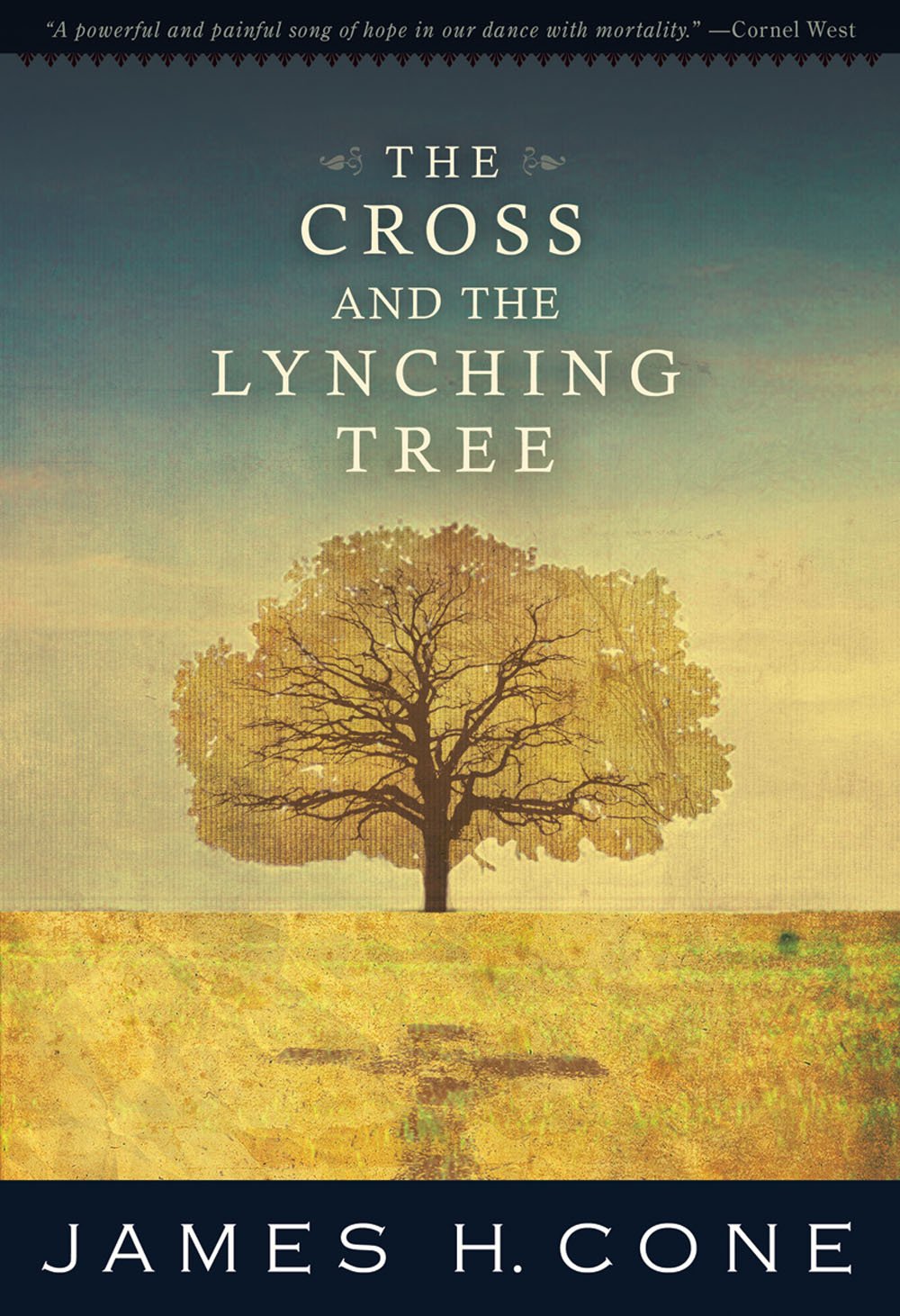
Lent 2015 - The Cross and the Lynching Tree - Chapter 1

NOTE: Throughout these blog posts, I will mostly be able to write through the narrow lens of my own experience. I am not well versed in critical theory, the study of race, or the discipline of history. Although I consider myself a practical theologian and a Christian, I would not say that I have the skill set of someone schooled in doctrinal, dogmatic or systematic theology or even ethics. I will probably stumble over ways of talking about what I am reading and my reactions to it. With these caveats, I would like to think that this is an appropriate place from which to engage this book. I would hope that this book would be read in churches and seminaries, classrooms and even homes, by people not well-versed in any of the disciplines I mentioned above. I am reading this book for the first time, and so my words, though I hope reflective and thoughtful, will be first time reactions. 

A general introduction to this blog series can be found here, and an index and schedule for the series can be found here.

*****

I have to admit that I'm struggling to write a blogpost about this first chapter. The main difficulty is that no words of mine could replace the experience of reading these stories of hope in the midst of lynching. And that is the point of this book. As Cone writes in the introduction:

"...my primary concern is to give voice to black victims, to let them and their families and communities speak to us, exploring the question: how did ordinary blacks, like my mother and father, survive the lynching atrocity and still keep together their families, their communities, and not lose their sanity? ... I believe that the cultural and religious resources in the black experience could help all Americans cope with the legacy of white supremacy and also deal more effectively with what is called the 'war on terror.' If white Americans could look at the terror they inflicted on their own black population—slavery, segregation, and lynching—then they might be able to understand what is coming at them from others. Black people know something about terror because we have been dealing with legal and extralegal white terror for several centuries." (xviii-xix)

Monday, February 23, 2015

Lent 2015 - The Cross and the Lynching Tree - Introduction

NOTE: Throughout these blog posts, I will mostly be able to write through the narrow lens of my own experience. I am not well versed in critical theory, the study of race, or the discipline of history. Although I consider myself a practical theologian and a Christian, I would not say that I have the skill set of someone schooled in doctrinal, dogmatic or systematic theology or even ethics. I will probably stumble over ways of talking about what I am reading and my reactions to it. With these caveats, I would like to think that this is an appropriate place from which to engage this book. I would hope that this book would be read in churches and seminaries, classrooms and even homes, by people not well-versed in any of the disciplines I mentioned above. I am reading this book for the first time, and so my words, though I hope reflective and thoughtful, will be first time reactions. 

A general introduction to this blog series can be found here, and an index and schedule for the series can be found here.

*****

Take a moment to read this NYtimes article and these responsive letters. Sit with them for awhile.

Okay. Now gauge your response. Are you shocked? Outraged? Numbed? Unsurprised? What emotions does this information evoke in you? Guilt? Anger? Sadness? Pity? In some ways, your response will be shaped by the extent to which the history of lynching in the United States has been taken up as a part of your own history.

Wednesday, January 6, 2010

Thoughts on Issues in the Theology of Scripture Part 1: The Initial Essay


Greetings again, faithful readers. Reprinted below you can find my initial essay for my course in Issues in the Theology of Scripture. If you want to know more about the impetus behind this series of posts and the course that inspired them, please read this post.

Our professor assigned us a 1500 word essay (approximately 4 and 1/2 pages) addressing the topic "What do we mean when we say that the Bible is true and what methods of interpretation help us to appreciate its truthfulness" as if we were discussing it with an educated layperson. This assignment, to be blunt, was agonizing. So many thoughts ran through my head, I didn't know where to start. How could I address this huge topic in four pages?

I ended up starting with a blank slate, as it were, answering the question by simply picking up the Bible and looking at it, then slowly weaving in historical and theological questions as they arose from my ponderings. This ended up producing what I think is a coherent, self-contained essay, but it also left me feeling strange. Only after being in conversation with others this morning in class did I realize that I had left out two of the most important things about the Bible to me: a) story and b) a relationship with Jesus Christ, the cornerstone and primary revelation of God. Wow! What an oversight. But somehow they didn't arise in the flow of the essay and, as I had already written 1900 words and had to cut down, I couldn't shove them in without breaking the essay. I will write a post, possibly this weekend, containing my thoughts on these two very, very important things to me and I also might include them in my final paper for the course, which is a revision of this initial essay. I will post that final paper here as well.

For now, peruse my thoughts as derived from a broad-based view of just picking up the Bible and thinking about it organically. Please leave comments below. (Be nice if these comments happen to lead to strenuous discussion).

Thanks in advance faithful readers! Oh, and if you want another version of this essay, please read the one posted by my friend Jeff over at his blog: Theological Mishaps.

-----------------------------

"What do we mean when we say the Bible is 'true,' and what methods of interpretation help us to appreciate its truthfulness?"

This question is difficult because it would be so simple to answer: it is true because it is true and people have said so for centuries. Yet this is not satisfactory for skeptics who are unsure of the Bible and historians who analyze it. The Bible has been used to perpetrate horrible wrongs: slavery, torture, war. The observable fact of denominationalism demonstrates that different people also find different truths, or different slants on the same truth in the Bible.

Perhaps it would be helpful to begin by describing what we can accurately say about the Bible through cursory observation and reading of a Bible most people could obtain. Firstly, it is a book, words written on a page. This indicates that someone wanted to preserve its contents in a medium more permanent than one person’s memory, either for personal reasons, or for the benefit of others. Secondly, it is a collection. Its table of contents attests to two testaments and sixty-six books. It is not a single piece of literature written from one person’s imagination, but an assortment of writings gathered together either by one person or a group of people who think that its various parts relate to each other. This book was gathered for reasons involving preservation and relation. Whether or not the original authors of each book intended their works to be read by others, those who have maintained the collection have copied and distributed it, indicating that their reason for its preservation is that it might be shared. So, how do its disparate parts relate?

The Bible professes to span from the creation of the world and the history of a single family, through a nation, to the life of a particular man and the community he started. It contains history, biography, narrative stories, aphorisms, poetry, and letters. Its larger setting is Earth, though some scenes occur wherever God resides; its more immediate setting is the land surrounding the Mediterranean Sea. Its cast numbers in the thousands. The most common thread in this complex collection is that every book gives an account of either human encounters with God or human relationships with other humans. Though each book was composed for a different reason, mostly unknown to us, we can at least say with confidence that this common thread runs throughout.

So, this collection of works has been preserved for thousands of years in order to share its thoughts on human-divine and human-human relationships. A working definition of whether or not the Bible is true, then, might involve asking whether or not it accurately portrays human-divine and human-human relationships or describes ways in which these relationships might be improved. Now a host of other troubles appear. Some people do not believe God exists. For them, the Bible cannot be true in our definition because it describes something that does not exist. They might speak of its truthfulness by noting the usefulness of its thoughts on morality and ethics. Certainly the Bible contains much about morality, setting forth both good and poor examples of right living. Yet leaving God out of the book would mean cutting out more than half of its contents. So, though morality and ethics are certainly an integral theme of the Bible, they are not its primary theme.

Other people attempt to prosecute or defend the Bible’s truthfulness based upon its historical accuracy. Yet, not only do there seem to be contradictory accounts in the Bible (two chapters on creation in stark contrast; two accounts of monarchies in 1 and 2 Kings and 1 and 2 Chronicles that differ in a few details; four gospels with similar traits, but which are also wildly dissimilar), but also the copies that we have of the Bible contradict each other. Some words differ; some grammatical markings have been altered. It was also written in several different languages, most considered “dead,” and one (Hebrew) that was originally written without vowels. It is difficult to tell, sometimes, what the Bible is attempting to express, much less judge its historical accuracy. Yet, in larger ways, and in comparison with other documents from the Mediterranean area, it does describe many historical things accurately: places, people, events. In this way also, it can be spoken of as true, but not without qualifications

Most, however, when speaking of the Bible as true, would describe in a way harder to pin down with facts, figures or laws. For them, its truth lies in how it can speak in their lives. When they view the world through the Bible, things fall into place and their life makes sense. It helps them to grasp onto something outside of themselves; it draws them together with others in community; it gives them a purpose in life; it gives some explanation, or at least comfort when nonsensical and painful things occur. They have tested its claims about divine-human and human-human relationships in the field of life and found them to be accurate. It improves their relationship with other people and with the God in whom they believe. This is the primary sense in which many people say that the Bible is true.

Yet, the Bible has been used to break relationships and cause pain. How can the Bible’s adherents speak of its truth in the face of this misuse and how can they avoid these mistakes themselves? Careful attention to several points previously mentioned might provide clues. Firstly, they must remember that it is a collection, and this includes understanding its seeming contradictions. A better word, with a different connotation might be inserted here: not contradictory, but complementary. Certainly those who gathered the Bible could see with four gospels and two creation accounts side by side that there were differences. We can assume that they intended to include multiple voices and points of view. Another way of saying this is that one of the things the Bible expresses about divine-human and human-human relationships is that various people describe these relationships differently and that these different voices must not be sidelined, but considered together. If this is so, we cannot ignore reading the Bible as a whole, and where contradictions occur, we must try not to force a unified answer, but see how the accounts interact and to comprehend the song that the chorus of voices is singing.

We also cannot ignore the particularity of the Bible. It was written by particular people in particular settings in a particular time in history. Mostly, these people were not the majority. The Israelites were slaves in Egypt, marginalized. Even when they escaped and began their own country, they were always surrounded by greater powers that eventually conquered and enslaved them. As Jews, Jesus and his followers were also in the minority, under the rule of the Roman Empire. Jesus often disagreed with the Jewish authorities, putting himself and his followers on the outside. As Jesus’ followers began spreading his word to Jew and Roman and everything in between, they eventually created a new religious group, one not tied to nation or ruler, something unusual in the Roman Empire, making them once again a minority. In order to understand what the Bible says about relationships, we must understand its context and how it is different from ours. This also entails trying to grasp the languages in which the Bible was written and the cultures that gave it context, despite the difficulties of doing so.

Finally, these works were read in gatherings, discussed in groups, commented on by many. Though the Bible can be read for personal spiritual nourishment, it is best read in conversation with others. Again, its complementary nature encourages this. The surest way of avoiding misinterpretation of the Bible is by reading it in conversation. These conversation partners, as the previous paragraphs subtly imply, include the skeptics and historians, who force us to pay attention to its context and moral and ethical themes, to look at it closely and carefully.

Much more could be said about the Bible and its truthfulness. We have not even touched upon the books known as the Deutero-canonicals that are included in some Bibles and not in others. We have not discussed the ways the Bible has been and continues to be a driving force in culture and the abuses and interpretations that arise from this. We have not mentioned the differences that crop up in speaking of the truth of the Bible as it is translated into multiple cultures and languages. Yet, in each of these cases, the overarching lessons of reading the Bible carefully, contextually and in conversation and community are useful in mitigating some of the thornier issues and allow us to say with confidence that the Bible truthfully and accurately portrays divine-human and human-human relationships.

The Beginning of a New Blog Cycle: Thoughts on Issues in the Theology of Scripture


Well, it has been a long time since I've blogged. Life became extremely crowded last semester, what with a 15-hour a week job, a 15-hour a week internship and three intense classes (oh, and living life and loving my wife as well). Right now I'm taking a month-long course on Issues in the Theology of Scripture, which meets for three hours in the morning, leaving a little bit more time on my schedule. I've decided that this class, which so far has been wonderfully thought-provoking, might provide some good fodder for blogging. What I'm proposing to do is to post thoughts on the course (which began on Monday and so far has involved writing a 1500 word essay) every day that I can. I've asked my professor -- who will be referred to as Shane in the posts -- if I can quote him, or refer to his ideas if they are the seeds of my thought for these posts, and he has agreed that I can refer to him as long as the references are not wholesale transcriptions of his lectures or audio files (which they won't be) and that I accurately represent his views.

I hope to ponder the theme of the course, which Shane put before us on Monday, of wandering around in the gap between theology and biblical studies. I will go more into detail of what this gap entails and why it exists as Shane explains it to us in class, but in brief, let's just say that in higher education there exists a separation of disciplines. In most higher ed institutions divisions are placed between the sciences and the arts and the humanities, and also within each of these between history and english or philosophy, for instance. In Seminary, you often see this division of disciplines into: Biblical Studies, Practical Theology, Theology and Church History. The difficulty that sometimes arises in pursuing these studies is that the folk in the Biblical Studies department take very seriously the questions that have come from a historical-critical way of looking at the Bible: reading texts in original languages, studying their cultural, historical and political contexts, trying to work out how the texts were written, formed, passed down, etc. This method is a product of the Enlightenment. Meanwhile, the Theology department spends perhaps a class period on a theology of scripture, often avoiding questions that deal with the difficulties presented by the historical-critical method. These problems sometimes involve the inerrancy or infallibility of the Bible, the contradictions that can be found in the Bible (or seeming contradictions, I'm sure we'll get into this later), the grammatical differences between different copies of the Bible, what it means for the Bible to be divinely inspired and how this bears out when the Bible gets into human hands or when it is translated into different languages. So, the Biblical Studies department takes these questions seriously, but they are often in the background and understanding why these questions are important and what they mean for the life of faith and everyday living is not considered. Or, on the other hand, the Theology department discusses briefly a theology of scripture but does not consider how this might come to bear in practice or what a theology of scripture that takes into account the questions might look. This course tries to put these background questions into the foreground and to address them in a thoughtful and sensitive way.

It also attempts to equip students with tools to read what Shane calls the "Barnes and Noble School of Theology and Ancient Scriptures." By this he means the popular books that are widely available in major bookstores and have entered the general culture and conversation: Bart Ehrman's Misquoting Jesus, or Dan Brown's The DaVinci Code, for instance. While these books bring up interesting points that speak to the Historical-Critical method, the outcomes of their discussion can be misleading and they do not always speak to the theological or practical outcomes of the difficulties they mention. If you want a good introduction to this debate, check out Stephen Colbert's interview with Bart Ehrman, which Shane used as a catalyst for his initial lecture. The video is embedded below:


So, now that you know a bit about the course, you can follow along on this blog for the next few weeks as I share with you what I'm learning and what I'm thinking. I'll begin with the essay that we had for the course, which answers the question: "What do we mean when we say that the Bible is true, and what methods of Biblical interpretation help us to appreciate its truthfulness." This essay will be revised at the end of the semester. I'll post it in a separate post from this.

Thanks, as always, for sticking with me faithful readers!

Wednesday, October 15, 2008


Hi everyone.  I just wanted to get out on the front page a conversation started by my latest blog post.  I think it's a good one to have.  My friend Laurie posted a wonderful, balancing response to my post yesterday and I again responded to her.  Be safe, everyone, and watch the debate tonight!  May we live in love and not fear.


Marc, I respect your well-thought out, researched post, just as I respect your political position. I agree that fear and hate are terrible, divisive forces, but I don't agree that either candidate is trying to drive wedges of fear and hate into America. I consider the questions regarding Senator Obama's past associations valid, just as I consider questions regarding McCain's pas associations valid. We are so influenced by those around us; we should be able to ask about those influences.

What I can't fathom is how the supporters of both candidates can let their fervor turn so ugly. The recent McCain rally was well-covered, and we're both familiar with that, but I found this article that identifies some ugly, sad and scary behaviors of Senator Obama's supporters:

Townhall Article, Obama Supporter's Rage

No politician, no president, can change this. Other than just being good and decent people ourselves, how do we and our friends change this?

My Response:

Laurie,

Thank you for adding some levity and balance to the post. Those actions by Obama's supporters were NOT well covered and I hadn't found anything about them. So again, thank you.

I think I see a different fault in this situation in both men. I would like to make a slight nuance of a difference between what you perceived me saying about John McCain and what i would really like to say, and then to make a comment about the difference between this and the fault that I see Obama having. I think that I didn't clearly state what I see McCain doing wrong. I honestly don't think that he's trying to put a wedge in, or trying to divide people and spread hate. I think he's a much better man than that. I do think, however, that in trying to win this political election, he has done some things, I believe, without as much foresight as they needed, that have stoked the fires of hate that were already there. People already questioned Obama's patriotism, people already wondered whether Obama was Muslim, people wondered about whether or not Obama was born in the United States, people wondered whether or not they should fear him. By using this specific line of attack, which might have an arguably viable point about Obama's judgment, McCain, I hope unwittingly, added fire to these flames. If you watch the add on McCain's website about Ayers and Obama, it calls Obama dangerous, and constantly has pictures of him next to someone that they call a terrorist. That word-picture association sends a strong, subliminal message that, perhaps, Obama could be a terrorist, especially when coupled with Sarah Palin's remarks that Obama was "palling around with terrorists," and McCain's remarks that Obama had started his campaign in the living room of a terrorist. It also makes the subtle assumption that Barack Obama approves of these terrorist actions, and, in fact, this is what McCain's question of "judgment" is asking. This would make Obama seem like a person who would want to bomb the Pentagon, making him seem like a terrorist. Again, I don't think that this was McCain's intent, and I hope that it wasn't, but what I worry about is the foresight that was lacking in approving and condoning the use of those images and specific rhetoric to attack Obama. It also makes me worry about McCain, who, as an honorable man, once said that he would rather lose the election than lose the Iraq war. But now, he's pulling out all the stops to win the election (as anyone extremely desirous to win would). This, however, I think has led to some missteps that are potentially harmful and stoke the fire of hatred.
Obama, on the other hand, obviously hasn't reined in these supporters of his who are doing these horrible things. Now, people are hard to control, and people on all sides of the political spectrum get crazy over their politics. So I do not fully fault either candidate for the action of their constituents. Obama should definitely react and try to calm down his supporters. However, as far as I can tell (and I tried to read as many speeches of both men and watch as many ads as possible), Obama's rhetoric has not added kindling to the misguided actions of his supporters. He has not implied anything about Sarah Palin's stance on abortion. He has not linked Palin or McCain to anyone that should be stoned for any action. While, again, I think Obama should be more proactive about making sure that things like this don't happen and that he should apologize for what his supporters have done, Obama's rhetoric has not supported their actions. McCain's rhetoric was not thought through enough for it not to support hateful actions.
Regardless, both men have said very partisan things. Both men have bashed the other's political party. Both men have told untruths about each other. And I think this is where we come in. Not only can we lead decent lives, but we can also spread the word about the truths of the campaign. I highlighted McCain's arguments against Barack Obama because I saw them as potentially dangerous and they were the thing, obviously, that was being covered in the news and that i had the most access to. But we can tell the truth about both Candidates. We can talk about how both are good men. We can look at the way they deal with issues and with other people as a way of discerning between them. We can spread love as opposed to hate. I regret that possibly my previous post was construed as saying something overly negative about McCain. I didn't not mean it to be that way. I do believe that he is a good, noble man at heart, and that's what is so sad to me, that his campaign has come to the point where his rhetoric could be misconstrued rather easily as supporting hateful things. So. All that to say, thank you for your post, again, and for adding to the conversation.


Sunday, October 12, 2008

To Disobey One's Conscience Is Neither Just Nor Safe.


I'd like to talk about the following videos and articles.  If you want the post that follows to make full and complete sense, please watch them and read them before you read the rest of the post.


I'm sorry.  I'm sure that's a lot to digest.  I know it was a lot for me.  I've been haunted by these things for the past two days.  It's been hard for me to continue with homework, hard for me to work with all of this weighing on my mind.

I've resisted stating my opinions on this political race for a long time.  Here and there, I've scattered seeds of how it might relate to fear and love and how we ought to act.  But my conscience calls me to do more.  And, as Martin Luther (the monk-turned reformer) once said:  "To disobey one's conscience is neither just nor safe.  God help me.  Amen."

I am afraid.  I will tell you that truth right now.  I am afraid of our fear.  Fear can do horrible things, can cause horrible things.  And fear leading to hatred is even worse.  As Martin Luther King Jr. once said:
Like an unchecked cancer, hate corrodes the personality and eats away its vital unity.  Hate destroys a man's sense of values and his objectivity.  It causes him to describe the beautiful as ugly and the ugly as beautiful, and to confuse the true with the false and the false with the true.  Power at its best is love implementing the demands of justice.  Justice at its best is love correcting everything that stands against love.
-Strength to Love, 1963

What I read in these articles, what I see in these videos, is fear turned to hate.  I readily admit that many of the writers and videographers of these pieces are probably biased.  I readily admit that I might be biased.  But I cannot ignore the plain fact that the people in these articles and videos, yelling "terrorist," and "kill him," and "commie @3$*$#@" and a whole host of other things have been scared into hate.

It is the unfortunate nature of elections to divide us.  But when that division turns to hate, people get hurt.  I'm worried.

As a biracial child, the uncle of two beautiful quadri-racial boys (I think I just coined that term; their father is African American and Central American, their mother Chinese and Dutch) I am struggling against an overwhelming fear.

I cannot, in good conscience, support John McCain because of his lack of good judgment, and the rhetoric of his campaign.  Let me clarify that I am not starry-eyed over Barack Obama either.  He has made many mistakes, and told many half-lies and untruths and has said many partisan things.  But the tenor of his arguments and the driving force that I see in his campaign is one of hope and not anger, calm and not strife, unifying and not dividing.  Over the last few weeks, however, I have become more and more convinced that John McCain, a good man, a strong man, an honorable man, has been corrupted by his own campaign.  As much as he has a right to say that he has been a maverick (and he has truly reached across the aisles and bucked the system), I think that he is no longer.  The nasty politics of Washington have tainted him.  More than this, I think that he lacks foresight.

I question his judgment because of what has happened recently in his campaign.  Could he not have foreseen that relating Obama to a Terrorist, questioning if we know who Obama is, playing down his patriotism and calling him "that one," during the debate could lead to hate?  Could he not have foreseen that using a William Ayers line of attack on a presidential candidate who is mistakenly called a muslim and whose name is often linked to a known terrorist, simply by the changing of one letter, would lead to people wondering if Obama is a terrorist, fearing him, hating him, calling for his death?  Could he not have foreseen, or at least controlled the rhetoric of the people who surround him, who pray that God would protect God's honor by defeating Obama, who tangentially relate Obama to "bad guys," who "pal around with terrorists," who send smear after smear against Obama, who incite crowds by linking Obama to Osama with bombing the Pentagon?  McCain, in his ads, has called on the American people to question the judgment of his opponent.  It has only caused me to question McCain's.

And even though I applaud McCain for trying to tone down the rhetoric, it obviously hasn't worked, and he still, a day later, uses the same tactics.  His running mate uses the same tactics.  Other people in his party use the same tactics.  And McCain has the audacity to mention that he doesn't want to tone down his constituents' ferocity, just ask them for more respect?  It's the ferocity that scares me.

I worry for Obama and his family, and my family.  In a world where racism still lives, where some jump at any chance to condemn and fear and hate and kill, I fear.  I do not think that everyone is acting in fear.  I do not believe that most people would kill out of hate.  But it only takes a few people with a desire to kill to cause incomprehensible damage in this world.

For those of you reading this blog who are questioning who Barack Obama is, whether he is related to terrorists, whether he was actually born in the United States, whether he is secretly trying to ruin the U.S., I've collected some facts for you.  If you've received a chain e-mail linking Obama to any number of questionable people and questionable things, I've covered that for you too.  Here are a few links:


All of these links are to Factcheck.org, a wonderful website that has a whole host of articles that (as impartially as possible) seek to debunk lies about both candidates.  Believe me, there are a lot of things that Barack Obama has said that are misleading or downright false, and FactCheck.org calls him out on them.  As far as I can tell, this website (recommended by many magazines and websites, both liberal and conservative and everything in between) is trying to get to the real truth behind the half-truths and political meanderings.  

I'm not asking you to vote for Barack Obama.  This post is not a political endorsement of any kind.  Please, follow the issues, find out what qualities you respect in a leader, make sure you really know what's going on and then vote for the candidate in whom you believe.  But I am calling you to search out your own heart, to look at the rhetoric that you have been listening to, to re-read the e-mails you've probably been sent.  I'm asking you to consider what those e-mails do to you, whether they make you angry and afraid.  I'm asking you to try to conquer your fear, as I am trying, with love.  I'm asking you to make an effort, every day, to learn the truth, and more importantly, to spread the truth.  I'm asking you to stop others when they spew forth hate, about either candidate.  I'm asking you to start standing up for those who have been oppressed.  I'm asking you to put a stop to the downward moral and ethical spiral that seems to be taking over our nation and our world.  It stops with us.  It stops now.  Here I stand; I can do no other; I cannot and will not recant.  God Help me, Amen.

Monday, October 6, 2008

A Change in Tactics (or Is That Strategies?)


During my Writing as Faith Practice course this morning I had a revelation, of sorts.  Really, it was an ongoing realization that began last week with a meeting with my Field Education Mentor (a pastor who is guiding me through the experience of working a 9 month internship at a church).  I realized that I really, truly am afraid of being misinterpreted.  I utterly despise being unclear, or being seen as unclear, or having my words twisted.  This is something, I think, that many people fear.  It is tied, I believe, to my fear of failure, and, even further back, to a desire for acceptance.  I want to be accepted, and feel that I will be shunned if I fail (even though I know this is not true, it is still a fugue roiling round in the back of my mind).  A part of failing is failing to communicate.  Another is being perceived to be something else, something that I don't want to be, and being perceived as a failure through that.

Let's be concrete.  Say that I write on this blog an analysis of a particular work of literature, perhaps THE BROTHERS KARAMAZOV.  In doing so, I write something that misrepresents my view of Dostoyevsky and his writings.  People then comment on the blog about my misrepresentation.  I realize that what I wrote was not true to what I desired to evoke.  I feel failure.

Now, this is a small failure, certainly, but one of the things that I fear.  I, perhaps too readily, depend upon public opinion for validation of the things I do.  I know this about myself, and have known it for some time.  Oddly enough, one of the things I have been battling is this feeling that I am less passionate about things because I have not let myself take risks, and have tried to block out other's opinions of myself.  By not being as emotionally available as I could be, I feel that I have, to some extent, blocked off my passions.  This has worried me.  I am caught between acknowledging what people say about me, hearing their true concerns and then viewing my life from an objective, healthy point of view, and putting up defense walls and trying to be everything to everybody.

Let me put it this way: I want to try to hear what others say and to look at my life through their eyes, yet I want what they say about me to be good (or at least neutral).  So, while I am more open to others (in some respects, as in listening to them), I am actually also less open to them ( as in not revealing my true, full self to them).  And I feel that this has also affected the way I view and interact with God.  I am open to God, to new words, to new directives, to a new hope, but I am not open with God.  Perhaps that difference in preposition is truly what I am talking about, being open to, but not open with.  This leaves me with a numbed sense of passion, and, in some respects, has led to the difficult discernment problem in which I find myself.

Now, in my class this morning we discussed the necessity of good writers to be vulnerable, to dive in, both to reading other great writers, and to dialoguing with those writers, and to being misinterpreted by their readers.  A good writer must both be open to and open with.  I am a self-conscious over-editor.  Every sentence I write I immediately analyze for accuracy (I just did it then, I added a word to make the sentence make more sense).  This means that when I finish writing (if I get into writing at all) I often end with something less personal, less emotional, more filtered.  I am constantly worried about what others will think of my writing, whether or not it is good enough for others to read.

This blog is an attempt to force me to simply put writing out there and to allow it to be responded to (AH!  dangling preposition.  I tried to think of a way to fix this sentence, but couldn't since I'm headed to class in 10 minutes.  Wait...."to simply put writing out there and to allow others to respond to it."   Still not the most concise or most-well-written sentence.  Sigh.  I included this as a snippet of what goes on in my mind as I write).  Meanwhile, I initiated early on in this blogging a policy (or tactic, or strategy...first presidential debate anyone?) of comment moderation.  This ties to my fear of being misunderstood or misrepresented.  So, I have taken the small, but for me, bold step of removing comment moderation.  I can still delete comments (I believe) but now your comments should appear right away, without any screening from me.

One small step for Marc...

Thanks for reading, O Faithful Reader!