Showing posts with label world events. Show all posts

Monday, March 2, 2015

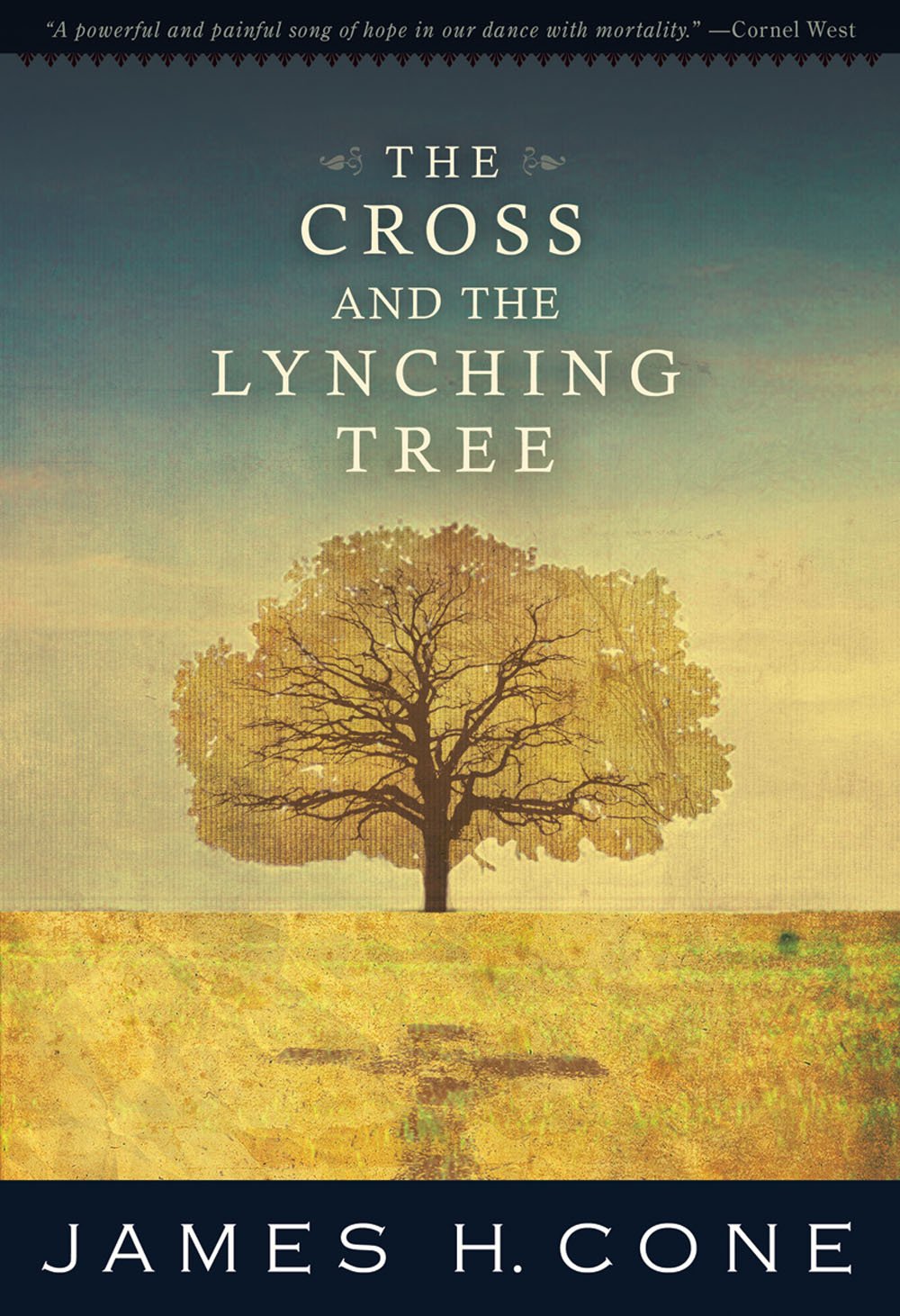
Lent 2015 - The Cross and the Lynching Tree - Chapter 1

NOTE: Throughout these blog posts, I will mostly be able to write through the narrow lens of my own experience. I am not well versed in critical theory, the study of race, or the discipline of history. Although I consider myself a practical theologian and a Christian, I would not say that I have the skill set of someone schooled in doctrinal, dogmatic or systematic theology or even ethics. I will probably stumble over ways of talking about what I am reading and my reactions to it. With these caveats, I would like to think that this is an appropriate place from which to engage this book. I would hope that this book would be read in churches and seminaries, classrooms and even homes, by people not well-versed in any of the disciplines I mentioned above. I am reading this book for the first time, and so my words, though I hope reflective and thoughtful, will be first time reactions. 

A general introduction to this blog series can be found here, and an index and schedule for the series can be found here.

*****

I have to admit that I'm struggling to write a blogpost about this first chapter. The main difficulty is that no words of mine could replace the experience of reading these stories of hope in the midst of lynching. And that is the point of this book. As Cone writes in the introduction:

"...my primary concern is to give voice to black victims, to let them and their families and communities speak to us, exploring the question: how did ordinary blacks, like my mother and father, survive the lynching atrocity and still keep together their families, their communities, and not lose their sanity? ... I believe that the cultural and religious resources in the black experience could help all Americans cope with the legacy of white supremacy and also deal more effectively with what is called the 'war on terror.' If white Americans could look at the terror they inflicted on their own black population—slavery, segregation, and lynching—then they might be able to understand what is coming at them from others. Black people know something about terror because we have been dealing with legal and extralegal white terror for several centuries." (xviii-xix)

Wednesday, January 6, 2010

The Beginning of a New Blog Cycle: Thoughts on Issues in the Theology of Scripture


Well, it has been a long time since I've blogged. Life became extremely crowded last semester, what with a 15-hour a week job, a 15-hour a week internship and three intense classes (oh, and living life and loving my wife as well). Right now I'm taking a month-long course on Issues in the Theology of Scripture, which meets for three hours in the morning, leaving a little bit more time on my schedule. I've decided that this class, which so far has been wonderfully thought-provoking, might provide some good fodder for blogging. What I'm proposing to do is to post thoughts on the course (which began on Monday and so far has involved writing a 1500 word essay) every day that I can. I've asked my professor -- who will be referred to as Shane in the posts -- if I can quote him, or refer to his ideas if they are the seeds of my thought for these posts, and he has agreed that I can refer to him as long as the references are not wholesale transcriptions of his lectures or audio files (which they won't be) and that I accurately represent his views.

I hope to ponder the theme of the course, which Shane put before us on Monday, of wandering around in the gap between theology and biblical studies. I will go more into detail of what this gap entails and why it exists as Shane explains it to us in class, but in brief, let's just say that in higher education there exists a separation of disciplines. In most higher ed institutions divisions are placed between the sciences and the arts and the humanities, and also within each of these between history and english or philosophy, for instance. In Seminary, you often see this division of disciplines into: Biblical Studies, Practical Theology, Theology and Church History. The difficulty that sometimes arises in pursuing these studies is that the folk in the Biblical Studies department take very seriously the questions that have come from a historical-critical way of looking at the Bible: reading texts in original languages, studying their cultural, historical and political contexts, trying to work out how the texts were written, formed, passed down, etc. This method is a product of the Enlightenment. Meanwhile, the Theology department spends perhaps a class period on a theology of scripture, often avoiding questions that deal with the difficulties presented by the historical-critical method. These problems sometimes involve the inerrancy or infallibility of the Bible, the contradictions that can be found in the Bible (or seeming contradictions, I'm sure we'll get into this later), the grammatical differences between different copies of the Bible, what it means for the Bible to be divinely inspired and how this bears out when the Bible gets into human hands or when it is translated into different languages. So, the Biblical Studies department takes these questions seriously, but they are often in the background and understanding why these questions are important and what they mean for the life of faith and everyday living is not considered. Or, on the other hand, the Theology department discusses briefly a theology of scripture but does not consider how this might come to bear in practice or what a theology of scripture that takes into account the questions might look. This course tries to put these background questions into the foreground and to address them in a thoughtful and sensitive way.

It also attempts to equip students with tools to read what Shane calls the "Barnes and Noble School of Theology and Ancient Scriptures." By this he means the popular books that are widely available in major bookstores and have entered the general culture and conversation: Bart Ehrman's Misquoting Jesus, or Dan Brown's The DaVinci Code, for instance. While these books bring up interesting points that speak to the Historical-Critical method, the outcomes of their discussion can be misleading and they do not always speak to the theological or practical outcomes of the difficulties they mention. If you want a good introduction to this debate, check out Stephen Colbert's interview with Bart Ehrman, which Shane used as a catalyst for his initial lecture. The video is embedded below:


So, now that you know a bit about the course, you can follow along on this blog for the next few weeks as I share with you what I'm learning and what I'm thinking. I'll begin with the essay that we had for the course, which answers the question: "What do we mean when we say that the Bible is true, and what methods of Biblical interpretation help us to appreciate its truthfulness." This essay will be revised at the end of the semester. I'll post it in a separate post from this.

Thanks, as always, for sticking with me faithful readers!

Monday, November 3, 2008

The Margins


Some thoughts after class and a few other things that have been swirling around in my head.

Hebrews 11: 13-16 “All of these died in faith without having received the promises, but from a distance they saw and greeted them. They confessed that they were strangers and foreigners on the earth, or people who speak in this way make it clear that they are seeking a homeland. If they had been thinking of the land that they had left behind, they would have had opportunity to return. But as it is, they desire a better country, that is, a heavenly one. Therefore God is not ashamed to be called their God; indeed, he has prepared a city for them."

I have found myself to be a man on the margins, a member of a small minority taken from a large majority, on a sojourn in a foreign land. I am an Asian man, a minority in the United States, only 4.2% according to the latest census. Yet, considering the whole world, Asian people are in the majority, they are the largest growing group. India and China alone make up almost 1/3 of the world’s population. I am a member of a small minority, taken from a large majority, on a sojourn in a foreign land. While I was living in Salt Lake City, UT, I was in the minority as a Christian. The majority of people in Salt Lake are members of the Church of Jesus Christ of the Latter Day Saints. Yet, considering the United States as a whole, Christians are in the majority (at least for now). I am a member of a small minority, taken from a large majority, on a sojourn in a foreign land.

Because of this I find great comfort in the affirmation that our God chooses the least and the lost, the outcast, the marginalized and the outsider. God chose a small nation, beaten down by many, the slave and servant and vassal state of a rotating who’s who of nations – Egypt, Babylon, Assyria, Greece, Rome – to be the purveyors of glory and salvation and the word of God. God chose to come as a Jewish man from the backwards town of Nazareth (“what good could ever come from there?” Philip asks). God chose fishermen and tax collectors and sinners and lepers as friends and disciples. Christianity, lest we forget, was once the minority. Christianity, lest we forget, was once persecuted because it was not tied to any national identity, because it was a kingdom not of this world.

In fact, I believe that this has been one of Christianity's core problems. Once Christianity became THE state religion, the majority, the world power, things went utterly wrong with it. The Inquisition, the Crusades, Slavery – absolute power corrupting absolutely. The Church is not free from corruption. As much as this may sound un-American (come on, McCarthy) I can't wait for the day when Christianity is no longer the dominant religion in America. It scares me how Christians like James Dobson and his group Focus on the Family can put out letters like this.

Although the writer of this letter insists that Christians should not hope for persecution or for these things to happen, I say: BRING IT ON. I want to remember what it was like to be a child of a God of outcasts, members of a kingdom not of this world, sojourners looking for a better home.

So that is why, for me, the lyrics of a modern-day prophet hit so hard and so true:

A King and a Kingdom
Derek Webb
Appears on: Mockingbird

Who’s your brother, who’s your sister
You just walked past him, I think you missed her
As we’re all migrating to a place where our Father lives
‘Cause we married into a family of immigrants

[Chorus]
So my first allegiance is not to a flag, a country or a man

My first allegiance is not to democracy or blood

It’s to a King and a Kingdom

There are two great lies that I’ve heard

The day you eat of the fruit of that tree you will not surely die
And that Jesus Christ was a white, middle class Republican
And if you wanna be saved you have to learn to be like him


How can we realize that we are part of a family of immigrants, part of Abraham’s family who left home, part of the Israelites who traversed the desert, part of all of those wanderers who never saw the things that they had been promised? How can we reclaim our identity as a wandering people, as sojourners in a foreign land, children of a God who is the God of the outcast, co-heirs of a kingdom not of this world?

Wednesday, October 15, 2008


Hi everyone.  I just wanted to get out on the front page a conversation started by my latest blog post.  I think it's a good one to have.  My friend Laurie posted a wonderful, balancing response to my post yesterday and I again responded to her.  Be safe, everyone, and watch the debate tonight!  May we live in love and not fear.


Marc, I respect your well-thought out, researched post, just as I respect your political position. I agree that fear and hate are terrible, divisive forces, but I don't agree that either candidate is trying to drive wedges of fear and hate into America. I consider the questions regarding Senator Obama's past associations valid, just as I consider questions regarding McCain's pas associations valid. We are so influenced by those around us; we should be able to ask about those influences.

What I can't fathom is how the supporters of both candidates can let their fervor turn so ugly. The recent McCain rally was well-covered, and we're both familiar with that, but I found this article that identifies some ugly, sad and scary behaviors of Senator Obama's supporters:

Townhall Article, Obama Supporter's Rage

No politician, no president, can change this. Other than just being good and decent people ourselves, how do we and our friends change this?

My Response:

Laurie,

Thank you for adding some levity and balance to the post. Those actions by Obama's supporters were NOT well covered and I hadn't found anything about them. So again, thank you.

I think I see a different fault in this situation in both men. I would like to make a slight nuance of a difference between what you perceived me saying about John McCain and what i would really like to say, and then to make a comment about the difference between this and the fault that I see Obama having. I think that I didn't clearly state what I see McCain doing wrong. I honestly don't think that he's trying to put a wedge in, or trying to divide people and spread hate. I think he's a much better man than that. I do think, however, that in trying to win this political election, he has done some things, I believe, without as much foresight as they needed, that have stoked the fires of hate that were already there. People already questioned Obama's patriotism, people already wondered whether Obama was Muslim, people wondered about whether or not Obama was born in the United States, people wondered whether or not they should fear him. By using this specific line of attack, which might have an arguably viable point about Obama's judgment, McCain, I hope unwittingly, added fire to these flames. If you watch the add on McCain's website about Ayers and Obama, it calls Obama dangerous, and constantly has pictures of him next to someone that they call a terrorist. That word-picture association sends a strong, subliminal message that, perhaps, Obama could be a terrorist, especially when coupled with Sarah Palin's remarks that Obama was "palling around with terrorists," and McCain's remarks that Obama had started his campaign in the living room of a terrorist. It also makes the subtle assumption that Barack Obama approves of these terrorist actions, and, in fact, this is what McCain's question of "judgment" is asking. This would make Obama seem like a person who would want to bomb the Pentagon, making him seem like a terrorist. Again, I don't think that this was McCain's intent, and I hope that it wasn't, but what I worry about is the foresight that was lacking in approving and condoning the use of those images and specific rhetoric to attack Obama. It also makes me worry about McCain, who, as an honorable man, once said that he would rather lose the election than lose the Iraq war. But now, he's pulling out all the stops to win the election (as anyone extremely desirous to win would). This, however, I think has led to some missteps that are potentially harmful and stoke the fire of hatred.
Obama, on the other hand, obviously hasn't reined in these supporters of his who are doing these horrible things. Now, people are hard to control, and people on all sides of the political spectrum get crazy over their politics. So I do not fully fault either candidate for the action of their constituents. Obama should definitely react and try to calm down his supporters. However, as far as I can tell (and I tried to read as many speeches of both men and watch as many ads as possible), Obama's rhetoric has not added kindling to the misguided actions of his supporters. He has not implied anything about Sarah Palin's stance on abortion. He has not linked Palin or McCain to anyone that should be stoned for any action. While, again, I think Obama should be more proactive about making sure that things like this don't happen and that he should apologize for what his supporters have done, Obama's rhetoric has not supported their actions. McCain's rhetoric was not thought through enough for it not to support hateful actions.
Regardless, both men have said very partisan things. Both men have bashed the other's political party. Both men have told untruths about each other. And I think this is where we come in. Not only can we lead decent lives, but we can also spread the word about the truths of the campaign. I highlighted McCain's arguments against Barack Obama because I saw them as potentially dangerous and they were the thing, obviously, that was being covered in the news and that i had the most access to. But we can tell the truth about both Candidates. We can talk about how both are good men. We can look at the way they deal with issues and with other people as a way of discerning between them. We can spread love as opposed to hate. I regret that possibly my previous post was construed as saying something overly negative about McCain. I didn't not mean it to be that way. I do believe that he is a good, noble man at heart, and that's what is so sad to me, that his campaign has come to the point where his rhetoric could be misconstrued rather easily as supporting hateful things. So. All that to say, thank you for your post, again, and for adding to the conversation.


Sunday, October 12, 2008

To Disobey One's Conscience Is Neither Just Nor Safe.


I'd like to talk about the following videos and articles.  If you want the post that follows to make full and complete sense, please watch them and read them before you read the rest of the post.


I'm sorry.  I'm sure that's a lot to digest.  I know it was a lot for me.  I've been haunted by these things for the past two days.  It's been hard for me to continue with homework, hard for me to work with all of this weighing on my mind.

I've resisted stating my opinions on this political race for a long time.  Here and there, I've scattered seeds of how it might relate to fear and love and how we ought to act.  But my conscience calls me to do more.  And, as Martin Luther (the monk-turned reformer) once said:  "To disobey one's conscience is neither just nor safe.  God help me.  Amen."

I am afraid.  I will tell you that truth right now.  I am afraid of our fear.  Fear can do horrible things, can cause horrible things.  And fear leading to hatred is even worse.  As Martin Luther King Jr. once said:
Like an unchecked cancer, hate corrodes the personality and eats away its vital unity.  Hate destroys a man's sense of values and his objectivity.  It causes him to describe the beautiful as ugly and the ugly as beautiful, and to confuse the true with the false and the false with the true.  Power at its best is love implementing the demands of justice.  Justice at its best is love correcting everything that stands against love.
-Strength to Love, 1963

What I read in these articles, what I see in these videos, is fear turned to hate.  I readily admit that many of the writers and videographers of these pieces are probably biased.  I readily admit that I might be biased.  But I cannot ignore the plain fact that the people in these articles and videos, yelling "terrorist," and "kill him," and "commie @3$*$#@" and a whole host of other things have been scared into hate.

It is the unfortunate nature of elections to divide us.  But when that division turns to hate, people get hurt.  I'm worried.

As a biracial child, the uncle of two beautiful quadri-racial boys (I think I just coined that term; their father is African American and Central American, their mother Chinese and Dutch) I am struggling against an overwhelming fear.

I cannot, in good conscience, support John McCain because of his lack of good judgment, and the rhetoric of his campaign.  Let me clarify that I am not starry-eyed over Barack Obama either.  He has made many mistakes, and told many half-lies and untruths and has said many partisan things.  But the tenor of his arguments and the driving force that I see in his campaign is one of hope and not anger, calm and not strife, unifying and not dividing.  Over the last few weeks, however, I have become more and more convinced that John McCain, a good man, a strong man, an honorable man, has been corrupted by his own campaign.  As much as he has a right to say that he has been a maverick (and he has truly reached across the aisles and bucked the system), I think that he is no longer.  The nasty politics of Washington have tainted him.  More than this, I think that he lacks foresight.

I question his judgment because of what has happened recently in his campaign.  Could he not have foreseen that relating Obama to a Terrorist, questioning if we know who Obama is, playing down his patriotism and calling him "that one," during the debate could lead to hate?  Could he not have foreseen that using a William Ayers line of attack on a presidential candidate who is mistakenly called a muslim and whose name is often linked to a known terrorist, simply by the changing of one letter, would lead to people wondering if Obama is a terrorist, fearing him, hating him, calling for his death?  Could he not have foreseen, or at least controlled the rhetoric of the people who surround him, who pray that God would protect God's honor by defeating Obama, who tangentially relate Obama to "bad guys," who "pal around with terrorists," who send smear after smear against Obama, who incite crowds by linking Obama to Osama with bombing the Pentagon?  McCain, in his ads, has called on the American people to question the judgment of his opponent.  It has only caused me to question McCain's.

And even though I applaud McCain for trying to tone down the rhetoric, it obviously hasn't worked, and he still, a day later, uses the same tactics.  His running mate uses the same tactics.  Other people in his party use the same tactics.  And McCain has the audacity to mention that he doesn't want to tone down his constituents' ferocity, just ask them for more respect?  It's the ferocity that scares me.

I worry for Obama and his family, and my family.  In a world where racism still lives, where some jump at any chance to condemn and fear and hate and kill, I fear.  I do not think that everyone is acting in fear.  I do not believe that most people would kill out of hate.  But it only takes a few people with a desire to kill to cause incomprehensible damage in this world.

For those of you reading this blog who are questioning who Barack Obama is, whether he is related to terrorists, whether he was actually born in the United States, whether he is secretly trying to ruin the U.S., I've collected some facts for you.  If you've received a chain e-mail linking Obama to any number of questionable people and questionable things, I've covered that for you too.  Here are a few links:


All of these links are to Factcheck.org, a wonderful website that has a whole host of articles that (as impartially as possible) seek to debunk lies about both candidates.  Believe me, there are a lot of things that Barack Obama has said that are misleading or downright false, and FactCheck.org calls him out on them.  As far as I can tell, this website (recommended by many magazines and websites, both liberal and conservative and everything in between) is trying to get to the real truth behind the half-truths and political meanderings.  

I'm not asking you to vote for Barack Obama.  This post is not a political endorsement of any kind.  Please, follow the issues, find out what qualities you respect in a leader, make sure you really know what's going on and then vote for the candidate in whom you believe.  But I am calling you to search out your own heart, to look at the rhetoric that you have been listening to, to re-read the e-mails you've probably been sent.  I'm asking you to consider what those e-mails do to you, whether they make you angry and afraid.  I'm asking you to try to conquer your fear, as I am trying, with love.  I'm asking you to make an effort, every day, to learn the truth, and more importantly, to spread the truth.  I'm asking you to stop others when they spew forth hate, about either candidate.  I'm asking you to start standing up for those who have been oppressed.  I'm asking you to put a stop to the downward moral and ethical spiral that seems to be taking over our nation and our world.  It stops with us.  It stops now.  Here I stand; I can do no other; I cannot and will not recant.  God Help me, Amen.

Sunday, September 21, 2008

Communing with Nature 5: Jenny Jump Musings


Well, here we are, finally, the end of my Jenny Jump posts.  It is hard to pull exact thoughts from an event that occurred three weeks ago, but I remember generalities and certain images flash through my mind.

Fear.  I wrote briefly about this in the last two posts, but I would like to elaborate on it here.  I freely admit that I was deeply afraid at moments on this trip.  Black bears are not normally a problem in the Wasatch and Uinta Mountain ranges of Utah (at least not that I can remember).  So, though I have been camping before, I've never had to think about bears.  Our first night in Jenny Jump, I lay awake for several hours after Sarah had finally gone to sleep, jumping at every noise, wondering if we'd left any meat residue on anything outside, pondering whether or not woven plastic and fiber-glass poles were enough to keep out a four-hundred pound bear.  Rest eventually came by way of shear exhaustion and the uncomfortable realization that if we were attacked by a bear, at least we were together and it was our time to go.  As I lay thinking the second night, my mind went to our distant ancestors, cave-dwellers, roaming nomads, sheepherders.  How could they have done it?  They must have either just been used to the fear, or must have had a higher tolerance for frayed nerves.  No wonder everything was turned into some type of deity.  No wonder so many of the first stories involved animals as characters.  Anthropomorphizing something frightening and strange, by its very definition, means to make something more human, more acceptable, more like us.  And communal stories of tricksters and lovers and the comedy of tragedy turn the frightening night into something known, something contained, something that can be passed on from parent to child, a secret.  When we can name something, we have power over it, we can classify it, make it more manageable.  

Now we live in a time when the mystery of the animal and the danger of the night have shifted.  We constantly assert our dominance over all of nature.  We have declawed our nightmares.  Yet we still cling to our old tactic of naming things, categorizing them, telling stories.  But now we tell these stories about each other, turn each other into archetypes.  Fear of animals has become fear of each other -- or perhaps the fear was there all along, but now that we have conquered one, the other has moved forward in our minds.  Tribalism has existed for millennia, of course, and prejudice right along with it.  Still, we are now fighting against our very "nature," that engrained habit that tells us labeling something makes it more safe and more close, even if it also creates an artificial distance between souls.  

I will not comment here on the candidates in our current political race, neither the one for whom I would vote, nor the one for whom I would not.  But I will write that I have heard many pundits and political know-it-alls questioning the role of racism and sexism in our decision-making. With a woman and an african-american both running, they assume, race and sex will have a huge part to play in this election.  During a special on CNN hosted by Roland Martin, one commentator even ventured to assert that more people vote on feeling and on who is most like them than on the issues.  What bothers me most about this is that it is, itself, a classification, a labeling, a naming.  The "american public" will most likely vote thusly because of their collective trending toward being like this or like that.  I ask, can we not conquer our nature?  Can we not bridge the distance cultivated by our need to name?  Whether you are against Sarah Palin because she is a woman, John McCain and Joe Biden because they are old, or Barack Obama because he is an African-american, can we not do better?  Or are we doomed, for now, to stay bound to our old ways and the fear that informs them?  Because it is fear, as far as I can see, that is the true determiner in this election.  Fear of war, fear of loss, fear of poverty, fear of the other.  I find it ironic that we are engaged in a "War on Terror."  Are we truly fighting our fear?  Or are we fighting the things of which we are afraid?  The title of this blog is "There is no fear in love."  The wider context of this quote is: "There is no fear in love, but perfect love drives out fear, because fear has to do with punishment." (1 John 4:18)  The true test of our times is whether or not we can overcome our fear with love.  At least that's my take on it.  Please leave comments, faithful readers, and thank you for staying with me.

Friday, August 29, 2008

The Apocalypse


My wife and I were watching the news today.  It came time for the news anchor to recap world news and I slowly had the growing feeling that we are nearing the apocalypse.  A hurricane in the Gulf, thousands drowning in India, a plane crashing in Las Vegas, two planes almost colliding, a freak accident of hot metal lighting a brush fire in Boise, Idaho and destroying twenty homes.  And those are simply the ones that the producers of a cable news station decided to present.  

Of course, I have often wondered if the world is really getting worse, or if we are simply more informed about how bad it is.  Are we truly falling apart, or are we simply more aware of how much we are falling apart?  And what are we to do?  Can we do anything?

Actually, the word "apocalypse," which, due to a rather provocative movie and common parlance, has come to connote the end of the world, actually means an unveiling or uncovering.  It comes from the greek apokalupto, which is a compound verb from apo (adv. off, away; back/prep. from, away from; from above; far from; asunder from; since; immediately after; on the part of; by means of, because of, with; after) and kalupto (to cover or envelop).  This is why the final book of the Bible (Revelation) is, in Greek, the Apocalypse of John.  It is the thing that was uncovered or revealed to John.

So I ask, what does the state of the world reveal to us about ourselves?  With Russia putting pressure on Georgia, the Middle East ever in turmoil, injustices across the world, and random occurrences, like an oxygen tank exploding on a plane without any warning, how are we responding?  And what does our response say about us?  I know that I am the least person to take on world problems.  Sometimes the overwhelming press of our media-saturated age leaves me breathless and apathetic.  It all seems so big.  Where do I even start?  What does this reveal about me?  Is the toll of disaster simply an outcome of the fact that there are more and more of us here on this earth to kill?  If a hurricane wipes through a village of eight, only eight people, or maybe even less, will die.  If it wipes through a city of millions, thousands will die.    Were things simpler once upon a time?  If feel that the answer is no (I think of the many, many accounts in almost all of the religions of the world about some major type of flood and things like the plague).  Yet, we live in fear.

One of Barack Obama's claims about John McCain is that he is playing on our fear in order to win.  I understand that claim, and it does irk me that our fears can cause us to sometimes make poor choices, but I wonder if we don't have a lot to fear.  What is the balance of fear and hope?  When does too much hope simply become foolishness?  Is there ever a point where being afraid is a more true act of faith than having hope?  I, as usual, have no answers, though some part of me says that hope is certainly stronger than fear and, as my blog title attests, there is no fear in love.  What do you think, reader?  I would love to hear from you.