For Part 1 of this post, which explores the character-driven structure of Agents of SHIELD, see this post. Part 2, below, explores how the showrunners experiment with differently structured plots each season.
2) Gradually More Complex Narrative Arcs
Part 1 demonstrated that the Agents of SHIELD showrunners have been playing with the structure of their seasons since the beginning, largely through the dynamics of protagonists and antagonists. The reality of “pods” for each season can also be determined through the actual plot that the seasons run through. Sometimes these pods are defined by subtitles (as in seasons 3 and 4). Other times they can only be seen through particular turns in the overarching plot. Within each larger pod the showrunners, even from the very beginning, have inserted “mini-arcs” that pay off particular characters, themes, and questions while pivoting to new ones. These pods and mini-arcs can best be discerned through outlines of the plots for each season. Those outlines are below. The titles for the Pods and mini-arcs (except for some for seasons 3 and 4) are my own.

Showing posts with label art. Show all posts
Showing posts with label art. Show all posts
Thursday, May 17, 2018

Agents of SHIELD - A Structural Analysis - Part 1
My partner and I only watch one or two TV shows. With two kids and a lot of other things going on, there isn’t much time for anything else. One of our current must-see shows is Marvel’s Agents of S.H.I.E.L.D. (and that’s the last time I’ll use the periods). ABC recently renewed SHIELD for a sixth season. In both the week leading up to that decision and in the days since, many have written about SHIELD’s remarkable transition from a show that shed viewers like a molting starling into a vital (but little-watched) phoenix program, renewed every year.
One article on the subject caught my eye both for its attention to one of the show’s much-heralded innovations -- the use of “pods” in its creatively rich season 4 -- and for the ways in which I realized that the articles’ analysis of the seasons missed the mark. The article traces a trajectory of development from a mostly procedural first season, through a serialized second season, into a subtitled third season, and a “pod-ed” fourth season. What this narrative does not see is the way that the showrunners -- Jed Whedon, Maurissa Tancharoen and Jeff Bell -- have been playing with structure and narrative since the very beginning. In reality, SHIELD has been doing "mini-arcs" with internal, compounding climaxes since the very beginning. It's just experimented with seasonal structure in several different ways.
SHIELD's experimentation with structure can be observed through two lenses: 1) the use of protagonists and antagonists; and 2) gradually more complex narrative arcs from season to season. Let’s explore both lenses. In order to reduce the amount of scrolling, I've divided this into two posts. You can access the second post through a link at the end of this first one. Obviously, there are spoilers for all five seasons of Agents of SHIELD.
One article on the subject caught my eye both for its attention to one of the show’s much-heralded innovations -- the use of “pods” in its creatively rich season 4 -- and for the ways in which I realized that the articles’ analysis of the seasons missed the mark. The article traces a trajectory of development from a mostly procedural first season, through a serialized second season, into a subtitled third season, and a “pod-ed” fourth season. What this narrative does not see is the way that the showrunners -- Jed Whedon, Maurissa Tancharoen and Jeff Bell -- have been playing with structure and narrative since the very beginning. In reality, SHIELD has been doing "mini-arcs" with internal, compounding climaxes since the very beginning. It's just experimented with seasonal structure in several different ways.
SHIELD's experimentation with structure can be observed through two lenses: 1) the use of protagonists and antagonists; and 2) gradually more complex narrative arcs from season to season. Let’s explore both lenses. In order to reduce the amount of scrolling, I've divided this into two posts. You can access the second post through a link at the end of this first one. Obviously, there are spoilers for all five seasons of Agents of SHIELD.
Monday, March 23, 2015
Lent 2015 - The Cross and the Lynching Tree - Chapter 4
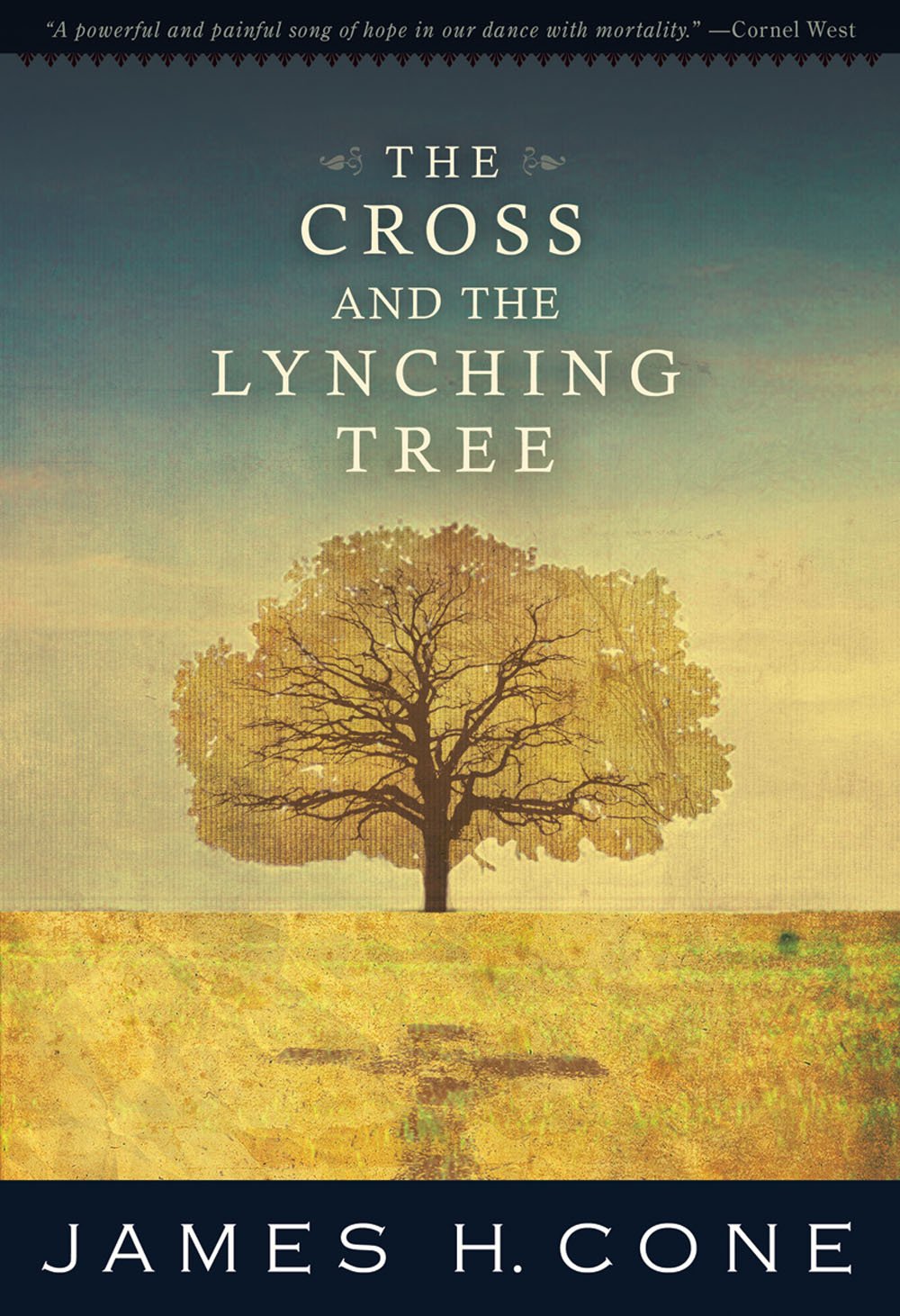 NOTE: Throughout these blog posts, I will mostly be able to write through the narrow lens of my own experience. I am not well versed in critical theory, the study of race, or the discipline of history. Although I consider myself a practical theologian and a Christian, I would not say that I have the skill set of someone schooled in doctrinal, dogmatic or systematic theology or even ethics. I will probably stumble over ways of talking about what I am reading and my reactions to it. With these caveats, I would like to think that this is an appropriate place from which to engage this book. I would hope that this book would be read in churches and seminaries, classrooms and even homes, by people not well-versed in any of the disciplines I mentioned above. I am reading this book for the first time, and so my words, though I hope reflective and thoughtful, will be first time reactions.
 A general introduction to this blog series can be found here, and an index and schedule for the series can be found here.
*****
It is a miracle that black Americans still believe in Jesus Christ. "It was not easy for blacks to find a language to talk about Christianity publicly because the Jesus they embraced was also, at least in name, embraced by whites who lynched black people. Indeed, it was white slaveholders, segregationists, and lynchers who defined the content of the Christian gospel." (118) Racism has so damaged the image of Christ in our country that Langston Hughes could write:
Listen, Christ,
You did alright in your day, I reckon—
But that day's gone now.
They ghosted you up a swell story, too,
Called it Bible—
But it's dead now.
The popes and the preachers've
Made too much money from it.
They've sold you to many
Kings, generals, robbers, and killers—
Even to the Tzar and the Cossacks,
Even to Rockefeller's Church,
Even to THE SATURDAY EVENING POST.
You ain't no good no more.
They've pawned you
Till you've done wore out. (116, quoted from Arnold Rampersad, Life of Langston Hughes, vol. 1 pp. 252-53)
When Hughes wrote this, he was shamed for blasphemy by both black and white church-going people. But perhaps we should not be discomfited so much by his "blasphemy" as by the sordid history which gave it birth, a history that has obscured the good news of Jesus Christ. Indeed, "Artists force us to see things we do not want to look at because they make us uncomfortable with ourselves and the world we have created." (117)
Yet, James Cone argues in this fourth chapter, it is precisely the artistic imagination that also enabled black slaves, "Cut off from their African religious traditions...to carve out a religious meaning for their lives with white Christianity as the only resource to work with. They ignored white theology, which did not affirm their humanity, and went straight to stories in the Bible, interpreting them as stories of God siding with little people just like them. They identified God's liberation of the poor as the central message of the Bible, and they communicated this message in their songs and sermons [and, as this chapter affirms, poems and short stories]." (118)
This poetic imagination operates differently from "abstract reasoning" that encourages us to "think about the cross as a theological concept or as a magical talisman of salvation." (108) It involves "spiritual wrestling...enduring and confronting the reality of inexplicable suffering." (108) It is a paradoxical imagination, which holds together contradiction, as in the writings of W.E.B. Du Bois (106). It holds together profound doubt and powerful faith, the cross and the resurrection, a dead Jewish man in Rome and black bodies swinging from trees—killed by the followers of that crucified savior.
It is this same poetic imagination that must be employed in living into God's justice and reconciliation today. For those of us who claim to be God's people, we cannot move toward living into our identity of children of God, as Christians without the Holy Spirit's gift of this poetic imagination. It is something we must receive.
But because this imagination sees more clearly than abstract reasoning, it holds before us truths we would rather not see, and sings the grating songs of grief, lament and contrition we would rather not hear. We would rather not believe "the plain facts," as Du Bois presents them, that "The church aided and abetted the Negro slave trade...and the church today is the strongest seat of racial and color prejudice. If one hundred of the best and purest colored folk of the United States should seek to apply for membership in any white church in this land tomorrow, 999 out of every 1,000 ministers would lie to keep them out." (101, quoted from "The Church and the Negro, " Crisis 6, no. 6 [October 1913]). We would rather not consider that, one hundred years after these facts were presented, racism is alive and well and black people are still actively excluded. We want to believe we live in some "post-racial society," or that things are getting better. They aren't. Admitting this can open us to receive the gift of the Spirit's poetic imagination.
It can also help us to listen to that lively imagination as it ignites us to live out our Christian calling as ambassadors of reconciliation. "From now on, therefore, we regard no one from a human point of view [Greek: according to the flesh]; even though we once knew Christ from a human point of view [according to the flesh], we know him no longer in that way. So if anyone is in Christ, there is a new creation: everything old has passed away; see, everything has become new! All this is from God, who reconciled us to himself through Christ, and has given us the ministry of reconciliation; that is, in Christ God was reconciling the world to himself, not counting their trespasses against them, and entrusting the message of reconciliation to us." (2 Corinthians 5:16-19) Of course, none of this is known apart from the cross, "for the love of Christ urges us on, because we are convinced that one has died for all; therefore all have died. And he died for all, so that those who live might live no longer for themselves, but for him who died and was raised for them." (2 Corinthians 5:14-15) It is by looking to the cross that we can see the new creation. And Cone reminds us that our poetic imaginations see rightly when they look to the cross within our present, to those still dying, to Jesus in the lost, the least, the imprisoned, the oppressed, the dying (Matthew 25). Paul commends to the Corinthians a ministry that comes "through great endurance, in afflictions, hardships, calamities, beatings, imprisonments, riots, labors, sleepless nights, hunger...in honor and dishonor, in ill repute and good repute. We are treated as impostors, and yet are true; as unknown, and yet are well known; as dying, and see—we are alive; as punished, and yet not killed; as sorrowful, yet always rejoicing; as poor, yet making many rich; as having nothing, and yet possessing everything." (2 Corinthians 6:4-10) I can think of no better description of the black experience in the United States.
The miracle of the gospel is not only that black Americans still believe in Jesus Christ after "the obstacle" that is the "fault" of Christian ministry under white supremacy in the United States (2 Corinthians 6:3); but also that out of that damaged witness would emerge the vibrant witness of black poetry, story, sermon and song. As Cone has been claiming all along, it is incumbent upon those of us who call ourselves Christians in the United States to confront white supremacy with the truth of black experience, to challenge our racism with the power of the gospel, to listen to those who are witnessing to the gospel in our midst—the oppressed, marginalized, poor, of ill repute and dishonor—and to hear the voice of Christ in them; for without doing so, we will not be able to "explain the meaning of Christian identity" to a watching world. (xvii)
In this book, Cone writes, like Paul, "frankly," with a "wide open" heart (2 Corinthians 6:11). In this book, as uncomfortable as it might make those of us who cannot hear the poetic imagination yet, Cone is writing "with no restriction in [his] affection, but only in yours. In return—I speak as to children—open wide your hearts also." (2 Corinthians 6:12-13)
*****
NOTE: I encourage thoughtful, impassioned conversation in the comments below. I do not say, "civil," because I think this sometimes connotes "dispassionate." But I would ask that those who comment attempt to engage with thought and reflection. I do reserve the right to delete any comment that I consider harmful. The point is a passionate and meaningful conversation, which means, for me, neither stilted dialogue nor combative debate.
Sunday, August 14, 2011
The Tenacity of Trust: Wrestling with God in the Hard Times

"Wrestling Jacob"
Excerpts from the poem by Charles Wesley
Come, O thou Traveler unknown,
Whom still I hold, but cannot see!
My company before is gone,
And I am left alone with Thee;
With Thee all night I mean to stay,
And wrestle till the break of day.
...In vain Thou strugglest to get free,
I never will unloose my hold!
Art Thou the Man that died for me?
The secret of Thy love unfold;
Wrestling, I will not let Thee go,
Till I Thy name, Thy nature know.
Monday, June 13, 2011
YA Saves
A recent Wall Street Journal article by Meghan Cox Gurdon has evoked a monsoon of articles and thoughts about the place, purpose and tone of Young Adult fiction. As someone who reads, researches about wants to write YA literature, I have been closely following the recent outpouring of support for "darker" YA. I don't know that I have time to write a full post on the subject. Instead, I'll link here to several articles--some written before the WSJ article, some written in response to it--that best portray the complexities of my current thoughts.
Friday, August 27, 2010
Peter, A Polar Bear Poster and the Power of a Moment
I own a poster of a cuddly polar bear cub. It has travelled with me from my childhood home in Salt Lake City to my dorm room in Alma and now hangs on our bedroom door in Princeton. Some photographer caught the cub ambling forward from a black background, head hanging slightly, dark button eyes barely lifted from the ground. A nameless graphic designer cropped the photo so that the youngling would dominate the image, then wrapped a short piece of text around the bear’s back. The text reads: “Help me to remember, Lord, that nothing’s gonna happen today that you and I can’t handle together.”
Wednesday, August 18, 2010
A History of Caedmon’s Call and a Review of Their New Album, Raising Up the Dead
It took a Caedmon's Call album to break me out of my blogging silence. Go figure. Of course. Sometime soon I'll update on my life and other things, as well as, hopefully, begin a secondary blog on the Psalms that I've been working on over the summer. What follows is a history of my interaction with the band and a review of their most recent album. If I get some historical facts about the band wrong, it's all my fault (and possibly wikipedia's, which really means mine for using wikipedia).
I have been listening to Caedmon’s Call for nearly a decade. A late-comer to the CC fandom, I only started paying indepth attention to them during my senior year of high school and first year of college (2002-2004), when I was learning to play guitar. For those unfamiliar with the band and its history, this two-year time period was one of dramatic change for the group. Their first three wide-release albums, My Calm, Your Storm (Storm), Caedmon’s Call (CC), and 40 Acres (Acres), were characterized by folk-rock sensibilities, introspectively philosophical lyrics with obscure biblical references, and a deeply Calvinist theology. Their fourth album, Long Line of Leavers (Leaver, 2000), represented a musical experiment, with horns and a more “electronic” sound. It also marked a slight shift in the balance of writing between the two primary lyricists – Aaron Tate (who had always written for the band, but only played with them in the very early days of their formation) and Derek Webb. Tate’s work had dominated Storm, and they had shared about even duties on CC and Acres. Webb’s work became more dominant in Leavers, and Cliff and Danielle Young, two of the band’s lead singers, contributed more explicitly to the lyrics of a couple songs. Webb, rightly or wrongly, became known for his songs about relationship and young adult feelings of alienation.
By the time I started listening, their earlier albums could not be easily found in stores and Amazon.com was not yet in my ken. Caedmon’s also never played in my home state of Utah, as far as I know. Leavers was, therefore, the first album of theirs that I owned. It was followed by In the Company of Angels: A Call to Worship (Angels 1), an album that their record label required in lockstep with the early 2000s worship fad, but which emphasized the band’s unique musical and theological take on praise music. It also marked the beginning of Aaron Tate and Derek Webb’s departures. The group’s next effort, Back Home (Home, 2003), was basically devoid of any of Tate’s work and included only a few songs by Webb. This writing gap was filled by Randall Goodgame, Joshua Moore (who had taken over keyboard and general crazy instrument duties from Randy Holsapple back in the Leavers era), and Webb’s wife Sandra McCracken. Tate’s mythological, philosophical and biblical introspection was replaced by hymn-like language and folk storytelling. Webb left the band at this point to pursue a solo career. This also happened to be the exact time when I first went to see a Caedmon’s Call concert. They had hired an up-and-coming singer-songwriter to fill in for Webb – Andrew Osenga, who had formerly fronted the group The Normals.
I now owned Acres, Leavers, Angels 1, and Home, which meant that my exposure to Caedmon’s basically extended only slightly across the divide between Old Caedmon’s and Emerging Caedmon’s. Some fans of the band see Angels and Home as the band’s low-point. The lyrics were simpler, the sound formulaic and the band’s heart didn’t seem in the music. For me, it was all I knew. Yet I still longed for the tighter lyricism and acoustic sound of Acres. I was thrown for a loop, then, when I purchased the first album in which Osenga had a hand, Share the Well (Well, 2004). At first I hated it. This wasn’t Caedmon’s! Their earthy guitar sound had been replaced by tenor-heavy rhythms and picking, sitar-sounding electric riffs, strange drums and atmospheric background noises. Despite all of this, I decided to acclimate myself to the new sound by playing the CD over and over again. It formed the backbone of my study time for nearly a semester. Soon I fell in love with the “New” Caedmon’s. The urgency of the story in the lyrics, and the otherworldly beauty of the music captured my heart. I learned that the band had actually travelled to India, Brazil and Ecuador, recording and writing on the road, including instruments and vocals from the people and cultures they encountered. Whereas many of their previous efforts had focused thematically on God’s grace, human sin, and the individual soul, Well turned its gaze to God’s love for the whole world and justice for the poor and oppressed. But these were not faceless poor, not statistics. Instead of slamming the message through with overwhelming numbers, Caedmon’s simply told the honest, beautiful stories of the people they encountered. While Home had seemed, in some ways, directionless, a meaningless collection of one-off tales and generic do-overs of the band’s previous themes, Well utilized the same storytelling sensibilities to paint a coherent picture of parts of the world that most folks in America have never seen. Well quickly became my favorite Caedmon’s album. The strange sounds that had been off-putting now became windows into the souls of my fellow brothers and sisters, children of God.
Following this stellar music masterpiece, Caedmon’s record label forced them to produce another worship album, In the Company of Angels II: The World Will Sing (Angels 2, 2006), which also coincidentally fulfilled the band’s contract with the company, allowing them to break ties with a corporation that had pressured them to do things with which they were not comfortable. Very little of the unique, multi-cultural sound that the band had fostered while overseas had been allowed to suffuse the album, most likely do to Well’s underwhelming sales and reception. After all, above everything else, large corporations want consistency and a safe bet (see the recent penchant for sequels and reboots in Hollywood). Despite the album’s compulsory nature, I still found songs to love amidst the general dross. Most of these favorites were written by Osenga, who has become one of my favorite storytellers.
Free of their fetters, the group cast about for a year, while also dealing with the fact that many of their members were now married with children. Touring became more and more difficult and some of their earlier themes of introspective alienation did not resonate in their new family-oriented lives. At this critical juncture, Webb, who had been absent from the band for nearly four years, found himself pulled back into their music-writing field. He had grown as a writer, and as a music producer, finding his voice in social and political criticism as a musical prophet of sorts. His insightful and cutting lyrics paralleled the sense of God’s justice for the oppressed that Caedmon’s had found overseas, but directed their gaze toward the injustice in the United States in a more biting way. In a strange turn, Webb and the rest of the band had gone different routes to arrive at a similar place, which allowed them to come together again to create Overdressed (2007). This album marked another shift for the group. Musically, it was a complete mish-mash. Osenga’s spare rock sensibilities mingled with Webb’s sparse new propheticism and the world music traits from Well. Once again, I found myself put-off by the album at first. Once again I played it non-stop for weeks. Soon I found a beauty in the collision of styles and themes and sounds.
The album title described the place of our souls before God. Trying to hide our sinfulness in our good works and a thin veneer of cultural Christianity, we are overdressed. Yet it also acted as a counter-theme to the state of the band. Utterly fearless and stripped of the constraints of their label, they were laying themselves out for everyone to see. The music was messy and unrefined, yet paradoxically more pure and alive than ever before. Many of the songs ended in unstructured jam sessions, or began with odd snippets of conversation from the recording process. Lyrically, the album laid bare the personal lives of the band members in a way that had been missing since their earlier works. Issues of lust and doubt were placed alongside a recognition of God’s work in the everyday life of laundry and parenthood. Social criticism was coupled with a realization of our culpability in injustice. A grand view of the world and the recognition of the smallness of our efforts at changing it lead to a realization of God’s largness and ability to change the world’s brokenness by the slow, careful work of healing the brokenness of every soul through openness and honesty with each other. Our imperfections become clear in the light of God’s grace and love, which makes us painfully ashamed of our nakedness yet also purifies and cleanses us.
During the tour for Overdressed I was finally able to see the band in concert with both Webb and Osenga. I also purchased their first two albums and one of their Guild CDs, which are fan-centered recordings of special concerts and studio rares from their early career. I began to truly understand what had upset people about Home and the worship albums. “Early” Caedmon’s was a thinking person’s Christian folk-rock group. Their lyrics were labyrinthine and obscure, yet their music was catchy and simplistically rich. You could listen to them and simply enjoy the tight three-part harmonies, thrumming layered guitars and percussive drive. Yet, if you paid attention at all to the lyrics you were nearly forced to look up matters relating to random Old Testament texts, Greek mythology and philosophy, and Reformation theology. New testament metaphors and verses were also reinterpreted in ways that made them fresh and interesting. Take, for instance, this restatement of John 3:16: “For you so loved the unlovable/That you gave the ineffable/That who so believes the unbelievable/Will gain the unattainable,” which not only restates the the verse in terms of rhyming “able” language, but also adds some reformation theology and sets you running toward the dictionary to figure out what “ineffable means.” Or, try this mixture of mythology and hymnology: “I mount up with waxen wings/High to reach the sky/But I am no further than/Than when I first begun.” Icarus and Amazing Grace in one stanza.
After the creative explosion of Overdressed, the band focused once again on their families. Andrew Osenga left the band to pursue his own solo career, much as Webb had done five years earlier. I wondered whether there would be another album. At the end of 2009, I heard whispers that Webb had rejoined the band for another upcoming album, which he was producing, and that the songs were being written by Webb, along with Cliff and Danielle, who had written only a few before, and the bassist Jeff Miller, who had one previous writing credit. For the first time in the band’s history the songs were all being written by people who were actually performing with the band. I was stoked. Raising Up the Dead was to be a unique album. Only 1000 physical copies of the work were being produced, and were going to be sold as collector’s items. Most people would have to download the album off of the group’s website, not even through channels like iTunes. In subtle and not-so-subtle ways, then, this was bascially a “fans-only” album. Unless you already knew about Caedmon’s, you wouldn’t know about this album.
In early August 2010, I downloaded Raising Up the Dead and even purchased the $50 deluxe edition, which included a t-shirt, the Guild CDs that I had missed, a Guild DVD and a physical copy of the CD, signed by the band, with lyric sheet. All of the physical materials wouldn’t arrive until September 14, so I simply listened to the CD on my computer. As with Share the Well and Overdressed, I was initially extremely disappointed. The album felt slow to me, with only medium-tempo songs. The world music influence had been laid completely by the wayside, along with some of the rock orchestration that Osenga had brought to the group. As much as I could tell from trying to catch the lyrics, much of the focus on God’s justice had also faded away. Essentially, the Caedmon’s that I had known for much of my experience with the band was gone.
Yet, once again, I decided to work through repeat listens. Once again, I was rewarded. In many ways, Raising Up the Dead feels like the Caedmon’s album that should have followed Long Line of Leavers. Themes of sin and grace have returned in strength as well as obscure lyrics and slight references to verses of scripture and even mythological notes. Despite the inclusion of some of Webb’s recent experiments with electronica and production, the album is also much more acoustic and folksy than the last few. And yet. And yet it is also feels like their most mature output to date. Instead of viewing sin and grace through college-age alienation and singleness, the songs focus on finding grace in imperfect community. Family comes through as the most important hermeneutical lens through which the band contemplates theology. The music is also extremely dense. It is not showy. It is not “radio-single” worthy. Instead it is intimate music, pondering music, music that makes you think as much as the lyrics do. It is music that requires the listener to work. It isn’t music to be memorized, like the earlier hits that hooked themselves instantly into the brain. It is music that engenders relationship. It is not the exuberance of first love, when every moment is alive and bright and memorable, but the slow beauty of marriage, when even the subtle moments mean something and the quiet rest of the other’s arms means more than flashy jewelry. It is music made of mystery, whose beauty is that you will never fully understand it, but every day you will want to learn more.
In these and numerous other ways, Raising Up the Dead represents the culmination of Caedmon’s Call’s wandering journey. Once again the title expresses both the themes of the work and the state of the band and its music. The introspection and theological heft of their early albums is combined with the themes of honesty and family from their later years. The old acoustic sound is filtered through the patience and naked dedication of Overdressed and the intricate musicality of Share the Well. The comfortable three part harmony is now sung through voices that are rougher, grainier and more expressive than the pop sound favored in their middle work. I want to follow up this post with one going through each song and what I'm currently experiencing through it. Look for that possibly tomorrow.
I regret that many will not know about this album. If you're reading this, download it from their website (caedmonscall.com). Tell your friends. Listen to it five times in a row at least. Let yourself fall in love with it. This is an album worth putting on repeat.
Thanks, as always, for your time and love, faithful readers.
Sunday, July 26, 2009
Puddleglum Theology Launched
Today I spent over seven hours doing something I've wanted to do for a while. With the help of google sites, I've created a central website for what I'm lovingly calling Puddleglum Theology.
What is Puddleglum Theology? If you've ever read The Chronicles of Narnia by C.S. Lewis, and especially the fourth book in the series The Silver Chair, you might have a clue. If you're completely in the dark about all of this, here's an excerpt from The Silver Chair and the introduction to the Puddleglum Theology website to shed some light:
"I'm a chap who always liked to know the worst and then put the best face I can on it. So I won't deny any of what you said. But there's one thing more to be said, even so. Suppose we have only dreamed, or made up, all those things--trees and grass and sun and moon and stars and Aslan himself. Suppose we have. Then all I can say is that, in that case, the made-up things seem a good deal more important than the real ones. Suppose this black pit of a kingdom of yours is the only world. Well, it strikes me as a pretty poor one. And that's a funny thing when you come to think of it. We're just babies making up a game, if you're right. But four babies playing a game can make a play-world which licks your real world hollow. That's why I'm going to stand by the play-world. I'm on Aslan's side even if there isn't any Aslan to lead it. I'm going to live as like a Narnian as I can even if there isn't any Narnia."
- Puddleglum, from The Chronicles of Narnia: The Silver Chair by C.S. Lewis
Welcome to Puddleglum Theology! The underlying ethos behind this website is contained in the above quote. I enjoy mystery and myth, beauty and brightness. I would rather take a stand for the world of story than suffer under the burden of mere fact. Not that facts are not useful, or reason an integral part of living and knowing. But, as Madeleine L'Engle expresses, "if we limit ourselves to the possible and provable...we render ourselves incapable of change and growth, and that is something that should never end." (The Rock That Is Higher, 100) She continues: "perhaps it is the child within us who is able to recognize the truth of story--the mysterious, the numinous, the unexplainable--and the grown-up within us who accepts these qualities with joy but understands that we also have responsibilities, that a promise is to be kept, homework is to be done, that we ow other people courtesy and consideration, and that we need help to care for our planet because it's the only one we've got." (TRTIH, 100) Perhaps my outlook on life can be more accurately portrayed by another quote from C.S. Lewis, this time from an essay on "Three Ways of Writing for Children," "When I was ten, I read fairy tales in secret and would have been ashamed if I had been found doing so. Now that I am fifty I read them openly. When I became a man I put away childish things, including the fear of childishness and the desire to be very grown up." (On Stories, 34)
I sincerely believe that there is more to life than we can accurately portray with mere facts, more to truth than statistics and analytical thinking can produce. I do not always live like a child, but I deeply desire that way of life. I want to wonder again, to be in awe more often, to wrestle with the unknown under a dark moon and somehow end up with both a blessing and a new name. I want to celebrate mystery, all the while seeking to understand. I want to be joyful, knowing full well how grim things truly are. I want to love indiscriminately, and fight injustice passionately. I hope that you'll join me.
On this website you'll find a page that reproduces my blog: There Is No Fear In Love, a growing compendium of quotes from my favorite authors and a discussion page where I'll post questions/thoughts for discussion. And, hopefully, more things in the future. So, again, welcome to Puddleglum Theology!
So, there you have it! Puddleglum Theology has been launched. If you are interested in Puddleglum Theology and would like to submit quotes relevant to the themes presented, e-mail them to me at marchon2884@google.com and I'll try to add them to our growing list of Wiggle Wisdom in the Wigwam Word Archive. Or, if you've written an article or blogpost relating to Puddleglum Theology, I can add that to Respectobiggle Research. Make sure to check out other quotes and articles on the Puddleglum Theology website. Here's the address:
Thanks for sticking with me, faithful reader!
Saturday, February 21, 2009
The...er...Vampire...is in the details.
I'm currently reading Stephenie Meyer's Twilight for my Children's Fantasy Literature and Moral Formation class. If you haven't heard of it, it's the tale of a clumsy girl (Bella) and the "too-perfect" vampire (Edward) for whom she pines. It's an exercise in overtly difficult abstinence, written by a Mormon mom. You see, Edward is attracted to Bella, more specifically, her blood, but he is a "vegetarian" vampire. He only drinks the blood of animals, not humans. He saves her life several times and wants to spend time with her, but constantly tells her that he's dangerous and she shouldn't be around him.
It's actually not as bad as I had anticipated, especially considering the fact that I'm not exactly the romance-novel type. The plot is decent and some of Meyer's imagery is fairly evocative.
What bothers me as I thumb through the sap is not the quality of Meyer's writing, but the lack of effort on the part of her editor. Meyer has a spark of talent. She can create visual scenes in the mind, and has an effective "romantic" tone to her writing. Her novel could have been better served with more careful editing. Here's an example:
The following scene is a bit of dialogue between Edward and Bella. The story is written from Bella's perspective, so the I in the non-spoken text is her. It's raining and they are walking to class. Edward begins.
His eyes were wickedly amused. "Will you please allow me to finish?"
I bit my lip and clasped my hands together, interlocking my fingers, so I couldn't do anything rash.
"I heard you say you were going to Seattle that day, and I was wondering if you wanted a ride."
That was unexpected.
"What?" I wasn't sure what he was getting at.
"Do you want a ride to Seattle?"
"With who?" I asked, mystified.
"Myself, obviously." He enunciated every syllable, as if he were talking to someone mentally handicapped.
I was still stunned. "Why?"
First of all, my writing professors always advocated "showing," as opposed to "telling." Meyer tells. Second of all, the imagery of her clasping her hands together seems rather awkward. Is she walking with her hands clasped together in front of her? Wouldn't that be a little obvious? Perhaps it would be better behind her back. Here's my "editing" of her text.
His eyes were wickedly amused. "Will you please allow me to finish?"
I bit my lip and clasped my hands together behind me, interlocking my fingers, so I couldn't do anything rash.
"I heard you say you were going to Seattle that day, and I was wondering if you wanted a ride."
"What?"
"Do you want a ride to Seattle?"
"With who?"
"Myself, obviously." He enunciated every syllable, as if talking to someone mentally handicapped.
"Why?"
I eliminated every duplicate turn of phrase and unnecessary word. The meaning still gets across. Bella's confused. Edward is offering her a ride. Now, this isn't very good writing. It's quite choppy. More like a play than a novel. Instead, I could direct Meyer to add in more subtle, more descriptive writing that doesn't simply say what the dialogue could express on its own, but instead highlights it. Also, I would encourage her to make every word count, and thus to use these descriptive additions to build tension, evoke emotion, tell scenery, and add pacing. I would also use more powerful words with more physical force. Then, perhaps, it would read like this:
His eyes were wickedly amused. "Will you please allow me to finish?"
I bit my lip and clasped my hands together behind me, interlocking my fingers, so I couldn't slap him.
"I heard you say you were going to Seattle that day, and I was wondering if you wanted a ride."
I nearly tripped into a puddle.
"What?"
"Do you want a ride to Seattle?"
The rain pattering on my hood muddled my thoughts.
"With who?"
"Myself, obviously." He lingered on every syllable, as if talking to someone mentally handicapped.
"Why?"
Now, I'm not exactly the best writer in the world. I'm sure someone else would use words that packed even more punch. Nevertheless, I see a marked improvement here. Instead of just saying that she was going to do "something" rash, I specified that something and used a word with onomatopoeic pizzazz. Also, Bella is known as a klutz. So I used that to my advantage, having her trip into a puddle to evoke her surprise, rather than just saying that she was surprised. I added the line about the rain pattering to show her confusion, add to the scenery, and pace the dialogue to allow for the reader to imagine that she is thinking before her response. Instead of the word "enunciate," which makes me think MY-SELF OB-VI-OUS-LY, I used "linger," which actually makes his comment smoother (he's a pretty cool character) and more sarcastic (which he also seems to be...seriously, read the rest of the book).
Anyway, I guess the devil...er...vampire...is in the details. Maybe instead of a writer I should be an editor.
Or maybe I'm completely wrong and I should be lucky that I even entice people to read my blog.
Thanks, faithful reader.
Tuesday, February 3, 2009
Running with Candles
This is where I am. I'm running with candles. I have talents, loves, passions. Like tiny flames they light my way. But I've decided to run with them, and soon they will flicker out.
Now is the time where you, faithful reader, may assume that I am bragging. And I probably am, unintentionally. Nevertheless, I think that in quite a few ways I've scooted through life, run through it without barriers. School has never been gut-wrenchingly difficult for me. I've miraculously run right into Graduate school with only a smattering of A- to my name. I've even somehow received scholarships without interviews, positions without trouble. Almost everything has gone my way. And yet. And yet I feel as if because of that I'm running with candles.
I'm certainly passionate about things: about reading and writing and the people of God. But I realize that that passion is about to be winked out of existence in the backdraft of my headlong run through life. Put succinctly: I have no discipline. I can pass a test by skimming texts, study for two hours when it takes others ten. I can write a six page paper in under an hour and still get more than a passing grade. And so I've never steeled myself to discipline. And in the end, I've given myself the short end of the stick.
I do remember things that I've read that I love, quotes that stick in my mind, but they are vague illusory ghosts, not striking images that shape me, not strong cornerstones of thought. I do not read as deeply as I would like. I do not write as often. Even as I pledged in my last post to be more reckless in not editing myself overmuch, I now have to look at myself and wonder if I don't need to simultaneously be more disciplined.
I don't want to lose these things that I love. I don't want to fall back into doing something, living something, being something that I don't love because of expediency. I've seen too many good friends who feel lost and adrift because they lost their grip on the things that made them passionate, the talents that they had. Instead of nurturing them, they ran wild into the wind, and their candles, their talents, their passions burned out.
I want to write. I want to read deeply, to memorize passages, to think again long hours into the night. I don't want to domesticate myself. I want to be reckless. But I'm finding that, in order to be reckless, I must be disciplined. If I want to read and write every day, I must set aside time to do so. If I want to write songs again, I must set aside time to do so. If I want to retain my sanity and protect my tiny light from the ravaging wind of my situation and my needs and the greed and pressure and force of the world, and academia, and the media and entertainment...really the harsh, cold, bitter wind of my own faults and wayward ways...I must have discipline.
So, reading my last two posts together, is there such a thing as Reckless Discipline? Or a Passionate Routine?
Thanks for sticking with me, faithful reader.
Thursday, October 16, 2008
Poetry Series: Part 1 of 11 - The Collector
Greetings faithful reader. I apologize for my long absence, time has not been my friend (see the poem below)! Also, I started this post almost two weeks ago, and only finished it now. I have three posts 3/4 composed, waiting to be finished and published. So, finally, here's one. Hopefully the other ones will be posted soon.
I hope that you are well. I'd like to move back in this blog to some thoughts on writing. In fact, I'd like to present a miniature series of poems.
I'm taking a class right now entitled Writing as Faith Practice. One of our requirements is to write three pieces, two of which can be academic papers, and one of which must be creative. Or, we could simply write three creative pieces (which is the option I chose). I started out this bold endeavor in my favorite realm: the short story. Unfortunately, after a few weeks of writing nothing solid was coming on a story. So I decided to try my hand at poetry. What came out was a series of eleven acrostic poems, using favorites quotes from the Bible as the spine of each poem. The poems are named after either the writer of the quote, the person speaking the quote, or the person about whom the quote was written. I'll present each of them here, in the order that I wrote them, and then discuss the writing process below. I hope you enjoy.
The Collector
Even eternity used to seem small,
Tucked in my heart like a toddler in my arms,
Eyelids drooping, breath running slow,
Resting its rosy cheek in the crook of my chest.
Now I wonder if my fear of the unknown is lack of love,
If infinity is rendered harmless when you hug it like a child.
Time marches like a two-year-old trying to run,
Yielding to the gravity of my mind.
I used to gasp when it fell down hard;
Now I know it's more resilient than I am to its changing.
The truth of the matter is I don't understand
How it works; I stand in wonder of it, winded by its
Embrace as it rushes to hug me 'round my hips.
Helpless, I watch it grow, coming slowly to understand that
Eventually I'll have to let it go. I'm
An unwilling parent of an unruly child,
Remembering the good old days when it used to
Take my hand as we walked together and
Squeeze it tight.
Or maybe I'm the child, the prodigal son of
Father Time, running from home with my inheritance.
Maybe eternity waits with a fatted calf, arms outstretched to
Embrace me. And maybe, instead of holding it tight, I
Need to rest in its arms and let it rock me to sleep.
Now, this acrostic comes from one of my favorite lines in the book of Ecclesiastes: "I have seen the burden God has laid on men. he has made everything beautiful in its time. He has also set eternity in the hearts of men; yet they cannot fathom what God has done from beginning to end." - Eccl. 3:10-11 This passage, by the way, comes right after the long litany made famous by the Byrds: "A time to be born; a time to die..." etc. If you've never heard the song before:
The reason I love this passage is that it says, yes, there is a time for all of these things, for even death and war, but that these things, too, will pass away and that everything will be made beautiful in its time. God has, therefore, set eternity in our hearts, has given us a hope beyond ourselves, beyond our understanding. Derek Webb put this whole passage into song much better than I think I ever could in poem:
This Too Shall Be Made Right
Derek Webb
Appears on: The Ringing Bell
Lyrics:
people love you the most for the things you hate
and hate you for loving the things that you cannot keep straight
people judge you on a curve
and tell you you’re getting what you deserve
this too shall be made right
children cannot learn when children cannot eat
stack them like lumber when children cannot sleep
children dream of wishing wells
whose waters quench all the fires of Hell
this too shall be made right
the earth and the sky and the sea are all holding their breath
wars and abuses have nature groaning with death
we say we’re just trying to stay alive
but it looks so much more like a way to die
this too shall be made right
there’s a time for peace and there is a time for war
a time to forgive and a time to settle the score
a time for babies to lose their lives
a time for hunger and genocide
this too shall be made right
I don’t know the suffering of people outside my front door
I join the oppressors of those who i choose to ignore
I’m trading comfort for human life
and that’s not just murder it’s suicide
this too shall be made right
Derek Webb
Appears on: The Ringing Bell
Lyrics:
people love you the most for the things you hate
and hate you for loving the things that you cannot keep straight
people judge you on a curve
and tell you you’re getting what you deserve
this too shall be made right
children cannot learn when children cannot eat
stack them like lumber when children cannot sleep
children dream of wishing wells
whose waters quench all the fires of Hell
this too shall be made right
the earth and the sky and the sea are all holding their breath
wars and abuses have nature groaning with death
we say we’re just trying to stay alive
but it looks so much more like a way to die
this too shall be made right
there’s a time for peace and there is a time for war
a time to forgive and a time to settle the score
a time for babies to lose their lives
a time for hunger and genocide
this too shall be made right
I don’t know the suffering of people outside my front door
I join the oppressors of those who i choose to ignore
I’m trading comfort for human life
and that’s not just murder it’s suicide
this too shall be made right
Also whistling around in my head while I wrote this poem was a quote from one of my favorite old-timey theologians: St. Augustine: "You have made us for yourself, and our heart is restless until it rests in you." from Augustine's Confessions.
The idea of comparing time to a child came to me through the idea of having something tucked into our hearts, even something like eternity. How can something that large fit into something so small? A mystery. And a welcome one.
Blessings to you, dear faithful reader.
Sunday, September 21, 2008
Communing with Nature 4: Jenny Jump Beauty
Dear faithful readers, I can only apologize for my absence with excuses: the beginning of the school year, my duties as a deacon, and general laziness. I am sincerely sorry for my absence. Of course, maybe some of you are simply bored of this whole Jenny Jump review and are waiting for me to return to something more substantial. Well, have no worries, I will. In fact, I will try to post two quick final Jenny Jump posts and then finally post a third, general update of my life. So, with all of that written, prepare yourself, dear reader, for a virtual (ha, because we're on the internet) glut of posts.
First of all, let's think about the beauty of Jenny Jump. If you've never been camping, I really cannot adequately describe to you the musky, cloying smell of decaying leaves and the freshness of the air. I cannot match the glory of a bright blue sky, the color of a baby's eyes, clear as sight will allow. I cannot even broach the subject of a midnight sky with a few whispy clouds and the comforting sight of familiar constellations far from home. Camping brings me to my roots, makes me wonder how afraid our tent-dwelling ancestors must have been, surrounded by the bark of wild animals and the twinkling sounds of insects. Every motion teasing their nerves. How insulated we are in our cities full of human noise. I feel more awake and alive when I'm camping. I feel more aware.
And the art of camping itself, well, how can I describe to you the success of a fire made only with a few pieces of newspaper, a match and some dry wood? How can I tell you how satisfying it is to sleep in a tent erected with your own hands and sweat (even though Eddie Bauer helped with the design)? How, if you've never been camping, can I possibly manage to evoke the weary pride that comes from hiking for five or six hours, the refreshing feeling of slick sweat pouring from your pores, the knowledge that you have worked and you have achieved something as you stand at the cliff edge on the summit of a mountain, surveying the terrain before you?
All of that to say that my deepest wish for you, dear reader, is that you know this joy, you know this pride, you know this radical experience (radical meaning "going to the root"). My heart aches for you to go camping for yourself if you never have. Meanwhile, these brief descriptions, I hope, encourage you to go. And now these brief descriptions will be supplemented by pictures.

The eponymous fire, built with my own hands. It was a quick fire, meant to burn out before we went to sleep.

Just one of the spectacular views from our many hikes.

A Jenny Jump Sunset. Wild bats were flying around in the gathering dusk. I tried to capture them with the camera, but they were fluttering too fast.

I love pictures of paths. Maybe it's my current preoccupation with a search for a vocation, but I think I've always been fascinated by a good path picture. Not to say that this is a particularly good path picture, but something about the dappled light on the brown dirt and the golden sun striking the green undergrowth caught my eye.

And finally, the satisfaction of a successful hike. And a beautiful woman by my side.
Stay tuned for the final Jenny Jump update and then a life update. Thanks for sticking with me, faithful reader.
Saturday, September 6, 2008
Communing with Nature 2: Jenny Jump Review
I apologize for not updating over the last few days. Obviously, Sarah and I were camping for the first three days of the week, and I've been recuperating and watching the Republican National Convention for the last two. So, now I'm back and ready to be posting. I think I'm going to do a short series, perhaps three separate posts, on our camping trip. It was so amazing and so many great things went on, that I don't want to overwhelm you with a huge, long, unreadable post. So, I'll start off with a review of Jenny Jump State Forest, continue onto a discussion of beauty and all that we saw at Jenny Jump, and finish with thoughts and experiences that came from our trip. Part 1 - a review of Jenny Jump State Forest will be appearing either tomorrow (Sunday, September 7) or Monday, and then each following day I'll post about the other two topics.
So, thank you again, faithful reader, and I'll leave you with a teaser of our adventures.

Sarah and I sitting outside of our tent.

A home away from home, complete with uno cards, a word puzzle book, and, if you look closely, my guitar.

At the end of our adventures. Both of us look a little sleepy, and I'm pretty greasy from two days without a shower, but I'd say we're a pretty handsome couple. (Side note, isn't it interesting that the word couple, which is essentially gender neutral, is often paired with the word handsome, which is often connotative of a masculine trait?)
Monday, September 1, 2008
Communing With Nature
This past weekend my parents came up to visit us. It was a whirlwind trip, driving twelve hours on Saturday, spending Saturday night and Sunday with us, and then leaving for a return drive of twelve hours at six o'clock this morning. Though the visit was brief, the time was precious. We played yahtzee, ate well, talked quite a bit, and just spent time together. (for those keeping count of such things, my mother won both yahtzee games).
As I type, Sarah is cleaning out our cooler. We are preparing to go to Northern New Jersey for what we hope will be a relaxing two-day camping excursion. Our camping site of choice is a place called Jenny's Jump (I'll type the story of the place later, but as a teaser, I'll say that the area includes quite a few places with the names of Ghost and Dead). It's supposed to be a very quiet, restful area, with a few camping sites, a nice hiking trail, and good weather this week.
I'm typing quickly, as I need to pack, but I will give you a full update when we return on Wednesday, including a review of the campsite, pictures and any thoughts that come to me while we are communing with nature.
Monday, August 25, 2008
Definitions
"Thoughts"
They come out of both my head and heart. Some thoughts will be logical, others emotional. Many will be both. Hopefully I have grown enough so that my gut-reactions are tempered by sober reflection, but then again it might be more fun for you the reader to pass your peepers over my un-distilled psyche. Nevertheless, these "thoughts" are my opinions, my point of view. They are not gospel truth and are not meant to be. Hopefully once I get over the lack of sleep that plagued me last night these posts will also be less serious and more hilarious. Not just for you the reader, but for me the writer. I'm boring myself already. Sort of.
"Writing"
Writing is anything involving the use of words on a page (or screen) to communicate. That's a really broad category. It could include plays, poetry, short fiction, novels, non-fiction, songs, essays and whole host of other things. It will include both my own work and my thoughts on things that I have read or heard recently. So, for instance, one day I might share a personal limerick:
One sunny day in old Princeton
A blogger wrote a rhyme for fun.
The form he picked
Was limerick.
The reader regrets having come.
Limericks are more difficult to write than they look. I had to rely on slant rhyme just to get me through. Sigh. Anyway, on another day I might post about the book(s) I am currently reading (The Brothers Karamazov and a collection of Robert Frost poems at the moment). One of the purposes of this blog is to teach me to write more often and to give me a forum in which to write. I, unfortunately, join the majority of Americans who are now indoctrinated with instant gratification, and this blog format seems to be ideal for the quick response to something I've written. I might occasionally post excerpts of things I've written recently or things on which I'm working. Also, this blog itself is an experiment in writing and occasionally I will write about the process of blogging and/or the process of writing.
"Faith"
Always a thorny subject. But the thorn supports a rose. As a person of faith, and a person who believes that God has called them to live in faith I cannot speak or write about anything without it being encroached upon by my personal worldview. I believe that no one can. We all have a worldview. Mine happens to center itself in Christianity and to be clothed in the "double love commandment" -- Love the Lord your God with all your heart, soul, mind and strength and love your neighbor as yourself. More simply put: love God; love others. The title of this blog reflects this. The posts that fall under this category will most likely deal with how exactly that simple commandment is lived out in real life. They might also deal with issues of theology, or places where other topics (politics, ethics, economics, mathematics, science) intersect with living out love. This obviously leaves open a wide space for me to write about anything (similar to the topic of life, but more on that in a bit). Yet I will try to restrain myself to writing about topics not mentioned in the blog description from the viewpoint of one of the "major" five. So, if I write about politics, I will write about how a specific musician (Derek Webb, for instance) writes and sings about politics and what I think of his interpretation. Or I will discuss how faith and politics do or do not work together. Obviously, this blog is heavily weighted toward the humanities as opposed to the sciences, but I do not think that this means that the two cannot be spoken about together, nor do I think that they never speak to each other. More on that some day in the future.
"Music"
This is similar to writing, except that I will focus on singers/songwriters/instrumentalists. I will also talk about the music apart from the lyrics. I will also sometimes link to my own music, as opposed to just posting the lyrics to a song.
"Art"
Really here I probably mean beauty, but Art just sounded better in the blog description. These posts will discuss where I see beauty in the world, whether it is the art of nature, or the art of a photographer or painter. They will also focus on the craft of creation. As you can already tell, many of the posts will be tagged both "writing" and "art," or "music" and "art." But I felt the separation was necessary because I will occasionally write about music and how it interacts with politics, as I said before. A post that is purely "art" will most likely be a completely joyful post because it will simply be about something beautiful. Like otters. Beautiful.
"Life"
These posts will deal with my personal life, what's going on with me. They will also deal with being alive. Again, experiences of beauty might be wrapped up in an experience of being alive, but I wanted to express both the places where these topics cross and the extension of their outer boundaries. So I chose to use both words.
I believe in inter-connectivity and cross-pollination. These topics flow in and out of each other and their unique qualities also bind them together. John Donne wrote that "no man is an island," (or "no person," for my inclusive-language-minded friends.) I believe that. And I believe that no thought, no topic is an island. So above all, this blog will probably express the sincerity of my belief in our lack of aloneness. We are all connected. And that's something very exciting.
Thank you for sticking with me. Let's get to some real posting.
Subscribe to:
Posts (Atom)