Showing posts with label fear. Show all posts

Tuesday, August 8, 2017

Satisfied?

Genesis 32:22-31; Psalm 17:1-7, 15; Matthew 14:13-21

Recently, I have become preoccupied by a particular kind of music: the Disney song.

Months ago, my daughter Abby learned a few songs from the Disney film Moana as part of a “Music Together” program. She loved the songs, even though she hadn’t seen the movie. So, about a week ago, we watched Moana together and I found myself quietly tearing up.

I was so moved that I spent some time reading about the making of the movie. Eventually, I read an interview with the man who wrote the lyrics to most of the songs. His name is Lin-Manuel Miranda, and he is most famously known for writing the Broadway musical Hamilton, which adapts the story of Alexander Hamilton, one of the founders of the United States, through a mixture of hip-hop and traditional Broadway music.

In the interview with Lin-Manuel Miranda, he talks a little bit about one of the most well-known songs from Moana, “How Far I’ll Go.” The interviewer brings up the fact that serious fans of Disney films have a specific name for the kind of song that “How Far I’ll Go” represents. They call them “I want” songs.

Sunday, May 7, 2017

In the Midst - Psalm 23

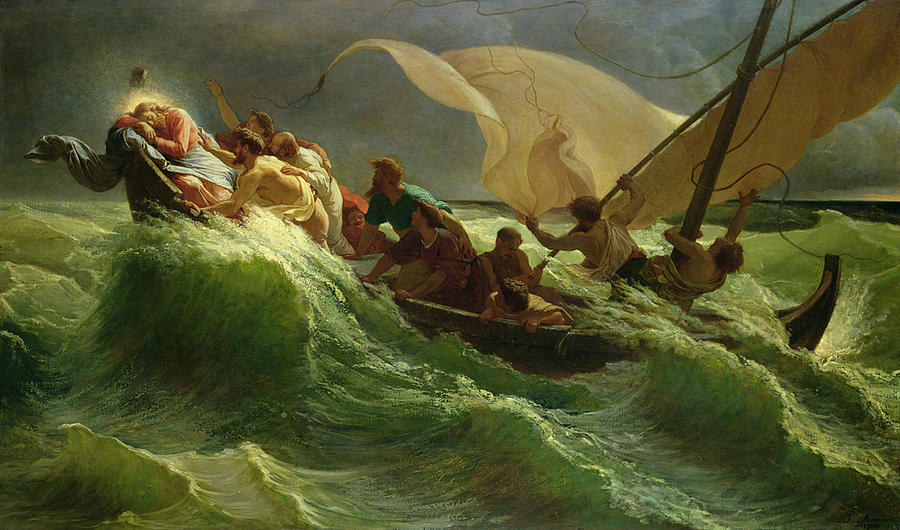
http://images.fineartamerica.com/images-medium-large/christ-asleep-in-his-boat-jules-joseph-meynier.jpg


A couple of years ago, I was helping to teach a class about prayer. We were teaching lectio divina, which means “sacred reading.” In lectio divina, a short selection of scripture is read several times. Each time the scripture is read, those who are praying dive deeper into prayer. They choose a word or a phrase and chew on it, slowly turning it over in their hearts and minds. Sometimes, lectio divina leads into what is known as Imaginative Prayer. In imaginative prayer, the participants imagine themselves having a conversation with Jesus. They imagine not only what they would say to Jesus, which is what we often do in prayer, but also how Jesus would reply.

That day, as I was praying, I imagined that I was on a boat. I realized that I was imagining Matthew chapter 8, when Jesus and the disciples are out on the water and Jesus is asleep in the bottom of the boat. Suddenly, a terrible storm arises. The disciples are doing everything in their power to keep the boat from sinking. And Jesus keeps sleeping. There is a terrible storm, and Jesus is sleeping! The waves are crashing, the thunder is rolling, and Jesus is sleeping! The disciples wake Jesus up and ask him to help. Jesus gets up and says to his disciples, “Why are you afraid, you of little faith?” Then, he calms the storm.

Thursday, August 27, 2015

Psalm 11: When The Foundations Are Destroyed


This is a lightly edited version of a sermon I delivered last year at the opening worship gathering for Koinonia, the fellowship for Princeton Theological Seminary's PhD students. From 2011-2015, I served as Chaplain for the Koinonia fellowship. I felt urged to post it today, because not much has changed in the last twelve months, and my words convict me more than ever.

*****

If the foundations are destroyed, what can the righteous do?

In the Lord I take refuge; how can you say to me,
    “Flee like a bird to the mountains;
for look, the wicked bend the bow,
    they have fitted their arrow to the string,
    to shoot in the dark at the upright in heart.
If the foundations are destroyed,
    what can the righteous do?”
The Lord is in his holy temple;
    the Lord’s throne is in heaven.
    His eyes behold, his gaze examines humankind.
The Lord tests the righteous and the wicked,
    and his soul hates the lover of violence.
On the wicked he will rain coals of fire and sulfur;
    a scorching wind shall be the portion of their cup.
For the Lord is righteous;
he loves righteous deeds;
    the upright shall behold his face.

Monday, March 16, 2015

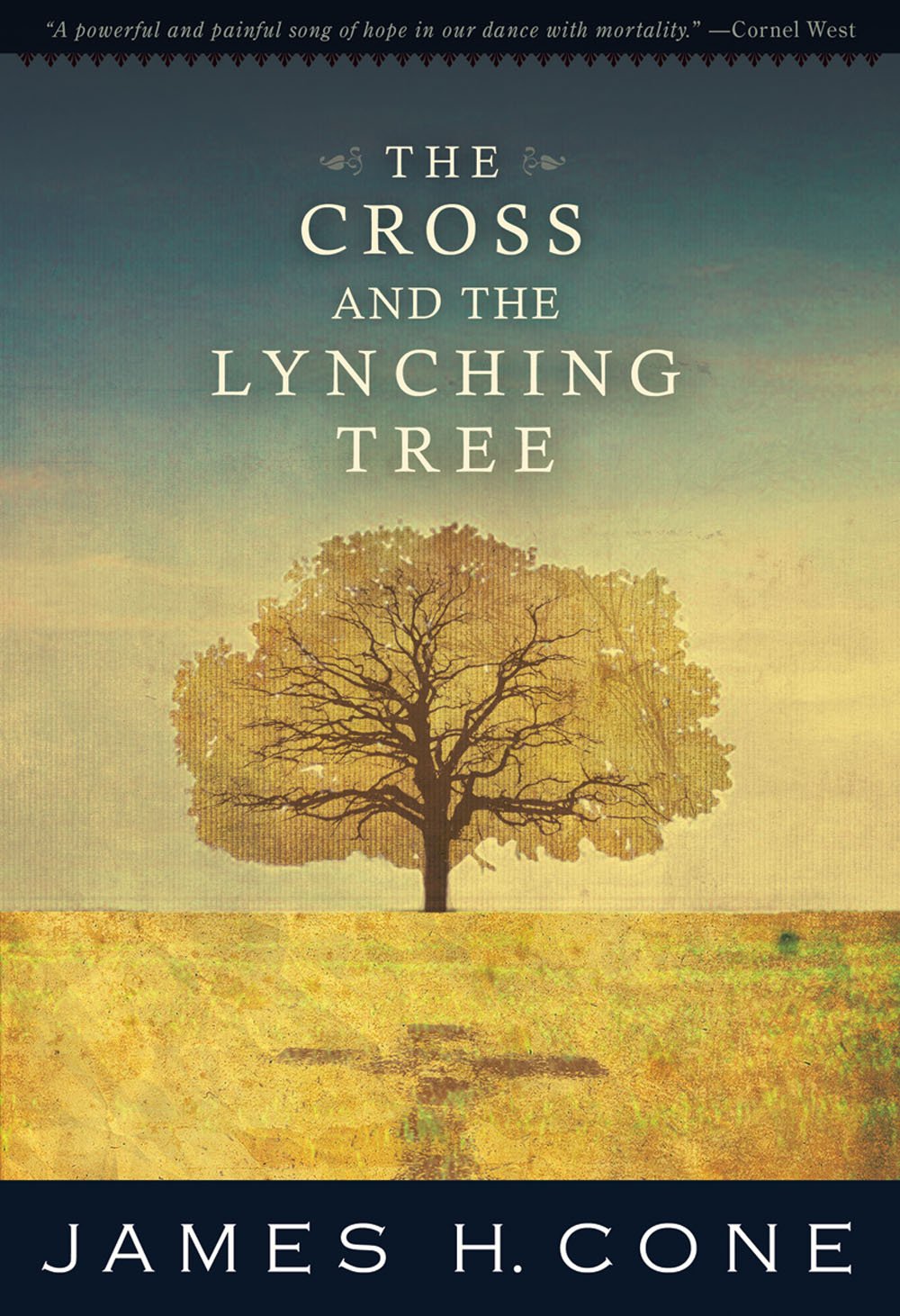
Lent 2015 - The Cross and the Lynching Tree - Chapter Three

NOTE: Throughout these blog posts, I will mostly be able to write through the narrow lens of my own experience. I am not well versed in critical theory, the study of race, or the discipline of history. Although I consider myself a practical theologian and a Christian, I would not say that I have the skill set of someone schooled in doctrinal, dogmatic or systematic theology or even ethics. I will probably stumble over ways of talking about what I am reading and my reactions to it. With these caveats, I would like to think that this is an appropriate place from which to engage this book. I would hope that this book would be read in churches and seminaries, classrooms and even homes, by people not well-versed in any of the disciplines I mentioned above. I am reading this book for the first time, and so my words, though I hope reflective and thoughtful, will be first time reactions. 
A general introduction to this blog series can be found here, and an index and schedule for the series can be found here.

*****

What does it mean to bear a cross? 

I spent this past week with my extended family in North Carolina. My eldest nephew has an arsenal of Nerf guns and loves to play Nerf wars. We shoot harmless styrofoam bullets at each other while running around my parents' large basement. He is over five feet tall and is solidly built. Despite my sister’s heroic efforts to get him to wear denim and a polo shirt, he also most often heads out of the house in black sweats and a black hoodie. He is 12. This is the same age as Tamir Rice. Until this year, our silly Nerf games and his fashion sense meant little to me. Now I’m doing everything to encourage him to wear jeans and a polo shirt and I don’t really want him to play Nerf outside (even though the weather was beautiful).

The reality that Tamir Rice could have been either of my nephews spurred me to begin making major changes to how I engage race. But that my thought was about my nephews and that I have never thought the same about myself demonstrates the difference in experience between those who benefit from white privilege and those who suffer from it.

Monday, March 2, 2015

Lent 2015 - The Cross and the Lynching Tree - Chapter 1

NOTE: Throughout these blog posts, I will mostly be able to write through the narrow lens of my own experience. I am not well versed in critical theory, the study of race, or the discipline of history. Although I consider myself a practical theologian and a Christian, I would not say that I have the skill set of someone schooled in doctrinal, dogmatic or systematic theology or even ethics. I will probably stumble over ways of talking about what I am reading and my reactions to it. With these caveats, I would like to think that this is an appropriate place from which to engage this book. I would hope that this book would be read in churches and seminaries, classrooms and even homes, by people not well-versed in any of the disciplines I mentioned above. I am reading this book for the first time, and so my words, though I hope reflective and thoughtful, will be first time reactions. 

A general introduction to this blog series can be found here, and an index and schedule for the series can be found here.

*****

I have to admit that I'm struggling to write a blogpost about this first chapter. The main difficulty is that no words of mine could replace the experience of reading these stories of hope in the midst of lynching. And that is the point of this book. As Cone writes in the introduction:

"...my primary concern is to give voice to black victims, to let them and their families and communities speak to us, exploring the question: how did ordinary blacks, like my mother and father, survive the lynching atrocity and still keep together their families, their communities, and not lose their sanity? ... I believe that the cultural and religious resources in the black experience could help all Americans cope with the legacy of white supremacy and also deal more effectively with what is called the 'war on terror.' If white Americans could look at the terror they inflicted on their own black population—slavery, segregation, and lynching—then they might be able to understand what is coming at them from others. Black people know something about terror because we have been dealing with legal and extralegal white terror for several centuries." (xviii-xix)

Sunday, August 14, 2011

The Tenacity of Trust: Wrestling with God in the Hard Times


"Wrestling Jacob" 
Excerpts from the poem by Charles Wesley

Come, O thou Traveler unknown,
Whom still I hold, but cannot see!
My company before is gone,
And I am left alone with Thee;
With Thee all night I mean to stay,
And wrestle till the break of day.

...In vain Thou strugglest to get free,
I never will unloose my hold!
Art Thou the Man that died for me?
The secret of Thy love unfold;
Wrestling, I will not let Thee go,
Till I Thy name, Thy nature know.

Friday, August 27, 2010

Peter, A Polar Bear Poster and the Power of a Moment

I own a poster of a cuddly polar bear cub. It has travelled with me from my childhood home in Salt Lake City to my dorm room in Alma and now hangs on our bedroom door in Princeton. Some photographer caught the cub ambling forward from a black background, head hanging slightly, dark button eyes barely lifted from the ground. A nameless graphic designer cropped the photo so that the youngling would dominate the image, then wrapped a short piece of text around the bear’s back. The text reads: “Help me to remember, Lord, that nothing’s gonna happen today that you and I can’t handle together.”

Saturday, September 12, 2009

Confidence and Completion


"I am confident of this, that the one who began a good work among you will bring it to completion by the day of Jesus Christ." - Philippians 1:6

Last weekend, Sarah and I went back up to our Alma Mater, Alma College (somehow it seems redundant), to participate in the wedding of two wonderful friends. We laughed, some people cried, we played music, we danced, we talked with old friends. The weather was beautiful, the sky a bright blue, the temperature warm enough for sleeveless dresses and cool enough to forestall sweat. After the happy couple left for their honeymoon cruise, we helped the wedding party clean the reception hall. Then we went to chapel.

Alma's chapel service, if you haven't been, starts at 9:00 at night on Sundays. It's a rather odd affair: drums and guitars and piano blaring out the good news to old teens and young twenty-somethings dressed in everything from pajamas pants and slippers to khakis and nice shirts. Sometimes the soon-to-retire sixty-something-year-old president of the college attends with her husband, a professor at a seminary in Detroit. She smiles and shakes hands during the boisterous passing of the peace, where some people hug, others give high-fives and folk run around to greet each other with such energy that the worship leader always has to call them back with a shout. Chapel worship is robust and energetic, with clapping and singing at the top of lungs. The music ranges from spirituals, folk songs and old hymns to straight up rock. The preaching is done by students and professors and local ministers. It can also be reflective, with prayer and silence, and sometimes weeping. It is not an experience for the faint of heart. Or perhaps it is, because through it your heart might be strengthened. It certainly expands hearts and opens arms in fellowship.

It was not always this way. Ten years ago, long before I attended Alma, the Chapel program was dying. I heard, from Alums, that Chapel attendance once consisted of the chaplain and five students listening to hymns recorded on tape and played on a stereo. Two years before I landed a few students decided to change that. They formed a small band and started playing more upbeat music - live. To advertise the change, they played at the college's annual song competition. A few people took notice and attendance rose to fifteen or twenty people. The chaplain, who was supportive of this, was also nearing retirement. So, the year before I came to Alma, he retired.

I came to Alma at the same time as a new chaplain. Having lead worship at my church for a few years, I knew that I wanted to participate in any way I could. The band leader at that point, one of the founders of the chapel band, was in his senior year. The band needed a keyboardist, and he felt like he could train someone to replace him leading the band on guitar and vocals. I took up the charge and played every week. He bolstered my guitar skills, playing for hours after every service with me. Soon I became confident enough to sing and strum at the same time, if not often in rhythm. Sometimes I slowed down. Other times I sped up. The rest of the band at that time (all extremely competent musicians who either had separate bands of their own or who were part of our college's award winning percussion ensemble), dealt with the transition as well as could be expected and taught me a lot about how to lead a band and how to work with people. They also taught me rhythm (mostly). Other part-time folk were brought into the band as well, and we developed a rotating roster of singers and keyboardists and guitar players. We added occasional flute and violin and harmonica and tin whistle too.

The then out-going worship leader was also the chapel intern. He worked ten to twenty hours a week at the chapel, helping the chaplain with whatever she needed and developing the worship life. He knew that not every Alma student would want to take over the position of chapel intern, but the program was growing. They started an Alternative Break program that year, in conjunction with the college's Discovering Vocation office. Worship attendance had grown to an average of thirty people per week. And more and more students seemed interested in Christian leadership. So the chapel intern and the chaplain devised a plan. They divided the work of the intern into six areas with twelve positions: music and worship, technology, clerical, liturgical, worship and the arts, and hospitality. Then they hired twelve students, including myself, as test pilots for a new group: the Student Ministry Coordinators. Half of us were considering some type of graduate work in religion, the other half were very dedicated chapel goers, or people who had worked sound and other things with the chapel program.

Over the next three years the roster of SMCs changed, with a core of five or six of us. The chaplain broke her leg and was out for half a year, then moved on to a position at a Seminary. We went through a year with an interim chaplain, then found a new one for my senior year. Ever year seemed in flux. Sometimes we were barely keeping ourselves upright. We fought each other. Divisions flared up. Some people who came into the program were just looking for a campus job. Others had problems at home. We were all over-busy, over-stressed and sometimes over-worked. Sometimes all twelve of us (thirteen including the chaplain) came to meetings, sometimes less than half. We changed the order and style of worship over and over and over again. The only constant was the worship. Sunday after sunday. Rain or shine. Sometimes there were only ten people in the pews. Sometimes there were almost sixty. Somehow, in all of this turmoil, by the grace of God, the program grew. Three chaplains in three years. Twenty-or-so over-stressed students. Varying quality of music (often my fault, sometimes because no one came to practice). Yet, by my senior year, our average attendance had grown to over sixty people per week.

That senior year we realized that most of us SMCs were...well...seniors. We had grown up together, shared our lives together, cried and laughed and struggled together. But we were moving on. What would the future hold? Should we disband the SMCs? Should we pare it down to only six? How do you pass the torch? We put out a search for first and second year students to join us, to apprentice us. We left as much information as we could in their hands (I sent six CDs full of music back so the new band leaders could listen to most of the songs in our catalogue). Still, two of those we were training were going to be in semester over seas programs, and our chaplain was going to go on sabbatical for a year. It seemed that the program was going to be in flux even more than before. And the elusive stability that we had sought, the stability that we thought we could provide by being there, was going to be lost.

Would the chapel program survive us? (I admit this is a prideful and obviously stupid thought. I wish I could say I'm a better person than one who would think that, but I can't.) The six or seven students in whose hands we were leaving the SMCs had a huge mountain to overcome. Not only were they small in number and newly trained with another interim chaplain with whom they must deal, but the expectation of those who had come to chapel regularly and who would still be attending the next year was like a thick fog in the air. It's always hard not to compare. I could understand if the students buckled under the weight of it all. I could understand if many of them gave up. I almost had several times. Life is much easier without stress.

I paint a dire picture of course. But, in talking with several of the SMCs the year after I left, I discovered that they were having a difficult time. Attendance had dropped. The interim chaplain was sometimes hard to deal with. Some of them did end up quitting.

And yet.

And yet. It is a testimony to God's strength and grace that the Chapel program survived. And not just survived. Thrived. After the initial drop in attendance, a quiet revolution began. The SMCs knew what all good torch-bearers know, what all those running a relay know. When the torch is passed, you can only run as you can run. You can only breath as you can breath. If you think too much about imitating the previous runner, you're sunk. If you think too much about how desperate the situation is, you're sunk. If you dwell on the past instead of running into the future, the race is already over. You must run the race you've been given and set your eyes on the finish line. The SMCs made the program their own. They found their voice.

By the second year after I graduated, average chapel attendance was edging close to one hundred. I came back to preach in January, the first Sunday of the second semester. During my tenure as an SMC, first Sundays of second semester were notoriously low. Something about the winter cold and coming back from break and the rigors of the first semester that always depleted our attendance usually brought down the numbers to just between fifteen and twenty. Certainly not sixty. Certainly not eighty. Certainly not one hundred. But that January night I preached to one hundred people. On a low Sunday.

And now back to last weekend. Sarah and I walked into chapel early. She went downstairs and I stayed up in one of the pews to listen to the new chapel band. Only one of the members had even been a student at Alma when I had been an SMC. But they sounded good. Different. They had their own style. And yet there was something familiar about it. I even heard one of the worship leaders ask after a song: "Any questions, concerns, or problems?" which is a slight variation on something I used to say: "Questions, concerns, comments, queries?" I guess I'm more into alliteration. Slowly the chapel started to fill. Sarah and I were expecting low numbers. This was the Sunday of Labor Day weekend, after all. Although many first year students were already on campus, upperclassfolks didn't have to start until Tuesday. Monday was a holiday. Labor Day Sundays were notoriously low. But the chapel filled. And filled. Eighty-nine people, not including the six or seven SMCs who were there (some of them hadn't come back to campus yet).

Worship was exhilarating. The music was uplifting and just as flawed as it had been when I was leading the band. I discovered during my four worship-leading years that the time when the band was the least prepared and when the music often sounded the worst was the time when I reached out to God the most and found that I was truly worshipping. So I rejoiced that some songs were too fast and that you couldn't always hear the singers. Worship is never about the band anyway. It's about God. Passing of the Peace was even more boisterous than I remembered; the fellowship more deep. The college president even gave me an informal hug and asked how I was doing with a bright, cheery smile. The SMCs had added a ministry to worship. Some of them stayed in the back afterward to offer anyone who needed it a shoulder to cry on and a hand to hold in prayer.

And the message. The message was prayerful and heartfelt and chocked-full of scriptures and genuine. The student who preached gave a message about Growth. And she used the scripture passage at the head of this blogpost. She talked about how growth was hard, but how God was with us. And how God had a plan, even if we could not see it. And as I sat in that pew, some of the doubts about what I'd done in college faded away. Some of the tension and emptiness slipped back to the darkened corner of my mind from where, someday, they might creep back again. But for now, they were silenced and gone. And I got a glimpse of that elusive plan of God, that stretches all throughout history and is more like a woven blanket with an intricate pattern of warp and woof than a simple straight line. I saw that God had used me despite me, and that God was growing the chapel despite me too. I saw that it was true that the good work that God began at the Chapel among my generation, and even before us, was being carried on to completion. I saw that sometimes this means that God will complete something started in us, even when we are no longer there. The verse is ambiguous about this, of course. It doesn't say that we will complete the work, or that the work will be completed in us, but that God will complete the work that was begun in us. Nevertheless, this confidence that God was completing a work that I helped to inaugurate gave me confidence for my own life. If God could complete this, surely God can complete me.

Saturday, August 22, 2009

Adventure


Three weeks ago I gave the message at the church where I worked for the past year. I returned as "pulpit supply" while the pastor was on vacation. The message circled around the concept of asking God for more. No, I have not stepped into the prosperity gospel camp. I do not believe that if you sow your seed (money) and give it to the church God will bless you with three cars and a million dollar house. God wants even more than that for all of us. God wants us to have a real, deep relationship with the one who threw the stars out into the heavens and set the earth spinning. God wants us to have more than just the drudgery of this day to day life, more than the discontentment that can so easily set in, more than rehearsing our old wounds and lashing ourselves on the back for our sins. God wants forgiveness for us, grace for us, love for us, hope for us. I preached that and I believed it, and I believe it still. But I didn't trust it.

Three close friends from the seminary come to the church to listen to me preach. While we sat in the church basement, eating delectable treats (no wonder I gained a few pounds this year), it started to pour outside. Monsoon-level. The streets were rivers, with water at least a foot deep in some places. Driving home, two of our friends, husband and wife, stalled their car in one of the impromptu rivers. Sarah and I were able to pick them up and take them home, but their car needed hundreds of dollars of repairs. We felt a little guilty, since they came to hear me preach, and we had given them alternate directions home, directions that led them through the water. But, they were gracious and soon forgave us.

Fast forward three weeks, and the third friend who came to listen desired my companionship on a road-trip to bring some of his things to storage in a town two hours away. He's moving to Ireland for the next year, and I wanted to spend time with him, so I readily agreed. We ended up taking the second vehicle of our erstwhile water-logged friends, an SUV. The drive up was wonderful, blue skies and the wind rushing past us, green trees and the smell of pine. We arrived and he unloaded his things (packed in heavy rubbermaid bins that he told me were too heavy for me--which was true--and that he proceeded to lug up two flights of stairs himself.) We spent a few minutes chatting with the woman at whose house he was leaving his stuff, then headed back home. He was craving hot dogs, so we stopped along the way at a roadside restaurant and he ordered two dogs with all the fixings and two birch-beer floats, one for each of us. (Birch beer tastes like a smoother, slightly more bitter root beer and is the color of black cherry soda.) So far, the day had been perfect. We took to the road again, relishing the fresh air and the good conversation.

While we drove I asked him what drove him. What was the passion underlying his time in seminary? What kept him going through the long nights of studying and all the frustration? Even as I asked him, I knew that I asked because I was having trouble answering the question myself. Back in high school I was surrounded by energetic friends in the prime of life. We prayed for each other, sang with each other, took trips to the mountains with each other. I was ready to do anything God wanted, ready to go anywhere. I read my bible daily, prayed every night and wrote in my journal at least once a week. I wrote songs and poems and novels. I was full of joy and passion. I was eager for God.

College hit. I moved miles away from my friends and the home I'd known for eighteen years. The new relationships I tried to build in college didn't last long. During an AOL chat with them, a girl mentioned something that was troubling her. I typed that I would pray for her, and instantly the backlash began. It was offensive to offer prayer in college. Offensive and pushy. Those friends soon turned their backs on me, especially after I met Sarah and started spending more time with her instead of them. Soon I met new friends, good folk who worked with me at the college chapel. But my life wasn't the same. I grew distant from God in college, angry. I did things that drew me away from God, things that I continue to regret. I took on too much in my first year, sleeping only four hours a night most nights. Then I vowed to never take on too much again. Living on the edge of sleep was exhilarating for me, but I didn't think it was healthy. So I curtailed my passions. Even though I wrote for all of my writing classes, everything I wrote was dark, writing became an assignment, working for a deadline. During some of the best times of my life, I often withdrew to my room and shut my door. I still regret having a closed door for some of the residents for whom I was an RA.

My friends from Utah faded to the background. I hardly knew them anymore. I was so busy in my first two years that I didn't stay in contact. Even the new friends I gained were kept at a safe distance. I didn't let them into my heart, into my life.

I learned that I had a fear of failure and, instead of facing it head on like I knew I should, I built a cocoon of safety. I did, and still do only things at which I can succeed. I don't let other people see my flaws. I let as much of myself out as is needed to retain friendship, but not enough to make it real. My relationship with God has fared the same fate.

After college, I followed the call planted in my heart in middle school and went to seminary, Sarah following me with love and trust and sacrifice. We arrived and the first year changed me again. It was hard to gain friends, hard again to get my footing. The call to be a church pastor disappeared quickly, pushed away by justified fears and by good reasons and good sense. God was still calling me, but now the voice seemed farther off, and in a different direction. God was calling me, but we were separated by fog and a sturdily-built cocoon. I was directionless, and far away again from God. I've spent my time like a pocketful of pennies, selling it for cheap. I troll the internet for interesting articles, and watch TV like I used to read books. I find myself grasping for the passion and eagerness I once had, grasping and holding nothing. My life is circular and stagnant. After my friend told me about his passion, I told him that I felt lost and that my relationship with God wasn't that good, that I wanted it to be better. I told him that the only thing driving me is the search for my old drive. He said that these dry times are why we need faith.

An hour away from Princeton, we ran into a wall of water. Monsoon-level, yet again. The rain was hitting the windshield so fast and so hard we could barely see, and we rumbled through the quickly-rising torrent, spraying muddy water everywhere. People were pulled over on the side of the road, hazard lights flashing like lighthouses in the darkness of the storm. Some cars were stuck in the flood, their owners knee-deep in water, trying to push them out. I was worried.

My friend is a wild, devil-may-care man, with a big laugh and an even bigger heart. The storm gave him energy. Soon he had me smiling with his effusive praise for how exciting it all was. Still, I held our map with white-knuckled intensity.

"It's odd," I said to him, "I'm smiling, but somewhere deep in my head I'm really worried. Not about us, but about the car. I don't want to be the cause of stalling two of their cars."

"I am too," he said. "But that's what makes it an adventure!"

Just last night, another friend and I were talking about joy. We talked about how fleeting happiness is, and how unattainable joy is. Happiness comes up like a weed, sudden and often. But it dies just as quickly. Joy is like a great oak, it needs roots and a firm ground. But how often is our true joy carried away by the carrion of life, how often does the seed of joy land on the hard ground, how often is it choked out by the very weeds of our happiness, choked before it can ever take root? Sometimes in our search for momentary happiness, we strangle our joy.

This blog is named after one of my favorite verses. "There is no fear in love." (I John 4:18) I have taken this verse to mean that I should not fear, and in doing so have avoided those things that scare me. Avoided deep relationships, avoided the pain of confronting myself, avoided the incomprehensible and wild God. Avoided where that wild God is calling me. But the verse goes on. "There is no fear in love, but perfect love casts out fear; for fear has to do with punishment, and whoever fears has not reached perfection in love."

Maybe this is an indictment from the writer of I John. Those who fear have not reached perfection in love. Our maybe it's a statement of reality. We all fear, we are all imperfect in love. Right before this, the author says that we love because God first loved us. God is love.

In reading this I realize that the fear has to be there for the love to cast it out. And in that split second between fearing punishment and failure and embracing, or being embraced by love, in that small moment is joy. After all, the contraction in the throat that comes with fear and the widening motion of the smile that comes with love are what make life an adventure. And perhaps by avoiding the fear, I've been avoiding the love and the joy too. Perhaps by trying to find a shortcut past my fear I've gone right around love and joy and into this wasteland where I find myself now.

And perhaps this is a turning point. And maybe it's not. The Israelites encountered a God who moved in cloud and fiery pillar, a God who split the sea in half; yet they still complained and worried about how they were going to be fed. Peter saw Jesus talking with Elijah and Moses on a mountain, witnessed him raise people from the dead and bring sight to the blind, and still denied his lord, his savior, his friend, three times when the fear of death came in a slave girl's accusation.

But that same God who took the complaints brought the Israelites to a good land just the same, though they had to struggle through the wilderness to get there. And that same God has preserved those people for thousands of years. That same God spoke to them lovingly again and again, trying to get them to turn around when they strayed, never giving up on them. That same God came down as a person, came down to take the brunt of our complaints and inattention, came down to be spat upon and ridiculed. That same God came down to befriend Peter, and when Peter betrayed him, that same God came back and restored Peter with love, affirmed his love three times, once for every betrayal. That same God loves me with a perfect love that can drive away my fear, because I can't do it on my own. That same God brought me the joy of my life--my wife--out of the midst of the wilderness of college. That same God brought me one of my best friends out of the driest time in my life. That same God brought me to this place, brought me this far, brought me through two floods and through this season of doubt to the place I am now.

The passion will come again. The voice will become clearer. The skies will turn from grey to blue and though I see now in a mirror, dimly, then I shall see God face to face. And even if all of this does not happen, God is still with me. Even when I turn my back on God, God is still facing me. And because God is facing me, and because God is pushing me from behind, and because God is walking right by my side, I can face my fears too. And that God of perfect love, that God who is love, will cast out those fears, and in doing so, bring me joy again. That's what makes it an adventure.

Thanks for sticking with me, faithful reader.


Thursday, April 2, 2009

Good Byes and Bumper Stickers


This morning I dropped off Sarah at the airport so that she could attend a friends wedding.  It will be the first time in more than a year and a half that we've been separated for more than a day.

We seem to have an uncanny knack for staying up until midnight the night before traveling, especially when we have to wake up at 4:30AM.  Last night was no exception.  Most of it, I'm sure, is apprehension.  I know that, under my calm demeanor, I was bottling up worry for her safety.  So we stayed up last night talking and eating ice cream, joking and fiddling with all the details of her itinerary and the contents of her suitcase, making sure everything was in its place.

We woke at 4:30 this morning (well, 4:30ish) and brewed a pot of coffee.  Neither of us are big coffee drinkers.  I can't stand more than a cup, two if I'm lucky, before my bowels begin to feel unsteady and I get a slight headache.  Sarah's the same.  Nevertheless, since we had a 50 minute drive to the airport and I had a 50 minute drive back, and because we'd stayed up so late, we brewed just enough for a travel mug for each of us.  Then we took one last look around the apartment, stepped into our shoes and headed out the door.

The drive to the airport went too quickly.  We talked the entire way and the 50 minutes sped by like a bullet train.  All too soon we were at the exit for the Philadelphia airport.  Both of our stomachs were queasy and we joked that we weren't sure if it was the coffee or our nerves.  Then we arrived at the departure terminal, hugged and kissed and promised to be safe.  She clutched her bags and walked into the terminal.  I got back into the car.

Now, if you don't know me that well, you perhaps don't know that I am a worrier.  I actually have an award statue for it.  Seriously.  It's sitting on my mantel next to my perfectionist certificate.  When I was young I had was plagued nightly by the fear that I would wake up to find my parents dead.  Oftentimes I snuck to their bed at night to make sure they were safe; most nights I ended up crawling into bed with them.  I knew the route from my bedroom through the kitchen to their bedroom so well that I was like Indiana Jones stepping from tile to tile in the Last Crusade, marking the name of Jehovah with my steps and trying not to make the floorboards creak.  I've overcome those fears--mostly--but every now and then, especially when someone in my family is traveling, the fears seize up on me again.

So, my stomach in knots, I sat back down in the car, turned on my turn signal, and prepared to move back into the already cramped airport traffic.  As I waited for an entrance, a car moved past and slowed down to let someone off just long enough for me to see its bumper sticker.  "Relax, God is in Charge."

Now, this can be a problematic phrase.  What does it really mean that God's in charge?  Does it mean that God causes everything?  Even the bad things?  Or less stiffly, does God at least ordain or allow bad things to happen?  This phrase can be troublesome for many people.  And it can be hard to believe, too.  Is God really in charge?  What about Hurricane Katrina?  What about 9/11?  What about the babies who die and the women and men and children in Africa with AIDS?  What about murder and hunger and genocide?  How can God be in charge if all of these things happen?

These are questions I wrestle with.  I know many people do.  Yet, my wrestling is often overbalanced by the good I see in the world.  People escape from death just as much as they succumb to it.  People of faith have been the ones who stayed down in the Gulf, long after everyone else had left and stopped helping.  Even now the Church where I'm working is planning a trip to Louisiana to continue the good work of cleaning up and rebuilding.  It is often people inspired by the love of God in their lives who are doing things about AIDS in Africa.  It is a stark reminder to me that (fortunately or unfortunately) God is certainly in charge, but God is big and loving enough to also put things in our hands.  Certainly people of faith have done horrible things as well (let's not even get into that list), but I truly believe that even then, those who loved God and who were loved by God were working to make things right.

Derek Webb has two beautiful songs, one called "This Too Shall Be Made Right" and the other "A Love That's Stronger Than Our Fear."  They express that duality of our need to do good in the world and the promise of God that, eventually, all our tears will be dried and sorrow and crying and fear will be no more.  That perfect love drives out fear.  Here are the lyrics.

This Too Shall Be Made Right
people love you the most for the things you hate

and hate you for loving the things that you cannot keep straight
people judge you on a curve
and tell you you’re getting what you deserve
this too shall be made right

children cannot learn when children cannot eat
stack them like lumber when children cannot sleep
children dream of wishing wells
whose waters quench all the fires of Hell
this too shall be made right

the earth and the sky and the sea are all holding their breath
wars and abuses have nature groaning with death
we say we’re just trying to stay alive
but it looks so much more like a way to die
this too shall be made right

there’s a time for peace and there is a time for war
a time to forgive and a time to settle the score
a time for babies to lose their lives
a time for hunger and genocide
this too shall be made right

I don’t know the suffering of people outside my front door
I join the oppressors of those who i choose to ignore
I’m trading comfort for human life
and that’s not just murder it’s suicide
this too shall be made right

A Love That's Stronger Than Our Fear

what would you do
if someone put a gun to your head
and ask you to tell them a lie
what would you say
if you were pushed that way
to betray yourself to keep yourself alive
is life worth so much

[Chorus]
there’s got to be a love that’s stronger than our fear
of everything being out of control
everything being out of control

what would you do
if someone would tell you the truth
but only if you torture them half to death
tell me since when do the means justify the ends
and you build the kingdom using the devil’s tools
can time be so short

[Chorus]

[Bridge]
there is a day that’s been inaugurated but has not yet come
that we can proclaim by showing that there’s a better way

Though there are arguments on both sides for what it means that God is in Charge, I do find comfort in the phrase.  Some do not.  But I do.  I find peace knowing that God is working in ways I cannot imagine, and at the same time God is working through me.  God trusts me enough to do good in the world.  Can I trust God enough to do the same?

Thanks for sticking with me, faithful reader.

Tuesday, February 3, 2009

Running with Candles


At Princeton Seminary we have a tradition at Christmas.  After our Carols of Many Nations Concert--which ends in a stirring rendition of Silent Night sung while holding candles--we walk out into the main quad, candles still lit, and sing carols.  This is the trickiest part of the evening.  How do you walk dressed in a long choir robe, with a candle in one hand and a program with lyrics for carols in the other?  If you dash out into the night, especially a windy night, your candle will go out (and you might trip to boot).  If you hold your candle too close to your program you may light it on fire, but then how can you see what you're supposed to be singing (especially after they've changed all the hymns to be gender-neutral and you constantly forget to sing "God Rest Ye Merry Christians All" instead of "God Rest Ye Merry Gentlemen")?  So, you must balance, walk carefully into that good night.  You must discipline your steps and keep your eye close on the flickering flame.  

This is where I am.  I'm running with candles.  I have talents, loves, passions.  Like tiny flames they light my way.  But I've decided to run with them, and soon they will flicker out.

Now is the time where you, faithful reader, may assume that I am bragging.  And I probably am, unintentionally.  Nevertheless, I think that in quite a few ways I've scooted through life, run through it without barriers.  School has never been gut-wrenchingly difficult for me.  I've miraculously run right into Graduate school with only a smattering of A- to my name.  I've even somehow received scholarships without interviews, positions without trouble.  Almost everything has gone my way.  And yet.  And yet I feel as if because of that I'm running with candles.

I'm certainly passionate about things: about reading and writing and the people of God.  But I realize that that passion is about to be winked out of existence in the backdraft of my headlong run through life.  Put succinctly: I have no discipline.  I can pass a test by skimming texts, study for two hours when it takes others ten.  I can write a six page paper in under an hour and still get more than a passing grade.  And so I've never steeled myself to discipline.  And in the end, I've given myself the short end of the stick.

I do remember things that I've read that I love, quotes that stick in my mind, but they are vague illusory ghosts, not striking images that shape me, not strong cornerstones of thought.  I do not read as deeply as I would like.  I do not write as often.  Even as I pledged in my last post to be more reckless in not editing myself overmuch, I now have to look at myself and wonder if I don't need to simultaneously be more disciplined.

I don't want to lose these things that I love.  I don't want to fall back into doing something, living something, being something that I don't love because of expediency.  I've seen too many good friends who feel lost and adrift because they lost their grip on the things that made them passionate, the talents that they had.  Instead of nurturing them, they ran wild into the wind, and their candles, their talents, their passions burned out.  

I want to write.  I want to read deeply, to memorize passages, to think again long hours into the night.  I don't want to domesticate myself.  I want to be reckless.  But I'm finding that, in order to be reckless, I must be disciplined.  If I want to read and write every day, I must set aside time to do so.  If I want to write songs again, I must set aside time to do so.  If I want to retain my sanity and protect my tiny light from the ravaging wind of my situation and my needs and the greed and pressure and force of the world, and academia, and the media and entertainment...really the harsh, cold, bitter wind of my own faults and wayward ways...I must have discipline.

So, reading my last two posts together, is there such a thing as Reckless Discipline?  Or a Passionate Routine?

Thanks for sticking with me, faithful reader.

Monday, November 3, 2008

The Margins


Some thoughts after class and a few other things that have been swirling around in my head.

Hebrews 11: 13-16 “All of these died in faith without having received the promises, but from a distance they saw and greeted them. They confessed that they were strangers and foreigners on the earth, or people who speak in this way make it clear that they are seeking a homeland. If they had been thinking of the land that they had left behind, they would have had opportunity to return. But as it is, they desire a better country, that is, a heavenly one. Therefore God is not ashamed to be called their God; indeed, he has prepared a city for them."

I have found myself to be a man on the margins, a member of a small minority taken from a large majority, on a sojourn in a foreign land. I am an Asian man, a minority in the United States, only 4.2% according to the latest census. Yet, considering the whole world, Asian people are in the majority, they are the largest growing group. India and China alone make up almost 1/3 of the world’s population. I am a member of a small minority, taken from a large majority, on a sojourn in a foreign land. While I was living in Salt Lake City, UT, I was in the minority as a Christian. The majority of people in Salt Lake are members of the Church of Jesus Christ of the Latter Day Saints. Yet, considering the United States as a whole, Christians are in the majority (at least for now). I am a member of a small minority, taken from a large majority, on a sojourn in a foreign land.

Because of this I find great comfort in the affirmation that our God chooses the least and the lost, the outcast, the marginalized and the outsider. God chose a small nation, beaten down by many, the slave and servant and vassal state of a rotating who’s who of nations – Egypt, Babylon, Assyria, Greece, Rome – to be the purveyors of glory and salvation and the word of God. God chose to come as a Jewish man from the backwards town of Nazareth (“what good could ever come from there?” Philip asks). God chose fishermen and tax collectors and sinners and lepers as friends and disciples. Christianity, lest we forget, was once the minority. Christianity, lest we forget, was once persecuted because it was not tied to any national identity, because it was a kingdom not of this world.

In fact, I believe that this has been one of Christianity's core problems. Once Christianity became THE state religion, the majority, the world power, things went utterly wrong with it. The Inquisition, the Crusades, Slavery – absolute power corrupting absolutely. The Church is not free from corruption. As much as this may sound un-American (come on, McCarthy) I can't wait for the day when Christianity is no longer the dominant religion in America. It scares me how Christians like James Dobson and his group Focus on the Family can put out letters like this.

Although the writer of this letter insists that Christians should not hope for persecution or for these things to happen, I say: BRING IT ON. I want to remember what it was like to be a child of a God of outcasts, members of a kingdom not of this world, sojourners looking for a better home.

So that is why, for me, the lyrics of a modern-day prophet hit so hard and so true:

A King and a Kingdom
Derek Webb
Appears on: Mockingbird

Who’s your brother, who’s your sister
You just walked past him, I think you missed her
As we’re all migrating to a place where our Father lives
‘Cause we married into a family of immigrants

[Chorus]
So my first allegiance is not to a flag, a country or a man

My first allegiance is not to democracy or blood

It’s to a King and a Kingdom

There are two great lies that I’ve heard

The day you eat of the fruit of that tree you will not surely die
And that Jesus Christ was a white, middle class Republican
And if you wanna be saved you have to learn to be like him


How can we realize that we are part of a family of immigrants, part of Abraham’s family who left home, part of the Israelites who traversed the desert, part of all of those wanderers who never saw the things that they had been promised? How can we reclaim our identity as a wandering people, as sojourners in a foreign land, children of a God who is the God of the outcast, co-heirs of a kingdom not of this world?

Wednesday, October 15, 2008


Hi everyone.  I just wanted to get out on the front page a conversation started by my latest blog post.  I think it's a good one to have.  My friend Laurie posted a wonderful, balancing response to my post yesterday and I again responded to her.  Be safe, everyone, and watch the debate tonight!  May we live in love and not fear.


Marc, I respect your well-thought out, researched post, just as I respect your political position. I agree that fear and hate are terrible, divisive forces, but I don't agree that either candidate is trying to drive wedges of fear and hate into America. I consider the questions regarding Senator Obama's past associations valid, just as I consider questions regarding McCain's pas associations valid. We are so influenced by those around us; we should be able to ask about those influences.

What I can't fathom is how the supporters of both candidates can let their fervor turn so ugly. The recent McCain rally was well-covered, and we're both familiar with that, but I found this article that identifies some ugly, sad and scary behaviors of Senator Obama's supporters:

Townhall Article, Obama Supporter's Rage

No politician, no president, can change this. Other than just being good and decent people ourselves, how do we and our friends change this?

My Response:

Laurie,

Thank you for adding some levity and balance to the post. Those actions by Obama's supporters were NOT well covered and I hadn't found anything about them. So again, thank you.

I think I see a different fault in this situation in both men. I would like to make a slight nuance of a difference between what you perceived me saying about John McCain and what i would really like to say, and then to make a comment about the difference between this and the fault that I see Obama having. I think that I didn't clearly state what I see McCain doing wrong. I honestly don't think that he's trying to put a wedge in, or trying to divide people and spread hate. I think he's a much better man than that. I do think, however, that in trying to win this political election, he has done some things, I believe, without as much foresight as they needed, that have stoked the fires of hate that were already there. People already questioned Obama's patriotism, people already wondered whether Obama was Muslim, people wondered about whether or not Obama was born in the United States, people wondered whether or not they should fear him. By using this specific line of attack, which might have an arguably viable point about Obama's judgment, McCain, I hope unwittingly, added fire to these flames. If you watch the add on McCain's website about Ayers and Obama, it calls Obama dangerous, and constantly has pictures of him next to someone that they call a terrorist. That word-picture association sends a strong, subliminal message that, perhaps, Obama could be a terrorist, especially when coupled with Sarah Palin's remarks that Obama was "palling around with terrorists," and McCain's remarks that Obama had started his campaign in the living room of a terrorist. It also makes the subtle assumption that Barack Obama approves of these terrorist actions, and, in fact, this is what McCain's question of "judgment" is asking. This would make Obama seem like a person who would want to bomb the Pentagon, making him seem like a terrorist. Again, I don't think that this was McCain's intent, and I hope that it wasn't, but what I worry about is the foresight that was lacking in approving and condoning the use of those images and specific rhetoric to attack Obama. It also makes me worry about McCain, who, as an honorable man, once said that he would rather lose the election than lose the Iraq war. But now, he's pulling out all the stops to win the election (as anyone extremely desirous to win would). This, however, I think has led to some missteps that are potentially harmful and stoke the fire of hatred.
Obama, on the other hand, obviously hasn't reined in these supporters of his who are doing these horrible things. Now, people are hard to control, and people on all sides of the political spectrum get crazy over their politics. So I do not fully fault either candidate for the action of their constituents. Obama should definitely react and try to calm down his supporters. However, as far as I can tell (and I tried to read as many speeches of both men and watch as many ads as possible), Obama's rhetoric has not added kindling to the misguided actions of his supporters. He has not implied anything about Sarah Palin's stance on abortion. He has not linked Palin or McCain to anyone that should be stoned for any action. While, again, I think Obama should be more proactive about making sure that things like this don't happen and that he should apologize for what his supporters have done, Obama's rhetoric has not supported their actions. McCain's rhetoric was not thought through enough for it not to support hateful actions.
Regardless, both men have said very partisan things. Both men have bashed the other's political party. Both men have told untruths about each other. And I think this is where we come in. Not only can we lead decent lives, but we can also spread the word about the truths of the campaign. I highlighted McCain's arguments against Barack Obama because I saw them as potentially dangerous and they were the thing, obviously, that was being covered in the news and that i had the most access to. But we can tell the truth about both Candidates. We can talk about how both are good men. We can look at the way they deal with issues and with other people as a way of discerning between them. We can spread love as opposed to hate. I regret that possibly my previous post was construed as saying something overly negative about McCain. I didn't not mean it to be that way. I do believe that he is a good, noble man at heart, and that's what is so sad to me, that his campaign has come to the point where his rhetoric could be misconstrued rather easily as supporting hateful things. So. All that to say, thank you for your post, again, and for adding to the conversation.


Sunday, October 12, 2008

To Disobey One's Conscience Is Neither Just Nor Safe.


I'd like to talk about the following videos and articles.  If you want the post that follows to make full and complete sense, please watch them and read them before you read the rest of the post.


I'm sorry.  I'm sure that's a lot to digest.  I know it was a lot for me.  I've been haunted by these things for the past two days.  It's been hard for me to continue with homework, hard for me to work with all of this weighing on my mind.

I've resisted stating my opinions on this political race for a long time.  Here and there, I've scattered seeds of how it might relate to fear and love and how we ought to act.  But my conscience calls me to do more.  And, as Martin Luther (the monk-turned reformer) once said:  "To disobey one's conscience is neither just nor safe.  God help me.  Amen."

I am afraid.  I will tell you that truth right now.  I am afraid of our fear.  Fear can do horrible things, can cause horrible things.  And fear leading to hatred is even worse.  As Martin Luther King Jr. once said:
Like an unchecked cancer, hate corrodes the personality and eats away its vital unity.  Hate destroys a man's sense of values and his objectivity.  It causes him to describe the beautiful as ugly and the ugly as beautiful, and to confuse the true with the false and the false with the true.  Power at its best is love implementing the demands of justice.  Justice at its best is love correcting everything that stands against love.
-Strength to Love, 1963

What I read in these articles, what I see in these videos, is fear turned to hate.  I readily admit that many of the writers and videographers of these pieces are probably biased.  I readily admit that I might be biased.  But I cannot ignore the plain fact that the people in these articles and videos, yelling "terrorist," and "kill him," and "commie @3$*$#@" and a whole host of other things have been scared into hate.

It is the unfortunate nature of elections to divide us.  But when that division turns to hate, people get hurt.  I'm worried.

As a biracial child, the uncle of two beautiful quadri-racial boys (I think I just coined that term; their father is African American and Central American, their mother Chinese and Dutch) I am struggling against an overwhelming fear.

I cannot, in good conscience, support John McCain because of his lack of good judgment, and the rhetoric of his campaign.  Let me clarify that I am not starry-eyed over Barack Obama either.  He has made many mistakes, and told many half-lies and untruths and has said many partisan things.  But the tenor of his arguments and the driving force that I see in his campaign is one of hope and not anger, calm and not strife, unifying and not dividing.  Over the last few weeks, however, I have become more and more convinced that John McCain, a good man, a strong man, an honorable man, has been corrupted by his own campaign.  As much as he has a right to say that he has been a maverick (and he has truly reached across the aisles and bucked the system), I think that he is no longer.  The nasty politics of Washington have tainted him.  More than this, I think that he lacks foresight.

I question his judgment because of what has happened recently in his campaign.  Could he not have foreseen that relating Obama to a Terrorist, questioning if we know who Obama is, playing down his patriotism and calling him "that one," during the debate could lead to hate?  Could he not have foreseen that using a William Ayers line of attack on a presidential candidate who is mistakenly called a muslim and whose name is often linked to a known terrorist, simply by the changing of one letter, would lead to people wondering if Obama is a terrorist, fearing him, hating him, calling for his death?  Could he not have foreseen, or at least controlled the rhetoric of the people who surround him, who pray that God would protect God's honor by defeating Obama, who tangentially relate Obama to "bad guys," who "pal around with terrorists," who send smear after smear against Obama, who incite crowds by linking Obama to Osama with bombing the Pentagon?  McCain, in his ads, has called on the American people to question the judgment of his opponent.  It has only caused me to question McCain's.

And even though I applaud McCain for trying to tone down the rhetoric, it obviously hasn't worked, and he still, a day later, uses the same tactics.  His running mate uses the same tactics.  Other people in his party use the same tactics.  And McCain has the audacity to mention that he doesn't want to tone down his constituents' ferocity, just ask them for more respect?  It's the ferocity that scares me.

I worry for Obama and his family, and my family.  In a world where racism still lives, where some jump at any chance to condemn and fear and hate and kill, I fear.  I do not think that everyone is acting in fear.  I do not believe that most people would kill out of hate.  But it only takes a few people with a desire to kill to cause incomprehensible damage in this world.

For those of you reading this blog who are questioning who Barack Obama is, whether he is related to terrorists, whether he was actually born in the United States, whether he is secretly trying to ruin the U.S., I've collected some facts for you.  If you've received a chain e-mail linking Obama to any number of questionable people and questionable things, I've covered that for you too.  Here are a few links:


All of these links are to Factcheck.org, a wonderful website that has a whole host of articles that (as impartially as possible) seek to debunk lies about both candidates.  Believe me, there are a lot of things that Barack Obama has said that are misleading or downright false, and FactCheck.org calls him out on them.  As far as I can tell, this website (recommended by many magazines and websites, both liberal and conservative and everything in between) is trying to get to the real truth behind the half-truths and political meanderings.  

I'm not asking you to vote for Barack Obama.  This post is not a political endorsement of any kind.  Please, follow the issues, find out what qualities you respect in a leader, make sure you really know what's going on and then vote for the candidate in whom you believe.  But I am calling you to search out your own heart, to look at the rhetoric that you have been listening to, to re-read the e-mails you've probably been sent.  I'm asking you to consider what those e-mails do to you, whether they make you angry and afraid.  I'm asking you to try to conquer your fear, as I am trying, with love.  I'm asking you to make an effort, every day, to learn the truth, and more importantly, to spread the truth.  I'm asking you to stop others when they spew forth hate, about either candidate.  I'm asking you to start standing up for those who have been oppressed.  I'm asking you to put a stop to the downward moral and ethical spiral that seems to be taking over our nation and our world.  It stops with us.  It stops now.  Here I stand; I can do no other; I cannot and will not recant.  God Help me, Amen.

Monday, October 6, 2008

A Change in Tactics (or Is That Strategies?)


During my Writing as Faith Practice course this morning I had a revelation, of sorts.  Really, it was an ongoing realization that began last week with a meeting with my Field Education Mentor (a pastor who is guiding me through the experience of working a 9 month internship at a church).  I realized that I really, truly am afraid of being misinterpreted.  I utterly despise being unclear, or being seen as unclear, or having my words twisted.  This is something, I think, that many people fear.  It is tied, I believe, to my fear of failure, and, even further back, to a desire for acceptance.  I want to be accepted, and feel that I will be shunned if I fail (even though I know this is not true, it is still a fugue roiling round in the back of my mind).  A part of failing is failing to communicate.  Another is being perceived to be something else, something that I don't want to be, and being perceived as a failure through that.

Let's be concrete.  Say that I write on this blog an analysis of a particular work of literature, perhaps THE BROTHERS KARAMAZOV.  In doing so, I write something that misrepresents my view of Dostoyevsky and his writings.  People then comment on the blog about my misrepresentation.  I realize that what I wrote was not true to what I desired to evoke.  I feel failure.

Now, this is a small failure, certainly, but one of the things that I fear.  I, perhaps too readily, depend upon public opinion for validation of the things I do.  I know this about myself, and have known it for some time.  Oddly enough, one of the things I have been battling is this feeling that I am less passionate about things because I have not let myself take risks, and have tried to block out other's opinions of myself.  By not being as emotionally available as I could be, I feel that I have, to some extent, blocked off my passions.  This has worried me.  I am caught between acknowledging what people say about me, hearing their true concerns and then viewing my life from an objective, healthy point of view, and putting up defense walls and trying to be everything to everybody.

Let me put it this way: I want to try to hear what others say and to look at my life through their eyes, yet I want what they say about me to be good (or at least neutral).  So, while I am more open to others (in some respects, as in listening to them), I am actually also less open to them ( as in not revealing my true, full self to them).  And I feel that this has also affected the way I view and interact with God.  I am open to God, to new words, to new directives, to a new hope, but I am not open with God.  Perhaps that difference in preposition is truly what I am talking about, being open to, but not open with.  This leaves me with a numbed sense of passion, and, in some respects, has led to the difficult discernment problem in which I find myself.

Now, in my class this morning we discussed the necessity of good writers to be vulnerable, to dive in, both to reading other great writers, and to dialoguing with those writers, and to being misinterpreted by their readers.  A good writer must both be open to and open with.  I am a self-conscious over-editor.  Every sentence I write I immediately analyze for accuracy (I just did it then, I added a word to make the sentence make more sense).  This means that when I finish writing (if I get into writing at all) I often end with something less personal, less emotional, more filtered.  I am constantly worried about what others will think of my writing, whether or not it is good enough for others to read.

This blog is an attempt to force me to simply put writing out there and to allow it to be responded to (AH!  dangling preposition.  I tried to think of a way to fix this sentence, but couldn't since I'm headed to class in 10 minutes.  Wait...."to simply put writing out there and to allow others to respond to it."   Still not the most concise or most-well-written sentence.  Sigh.  I included this as a snippet of what goes on in my mind as I write).  Meanwhile, I initiated early on in this blogging a policy (or tactic, or strategy...first presidential debate anyone?) of comment moderation.  This ties to my fear of being misunderstood or misrepresented.  So, I have taken the small, but for me, bold step of removing comment moderation.  I can still delete comments (I believe) but now your comments should appear right away, without any screening from me.

One small step for Marc...

Thanks for reading, O Faithful Reader!

Sunday, September 21, 2008

A Quick Life Update


Hello for the final time tonight, faithful reader.  Please read the two posts below, which complete my review of Jenny Jump State Forest and pose a few interesting (at least interesting to me) questions about fear.

As for my life, I am busier than a beaver or an ant before winter.  Over the last few weeks I have been preparing for the fall academic semester, hanging out with my wife and trying to relax as much as possible (to no avail).  Now I am in the thick of academia, about to plunge even further in its murky depths.  I am taking several fantastic classes this semester: Systematic Theology, Preaching, Writing as Faith Practice and Greek Translation.  I am also starting a unit of Field Education, working at a local Church in Trenton, NJ.  Needless to say, I am both eager and cautious about what lies ahead of me.  I hope, and fear, that I will be stretched this semester, in ways that I have never been.  I also hope that this will be a time of discernment for me, a time of questioning and finding answers, even if those answers lead to more questions.  

More than anything, I want to find joy and passion.  I want to know that I am at least getting out of the woods, even if I am not yet on the right path.  I want to know whether the light I see ahead is the daylight I so desire, or a train I should avoid.  I want to know if I am running away, or running toward, if I am escaping from or finally heading home.  Many of you know that I am caught in my thoughts between believing that I am called to parish ministry (being an ordained pastor) or academia (being a professor, or teach of some kind), or perhaps a third option (God only knows... literally).  Since I was in seventh grade, I have believed that I was called by God to do something.  For almost nine years I thought that that something was being a minister of the word and sacrament.  In fact, I never gave a second thought that this was my path.  

One day, during a class that aimed to view the pastor as a person, a class that focused on knowing oneself, the thought hit my like a train: what if I am not called to be a pastor?  I had been told this many times before, of course, that there were many callings, many vocations, many ways to live for God.  But I had never asked this question of myself.  I had been having a growing discomfort and apathy over the pastoral role, specifically the pastor as counselor and the pastor as administrator.  Slowly, I had begun to resent the fact that pastors nowadays, at least in the Presbyterian Church, are looked upon as administrators, counselors, healers, preachers, teachers, parents, prophets and a myriad of other things.  This seemed to me to contradict directly 1 Corinthians 12: 

"27Now you are the body of Christ, and each one of you is a part of it. 28And in the church God has appointed first of all apostles, second prophets, third teachers, then workers of miracles, also those having gifts of healing, those able to help others, those with gifts of administration, and those speaking in different kinds of tongues. 29Are all apostles? Are all prophets? Are all teachers? Do all work miracles? 30Do all have gifts of healing? Do all speak in tongues[d]? Do all interpret?"

If not all are apostles and teachers and prophets and healers and interpreters and administrators, why are pastors supposed to be?  Why are we not calling more and more on our congregations to take up the gifts God has given them?  Why are we not, more and more, de-emphasizing the position of pastor, instead of lifting it higher and expecting pastors to be gods?  Pastors are simply members of the church, chosen, for a time, to lead, or to exhort, to comfort.  But this is the job of all.  And pastors are simply congregants who feel that God has given them something to say, a vision for the church.  They are no greater than and are not more gifted than the people in their congregations.

Compounding all of this was the fact that I had become more and more attracted to the idea of teaching.  I have always thought of myself as a teacher, and all through my life I have held in tension three future occupations: writer, professor, pastor.  I have focused much of my life on pastor, thinking that it was the "God-ordained" ministry, the only one that could be viewed as a true "calling," (and isn't this what many of us think?).  Yet I remember thinking often how wonderful it would be to teach, to see the light of understanding glow in students eyes, to impart knowledge, to learn from my students, to question with them.

As soon as I was struck by this thought, the thought that I did not have to be a pastor, I felt both great fear and a great release.  I was afraid for what I would tell my family and my wife's family, who had known me for years, and had heard me say many times that I was confident that I was going to be a pastor.  I was afraid to tell my friends, some of whom were depending on me, who were going to be pastors with me, who had asked me (sometimes jokingly, sometimes not) to officiate their weddings when I was finally ordained.  I was afraid of the fact that it might mean seven more years of schooling, seven more years of being poor.  I was afraid and ashamed that I had for so long talked to my wife about only being here for three years, and she had put some of her dreams on hold to come here to support me.  I was afraid that I was straying from the path.  And yet, simultaneously, a great burden that I hadn't known was there lifted off of my shoulders.  I carried it still, supported high and pulling slightly on my armpits, until I finally broke the news to my wife.  She sat in silence for a while, questioning, and then said what she has always said to me: "I will support you and love you wherever you go."  The straps on my burden broke.  I felt free, and yet still fearful.  Hard times and hard questions have followed, but God's love and the love of my wife have continued to sustain me.

I still do not know if I have simply shrugged off the cross I was meant to bear ("take up your cross and follow me," said Jesus) or if I escaped from my own preconceived notions of ministry and the call God has for me.  I don't know if I have left the path, or ventured toward it.  So this year is a time of discernment.  I'm still taking all of the necessary classes to be ordained (although I am no longer engaged in the long, tedious, expensive Presbyterian process of ordination).  I am still working in a church for a field education experience, about to do all the things that I have no passion for, to see if my passion is actually just tempered by fear and needs to be overcome by love.  

I apologize for that not-so-brief update.  It just poured out of me.  Thank you for reading, if you have read this far.  I am sure I'm not the only one searching for a meaning and a purpose.  Grace and Peace to you, faithful reader.

Communing with Nature 5: Jenny Jump Musings


Well, here we are, finally, the end of my Jenny Jump posts.  It is hard to pull exact thoughts from an event that occurred three weeks ago, but I remember generalities and certain images flash through my mind.

Fear.  I wrote briefly about this in the last two posts, but I would like to elaborate on it here.  I freely admit that I was deeply afraid at moments on this trip.  Black bears are not normally a problem in the Wasatch and Uinta Mountain ranges of Utah (at least not that I can remember).  So, though I have been camping before, I've never had to think about bears.  Our first night in Jenny Jump, I lay awake for several hours after Sarah had finally gone to sleep, jumping at every noise, wondering if we'd left any meat residue on anything outside, pondering whether or not woven plastic and fiber-glass poles were enough to keep out a four-hundred pound bear.  Rest eventually came by way of shear exhaustion and the uncomfortable realization that if we were attacked by a bear, at least we were together and it was our time to go.  As I lay thinking the second night, my mind went to our distant ancestors, cave-dwellers, roaming nomads, sheepherders.  How could they have done it?  They must have either just been used to the fear, or must have had a higher tolerance for frayed nerves.  No wonder everything was turned into some type of deity.  No wonder so many of the first stories involved animals as characters.  Anthropomorphizing something frightening and strange, by its very definition, means to make something more human, more acceptable, more like us.  And communal stories of tricksters and lovers and the comedy of tragedy turn the frightening night into something known, something contained, something that can be passed on from parent to child, a secret.  When we can name something, we have power over it, we can classify it, make it more manageable.  

Now we live in a time when the mystery of the animal and the danger of the night have shifted.  We constantly assert our dominance over all of nature.  We have declawed our nightmares.  Yet we still cling to our old tactic of naming things, categorizing them, telling stories.  But now we tell these stories about each other, turn each other into archetypes.  Fear of animals has become fear of each other -- or perhaps the fear was there all along, but now that we have conquered one, the other has moved forward in our minds.  Tribalism has existed for millennia, of course, and prejudice right along with it.  Still, we are now fighting against our very "nature," that engrained habit that tells us labeling something makes it more safe and more close, even if it also creates an artificial distance between souls.  

I will not comment here on the candidates in our current political race, neither the one for whom I would vote, nor the one for whom I would not.  But I will write that I have heard many pundits and political know-it-alls questioning the role of racism and sexism in our decision-making. With a woman and an african-american both running, they assume, race and sex will have a huge part to play in this election.  During a special on CNN hosted by Roland Martin, one commentator even ventured to assert that more people vote on feeling and on who is most like them than on the issues.  What bothers me most about this is that it is, itself, a classification, a labeling, a naming.  The "american public" will most likely vote thusly because of their collective trending toward being like this or like that.  I ask, can we not conquer our nature?  Can we not bridge the distance cultivated by our need to name?  Whether you are against Sarah Palin because she is a woman, John McCain and Joe Biden because they are old, or Barack Obama because he is an African-american, can we not do better?  Or are we doomed, for now, to stay bound to our old ways and the fear that informs them?  Because it is fear, as far as I can see, that is the true determiner in this election.  Fear of war, fear of loss, fear of poverty, fear of the other.  I find it ironic that we are engaged in a "War on Terror."  Are we truly fighting our fear?  Or are we fighting the things of which we are afraid?  The title of this blog is "There is no fear in love."  The wider context of this quote is: "There is no fear in love, but perfect love drives out fear, because fear has to do with punishment." (1 John 4:18)  The true test of our times is whether or not we can overcome our fear with love.  At least that's my take on it.  Please leave comments, faithful readers, and thank you for staying with me.