Dear Readers,
I will, God-willing, finish my read-through of James Cone's The Cross and the Lynching Tree next Monday. I will write about both Chapter 5 and the Conclusion. Thanks for your patience as I sort through some personal matters and a busy schedule. These last two sections of the book are very powerful and I want to do them justice.
-Marc

Showing posts with label life. Show all posts
Showing posts with label life. Show all posts
Friday, April 3, 2015

Monday, March 30, 2015
Scheduling Note - 03.30.2015
Dear faithful readers,
Today's regularly scheduled post has been postponed until later in the week. A weekend on retreat + a very sick toddler has pushed back my reading and writing. Thanks for sticking with me --
Marc
Today's regularly scheduled post has been postponed until later in the week. A weekend on retreat + a very sick toddler has pushed back my reading and writing. Thanks for sticking with me --
Marc
Monday, March 2, 2015
Lent 2015 - The Cross and the Lynching Tree - Chapter 1
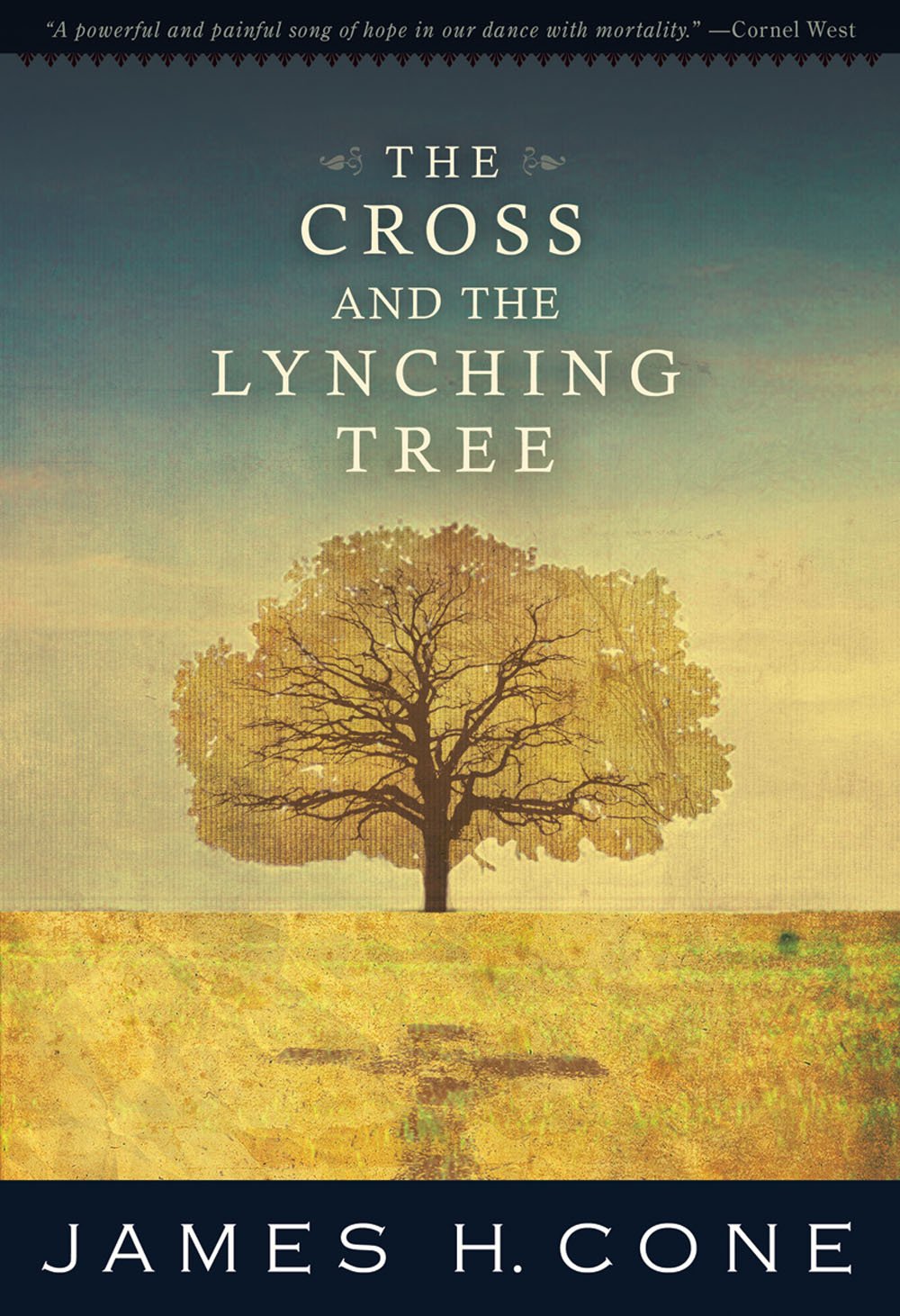 NOTE: Throughout these blog posts, I will mostly be able to write through the narrow lens of my own experience. I am not well versed in critical theory, the study of race, or the discipline of history. Although I consider myself a practical theologian and a Christian, I would not say that I have the skill set of someone schooled in doctrinal, dogmatic or systematic theology or even ethics. I will probably stumble over ways of talking about what I am reading and my reactions to it. With these caveats, I would like to think that this is an appropriate place from which to engage this book. I would hope that this book would be read in churches and seminaries, classrooms and even homes, by people not well-versed in any of the disciplines I mentioned above. I am reading this book for the first time, and so my words, though I hope reflective and thoughtful, will be first time reactions.
 A general introduction to this blog series can be found here, and an index and schedule for the series can be found here.
*****
I have to admit that I'm struggling to write a blogpost about this first chapter. The main difficulty is that no words of mine could replace the experience of reading these stories of hope in the midst of lynching. And that is the point of this book. As Cone writes in the introduction:
"...my primary concern is to give voice to black victims, to let them and their families and communities speak to us, exploring the question: how did ordinary blacks, like my mother and father, survive the lynching atrocity and still keep together their families, their communities, and not lose their sanity? ... I believe that the cultural and religious resources in the black experience could help all Americans cope with the legacy of white supremacy and also deal more effectively with what is called the 'war on terror.' If white Americans could look at the terror they inflicted on their own black population—slavery, segregation, and lynching—then they might be able to understand what is coming at them from others. Black people know something about terror because we have been dealing with legal and extralegal white terror for several centuries." (xviii-xix)
Thursday, February 28, 2013
The Gift of Not Being Needed
It's been ages since I last posted here. Much has changed. I'm now halfway through my final semester of PhD coursework at Princeton Theological Seminary. My wife and I now daily step back in awe that we are parents of a beautiful, vibrant baby girl. I'm twenty-eight years old.
Somehow, in those twenty-eight years, I had not yet come to the fundamental insight that my "worth is not the same as [my] usefulness." I found this quote this morning during daily devotion. I've been reading Henri Nouwen's lenten collection Show Me the Way. Nouwen has always been one of those writers whose words cut through all my defensive barriers. Yet his is a gentle sword. His words are so simple, his thoughts so concrete and clear. He writes without pretension and, in doing so, plumbs the profound depths of our relationship to God and our relationships with others.
I can't help quoting most of this morning's reading:
When we start being too impressed by the results of our work, we slowly come to the erroneous conviction that life is one large scoreboard where someone is listing the points to measure our worth. And before we are fully aware of it, we have sold our soul to the many gradegivers. That means we are not only in the world, but also of the world. Then we become what the world makes us. We are intelligent because someone gives us a high grade. We are helpful because someone says thanks. We are likable because someone likes us. And we are important because someone considers us indispensable.... (52)
 |
| Image from Greg High: www.greghigh.com |
I can't help quoting most of this morning's reading:
When we start being too impressed by the results of our work, we slowly come to the erroneous conviction that life is one large scoreboard where someone is listing the points to measure our worth. And before we are fully aware of it, we have sold our soul to the many gradegivers. That means we are not only in the world, but also of the world. Then we become what the world makes us. We are intelligent because someone gives us a high grade. We are helpful because someone says thanks. We are likable because someone likes us. And we are important because someone considers us indispensable.... (52)
Sunday, August 14, 2011
The Tenacity of Trust: Wrestling with God in the Hard Times

"Wrestling Jacob"
Excerpts from the poem by Charles Wesley
Come, O thou Traveler unknown,
Whom still I hold, but cannot see!
My company before is gone,
And I am left alone with Thee;
With Thee all night I mean to stay,
And wrestle till the break of day.
...In vain Thou strugglest to get free,
I never will unloose my hold!
Art Thou the Man that died for me?
The secret of Thy love unfold;
Wrestling, I will not let Thee go,
Till I Thy name, Thy nature know.
Monday, July 11, 2011
The Best, The Stressed and the Rest

Monday, June 13, 2011
YA Saves
A recent Wall Street Journal article by Meghan Cox Gurdon has evoked a monsoon of articles and thoughts about the place, purpose and tone of Young Adult fiction. As someone who reads, researches about wants to write YA literature, I have been closely following the recent outpouring of support for "darker" YA. I don't know that I have time to write a full post on the subject. Instead, I'll link here to several articles--some written before the WSJ article, some written in response to it--that best portray the complexities of my current thoughts.
Friday, August 27, 2010
Peter, A Polar Bear Poster and the Power of a Moment
I own a poster of a cuddly polar bear cub. It has travelled with me from my childhood home in Salt Lake City to my dorm room in Alma and now hangs on our bedroom door in Princeton. Some photographer caught the cub ambling forward from a black background, head hanging slightly, dark button eyes barely lifted from the ground. A nameless graphic designer cropped the photo so that the youngling would dominate the image, then wrapped a short piece of text around the bear’s back. The text reads: “Help me to remember, Lord, that nothing’s gonna happen today that you and I can’t handle together.”
Friday, August 20, 2010
A Brief Life Update
And now, for those interested, a life update.
Sarah and I still live in Princeton, NJ. I’m heading into my final year at Princeton Theological Seminary. I added a second masters to my degree program, so it’s taking me four years to graduate instead of three. When I walk down the aisle of the University Chapel next May I’ll have both an MDiv and a Master of Arts in Christian Education.
Wednesday, August 18, 2010
A History of Caedmon’s Call and a Review of Their New Album, Raising Up the Dead
It took a Caedmon's Call album to break me out of my blogging silence. Go figure. Of course. Sometime soon I'll update on my life and other things, as well as, hopefully, begin a secondary blog on the Psalms that I've been working on over the summer. What follows is a history of my interaction with the band and a review of their most recent album. If I get some historical facts about the band wrong, it's all my fault (and possibly wikipedia's, which really means mine for using wikipedia).
I have been listening to Caedmon’s Call for nearly a decade. A late-comer to the CC fandom, I only started paying indepth attention to them during my senior year of high school and first year of college (2002-2004), when I was learning to play guitar. For those unfamiliar with the band and its history, this two-year time period was one of dramatic change for the group. Their first three wide-release albums, My Calm, Your Storm (Storm), Caedmon’s Call (CC), and 40 Acres (Acres), were characterized by folk-rock sensibilities, introspectively philosophical lyrics with obscure biblical references, and a deeply Calvinist theology. Their fourth album, Long Line of Leavers (Leaver, 2000), represented a musical experiment, with horns and a more “electronic” sound. It also marked a slight shift in the balance of writing between the two primary lyricists – Aaron Tate (who had always written for the band, but only played with them in the very early days of their formation) and Derek Webb. Tate’s work had dominated Storm, and they had shared about even duties on CC and Acres. Webb’s work became more dominant in Leavers, and Cliff and Danielle Young, two of the band’s lead singers, contributed more explicitly to the lyrics of a couple songs. Webb, rightly or wrongly, became known for his songs about relationship and young adult feelings of alienation.
By the time I started listening, their earlier albums could not be easily found in stores and Amazon.com was not yet in my ken. Caedmon’s also never played in my home state of Utah, as far as I know. Leavers was, therefore, the first album of theirs that I owned. It was followed by In the Company of Angels: A Call to Worship (Angels 1), an album that their record label required in lockstep with the early 2000s worship fad, but which emphasized the band’s unique musical and theological take on praise music. It also marked the beginning of Aaron Tate and Derek Webb’s departures. The group’s next effort, Back Home (Home, 2003), was basically devoid of any of Tate’s work and included only a few songs by Webb. This writing gap was filled by Randall Goodgame, Joshua Moore (who had taken over keyboard and general crazy instrument duties from Randy Holsapple back in the Leavers era), and Webb’s wife Sandra McCracken. Tate’s mythological, philosophical and biblical introspection was replaced by hymn-like language and folk storytelling. Webb left the band at this point to pursue a solo career. This also happened to be the exact time when I first went to see a Caedmon’s Call concert. They had hired an up-and-coming singer-songwriter to fill in for Webb – Andrew Osenga, who had formerly fronted the group The Normals.
I now owned Acres, Leavers, Angels 1, and Home, which meant that my exposure to Caedmon’s basically extended only slightly across the divide between Old Caedmon’s and Emerging Caedmon’s. Some fans of the band see Angels and Home as the band’s low-point. The lyrics were simpler, the sound formulaic and the band’s heart didn’t seem in the music. For me, it was all I knew. Yet I still longed for the tighter lyricism and acoustic sound of Acres. I was thrown for a loop, then, when I purchased the first album in which Osenga had a hand, Share the Well (Well, 2004). At first I hated it. This wasn’t Caedmon’s! Their earthy guitar sound had been replaced by tenor-heavy rhythms and picking, sitar-sounding electric riffs, strange drums and atmospheric background noises. Despite all of this, I decided to acclimate myself to the new sound by playing the CD over and over again. It formed the backbone of my study time for nearly a semester. Soon I fell in love with the “New” Caedmon’s. The urgency of the story in the lyrics, and the otherworldly beauty of the music captured my heart. I learned that the band had actually travelled to India, Brazil and Ecuador, recording and writing on the road, including instruments and vocals from the people and cultures they encountered. Whereas many of their previous efforts had focused thematically on God’s grace, human sin, and the individual soul, Well turned its gaze to God’s love for the whole world and justice for the poor and oppressed. But these were not faceless poor, not statistics. Instead of slamming the message through with overwhelming numbers, Caedmon’s simply told the honest, beautiful stories of the people they encountered. While Home had seemed, in some ways, directionless, a meaningless collection of one-off tales and generic do-overs of the band’s previous themes, Well utilized the same storytelling sensibilities to paint a coherent picture of parts of the world that most folks in America have never seen. Well quickly became my favorite Caedmon’s album. The strange sounds that had been off-putting now became windows into the souls of my fellow brothers and sisters, children of God.
Following this stellar music masterpiece, Caedmon’s record label forced them to produce another worship album, In the Company of Angels II: The World Will Sing (Angels 2, 2006), which also coincidentally fulfilled the band’s contract with the company, allowing them to break ties with a corporation that had pressured them to do things with which they were not comfortable. Very little of the unique, multi-cultural sound that the band had fostered while overseas had been allowed to suffuse the album, most likely do to Well’s underwhelming sales and reception. After all, above everything else, large corporations want consistency and a safe bet (see the recent penchant for sequels and reboots in Hollywood). Despite the album’s compulsory nature, I still found songs to love amidst the general dross. Most of these favorites were written by Osenga, who has become one of my favorite storytellers.
Free of their fetters, the group cast about for a year, while also dealing with the fact that many of their members were now married with children. Touring became more and more difficult and some of their earlier themes of introspective alienation did not resonate in their new family-oriented lives. At this critical juncture, Webb, who had been absent from the band for nearly four years, found himself pulled back into their music-writing field. He had grown as a writer, and as a music producer, finding his voice in social and political criticism as a musical prophet of sorts. His insightful and cutting lyrics paralleled the sense of God’s justice for the oppressed that Caedmon’s had found overseas, but directed their gaze toward the injustice in the United States in a more biting way. In a strange turn, Webb and the rest of the band had gone different routes to arrive at a similar place, which allowed them to come together again to create Overdressed (2007). This album marked another shift for the group. Musically, it was a complete mish-mash. Osenga’s spare rock sensibilities mingled with Webb’s sparse new propheticism and the world music traits from Well. Once again, I found myself put-off by the album at first. Once again I played it non-stop for weeks. Soon I found a beauty in the collision of styles and themes and sounds.
The album title described the place of our souls before God. Trying to hide our sinfulness in our good works and a thin veneer of cultural Christianity, we are overdressed. Yet it also acted as a counter-theme to the state of the band. Utterly fearless and stripped of the constraints of their label, they were laying themselves out for everyone to see. The music was messy and unrefined, yet paradoxically more pure and alive than ever before. Many of the songs ended in unstructured jam sessions, or began with odd snippets of conversation from the recording process. Lyrically, the album laid bare the personal lives of the band members in a way that had been missing since their earlier works. Issues of lust and doubt were placed alongside a recognition of God’s work in the everyday life of laundry and parenthood. Social criticism was coupled with a realization of our culpability in injustice. A grand view of the world and the recognition of the smallness of our efforts at changing it lead to a realization of God’s largness and ability to change the world’s brokenness by the slow, careful work of healing the brokenness of every soul through openness and honesty with each other. Our imperfections become clear in the light of God’s grace and love, which makes us painfully ashamed of our nakedness yet also purifies and cleanses us.
During the tour for Overdressed I was finally able to see the band in concert with both Webb and Osenga. I also purchased their first two albums and one of their Guild CDs, which are fan-centered recordings of special concerts and studio rares from their early career. I began to truly understand what had upset people about Home and the worship albums. “Early” Caedmon’s was a thinking person’s Christian folk-rock group. Their lyrics were labyrinthine and obscure, yet their music was catchy and simplistically rich. You could listen to them and simply enjoy the tight three-part harmonies, thrumming layered guitars and percussive drive. Yet, if you paid attention at all to the lyrics you were nearly forced to look up matters relating to random Old Testament texts, Greek mythology and philosophy, and Reformation theology. New testament metaphors and verses were also reinterpreted in ways that made them fresh and interesting. Take, for instance, this restatement of John 3:16: “For you so loved the unlovable/That you gave the ineffable/That who so believes the unbelievable/Will gain the unattainable,” which not only restates the the verse in terms of rhyming “able” language, but also adds some reformation theology and sets you running toward the dictionary to figure out what “ineffable means.” Or, try this mixture of mythology and hymnology: “I mount up with waxen wings/High to reach the sky/But I am no further than/Than when I first begun.” Icarus and Amazing Grace in one stanza.
After the creative explosion of Overdressed, the band focused once again on their families. Andrew Osenga left the band to pursue his own solo career, much as Webb had done five years earlier. I wondered whether there would be another album. At the end of 2009, I heard whispers that Webb had rejoined the band for another upcoming album, which he was producing, and that the songs were being written by Webb, along with Cliff and Danielle, who had written only a few before, and the bassist Jeff Miller, who had one previous writing credit. For the first time in the band’s history the songs were all being written by people who were actually performing with the band. I was stoked. Raising Up the Dead was to be a unique album. Only 1000 physical copies of the work were being produced, and were going to be sold as collector’s items. Most people would have to download the album off of the group’s website, not even through channels like iTunes. In subtle and not-so-subtle ways, then, this was bascially a “fans-only” album. Unless you already knew about Caedmon’s, you wouldn’t know about this album.
In early August 2010, I downloaded Raising Up the Dead and even purchased the $50 deluxe edition, which included a t-shirt, the Guild CDs that I had missed, a Guild DVD and a physical copy of the CD, signed by the band, with lyric sheet. All of the physical materials wouldn’t arrive until September 14, so I simply listened to the CD on my computer. As with Share the Well and Overdressed, I was initially extremely disappointed. The album felt slow to me, with only medium-tempo songs. The world music influence had been laid completely by the wayside, along with some of the rock orchestration that Osenga had brought to the group. As much as I could tell from trying to catch the lyrics, much of the focus on God’s justice had also faded away. Essentially, the Caedmon’s that I had known for much of my experience with the band was gone.
Yet, once again, I decided to work through repeat listens. Once again, I was rewarded. In many ways, Raising Up the Dead feels like the Caedmon’s album that should have followed Long Line of Leavers. Themes of sin and grace have returned in strength as well as obscure lyrics and slight references to verses of scripture and even mythological notes. Despite the inclusion of some of Webb’s recent experiments with electronica and production, the album is also much more acoustic and folksy than the last few. And yet. And yet it is also feels like their most mature output to date. Instead of viewing sin and grace through college-age alienation and singleness, the songs focus on finding grace in imperfect community. Family comes through as the most important hermeneutical lens through which the band contemplates theology. The music is also extremely dense. It is not showy. It is not “radio-single” worthy. Instead it is intimate music, pondering music, music that makes you think as much as the lyrics do. It is music that requires the listener to work. It isn’t music to be memorized, like the earlier hits that hooked themselves instantly into the brain. It is music that engenders relationship. It is not the exuberance of first love, when every moment is alive and bright and memorable, but the slow beauty of marriage, when even the subtle moments mean something and the quiet rest of the other’s arms means more than flashy jewelry. It is music made of mystery, whose beauty is that you will never fully understand it, but every day you will want to learn more.
In these and numerous other ways, Raising Up the Dead represents the culmination of Caedmon’s Call’s wandering journey. Once again the title expresses both the themes of the work and the state of the band and its music. The introspection and theological heft of their early albums is combined with the themes of honesty and family from their later years. The old acoustic sound is filtered through the patience and naked dedication of Overdressed and the intricate musicality of Share the Well. The comfortable three part harmony is now sung through voices that are rougher, grainier and more expressive than the pop sound favored in their middle work. I want to follow up this post with one going through each song and what I'm currently experiencing through it. Look for that possibly tomorrow.
I regret that many will not know about this album. If you're reading this, download it from their website (caedmonscall.com). Tell your friends. Listen to it five times in a row at least. Let yourself fall in love with it. This is an album worth putting on repeat.
Thanks, as always, for your time and love, faithful readers.
Wednesday, January 6, 2010
The Beginning of a New Blog Cycle: Thoughts on Issues in the Theology of Scripture
Well, it has been a long time since I've blogged. Life became extremely crowded last semester, what with a 15-hour a week job, a 15-hour a week internship and three intense classes (oh, and living life and loving my wife as well). Right now I'm taking a month-long course on Issues in the Theology of Scripture, which meets for three hours in the morning, leaving a little bit more time on my schedule. I've decided that this class, which so far has been wonderfully thought-provoking, might provide some good fodder for blogging. What I'm proposing to do is to post thoughts on the course (which began on Monday and so far has involved writing a 1500 word essay) every day that I can. I've asked my professor -- who will be referred to as Shane in the posts -- if I can quote him, or refer to his ideas if they are the seeds of my thought for these posts, and he has agreed that I can refer to him as long as the references are not wholesale transcriptions of his lectures or audio files (which they won't be) and that I accurately represent his views.
I hope to ponder the theme of the course, which Shane put before us on Monday, of wandering around in the gap between theology and biblical studies. I will go more into detail of what this gap entails and why it exists as Shane explains it to us in class, but in brief, let's just say that in higher education there exists a separation of disciplines. In most higher ed institutions divisions are placed between the sciences and the arts and the humanities, and also within each of these between history and english or philosophy, for instance. In Seminary, you often see this division of disciplines into: Biblical Studies, Practical Theology, Theology and Church History. The difficulty that sometimes arises in pursuing these studies is that the folk in the Biblical Studies department take very seriously the questions that have come from a historical-critical way of looking at the Bible: reading texts in original languages, studying their cultural, historical and political contexts, trying to work out how the texts were written, formed, passed down, etc. This method is a product of the Enlightenment. Meanwhile, the Theology department spends perhaps a class period on a theology of scripture, often avoiding questions that deal with the difficulties presented by the historical-critical method. These problems sometimes involve the inerrancy or infallibility of the Bible, the contradictions that can be found in the Bible (or seeming contradictions, I'm sure we'll get into this later), the grammatical differences between different copies of the Bible, what it means for the Bible to be divinely inspired and how this bears out when the Bible gets into human hands or when it is translated into different languages. So, the Biblical Studies department takes these questions seriously, but they are often in the background and understanding why these questions are important and what they mean for the life of faith and everyday living is not considered. Or, on the other hand, the Theology department discusses briefly a theology of scripture but does not consider how this might come to bear in practice or what a theology of scripture that takes into account the questions might look. This course tries to put these background questions into the foreground and to address them in a thoughtful and sensitive way.
It also attempts to equip students with tools to read what Shane calls the "Barnes and Noble School of Theology and Ancient Scriptures." By this he means the popular books that are widely available in major bookstores and have entered the general culture and conversation: Bart Ehrman's Misquoting Jesus, or Dan Brown's The DaVinci Code, for instance. While these books bring up interesting points that speak to the Historical-Critical method, the outcomes of their discussion can be misleading and they do not always speak to the theological or practical outcomes of the difficulties they mention. If you want a good introduction to this debate, check out Stephen Colbert's interview with Bart Ehrman, which Shane used as a catalyst for his initial lecture. The video is embedded below:
| The Colbert Report | Mon - Thurs 11:30pm / 10:30c | |||
| Bart Ehrman | ||||
| ||||
So, now that you know a bit about the course, you can follow along on this blog for the next few weeks as I share with you what I'm learning and what I'm thinking. I'll begin with the essay that we had for the course, which answers the question: "What do we mean when we say that the Bible is true, and what methods of Biblical interpretation help us to appreciate its truthfulness." This essay will be revised at the end of the semester. I'll post it in a separate post from this.
Thanks, as always, for sticking with me faithful readers!
Wednesday, September 30, 2009
A "Brief" Update from the Newsdesk and a Meditation on Trains and Railroad Tracks
Just a brief update from the life of Marc. Life is good. Hectic? Yes. Sleepiness-inducing? Yes. Good? Definitely. My current schedule involves waking up between 6:30 and 7:00 AM after ignoring a beeping alarm for at least half an hour. Sarah and I then do crunches while listening to a worship song. Shower, breakfast and checking morning e-mail usually follow in some sort of order. Then, we're off to school at around 8:20, give or take ten minutes. From there, Monday through Thursday, I'm either in class or at work at the bookstore until 5:30/6:00 PM, at which point I (and sometimes Sarah) head home to cook and eat dinner and check evening e-mail. This concludes at approximately 7:30PM, after which I study/puttz around/occasionally harvest on farmville until around Midnight, at which point I flop in bed to read a chapter of a fun fiction book, then collapse for a good six hours of sleep and start the cycle over again. Friday's a little bit more relaxed, with class in the morning and then a lunchtime meeting with my church supervisor. Friday afternoon through Saturday are then recoup/relax/get other things done days. Sunday we wake up around 7:00 in order to leave for church at 9:00 (it's a one-hour drive each way), are at church from 10:00 til approximately 1:00, and drive back home to eat lunch at 2:00. Then I'm studying for classes on Monday.
This, at least, is the ideal week, and the rhythm for now. Last week I also helped to lead a Taize worship band (practice on Monday for an hour and a half and on Tuesday for 45 minutes). I will be doing this once a month. This past Saturday I was honored to play in the wedding of a friend's daughter and spent the day driving two hours to the wedding and two hours back. The wedding was beautiful, and I ended up playing the song that I used to propose to Sarah. Ah memories!
In a few weeks this rhythm will change as I become more engaged in my field education placement. I need to start allotting at least 4 hours a week to planning curriculum for two Adult Education classes I'm leading. I will also be preaching twice in November, which will require at least 8 hours of research and writing per sermon smashed somewhere in to my schedule. I will also start to attend meetings at the church on Tuesdays, cutting 4 additional hours out of my study week. Once I start to lead classes, a further 4 hours (including driving time) will need to be devoted to something other than studying. All of this means, if my calculations are correct, that Fridays and Saturdays, instead of days of rest, will need to be days devoted to studying.
So. You might not read from me much this semester! Or next semester. But I will try to update as much as possible.
On a positive note, the previous paragraphs were actually not complaining! I'm enjoying all of my classes and am very excited to dive into teaching and preaching and getting to know folk at the new church. I know quite a few people who have busier lives than I, and I am thankful to be involved in things I love.
On a further positive note, I present to you a short meditation on Trains and Railroad Tracks. Seriously. This is presented, for those who will understand what I am saying, in President Iain Torrance style: throwing a few random, seemingly unrelated stories together, then binding them up at the end.
On one of the Appendix DVDs for Peter Jackson's version of The Lord of the Rings, Jackson describes the process of writing and directing the massive three-film undertaking as "frantically laying down the tracks" in front of a moving train. He and his co-writers on the film would literally be revising scenes and, in some cases, planning shots the morning before shooting them. He was often exhausted.
In the Presbyterian Church, folk often refer to people who are seeking to be ordained as being "on the ordination track." It's a track meticulously laid out, with five tests, a psychological exam, meetings with several committees, deadlines and a whole forest full of paperwork. The PC(USA) has worked hard to ensure the reliability of its ministers (as far as humanly possible), and this "track" shows it. For those not on the ordination track in the PC(USA), the future is much, much less clear.
After finally coming to terms with no longer seeking ordination (at this point in life), I have recently become more comfortable sharing this information with others. Some people react knowingly, sympathetically, supportively. They offer prayers. Others react with shock. "You know how hard it is to get a job not being ordained? You know the pension and pay are less? Right? What do you do with an MDiv, not being ordained?" These are realities that I have faced and questions I have asked myself.
For a long time I knew where I was going. The track was laid out for me. I went to a Presbyterian-related college, received a religious studies degree, applied and was accepted to the seminary of my choice. I just had a few more hoops to jump through, a few more tests to take, three years of schooling and then... BAM! I'd be a pastor. All the rails were laid out for me. All the forms were in my possession. I just had to follow the steps. Well, the rest of the story is old news by now for readers of this blog. I'm no longer seeking ordination.
Today, at a luncheon for the Teaching Ministry Program in which I am enrolled, we were asked to share how we learned that we were teachers and when we discerned that teaching was a vocation, a ministry. As I sat listening to Faculty Mentors, Site Supervisors, and fellow students -- all with wildly different and intriguing testimonies -- I tried to find some type of pattern in my life, some type of story.
When the time came for me to speak, I began with the family myth of arguing with my grandmother and winning, at which point she announced that I would either be an lawyer or a pastor. I noted that, in accord with several of my peers, I understand things better when I try to make them understandable to others. I mentioned watching my mom go back to college, finish graduate school, and begin teaching, while I walked through elementary, middle and high school. I told how she always encouraged me to follow where God led, and how she constantly reminded me that our calling from God doesn't have to be in church ministry. I shared that she believed teaching was her ministry, her calling, and that she pursued it with passion. I related my love for the church, and my discernment of a calling to work for God with God's people, and how that lead me to seminary.
Then the story stopped. My voice hiccuped. I flailed for a second, wondering how to put what happened next. "I fell of the ordination track," I said, "and I'm not under care under anybody right now." I felt my face twitch. I didn't realize how hard it would be to say that sitting in a room of people, most seeking ordination, most working in the church. Ranged around me were nearly twenty people who had finally found their vocation, and nine of my peers who were learning with me what that word meant. I realized how much of a loss it had been to fall of the tracks, to get derailed.
"I fell off for a variety of reasons," I continued, "one of which was that I realized I was more comfortable as a member of a church, but not as the leader of a church. I feel more alive and full of light being one of many." That was another thing I'd only shared with a few people. I felt sweat on my hands. My body shook a little. I always have a strange reaction to being vulnerable, to sharing something deep and true about myself. I can preach a sermon, give a talk, teach a class and speak confidently, no knee-shaking involved. But when I talk about something deep and true about myself, I fight to stop my body from quivering. I fought this afternoon.
I pressed on and told how, with the help of Lori, my field ed. advisor, and Jan Willem, my supervising pastor from last year, I discerned that teaching might be where God was leading me. I spoke about applying and being accepted to both the teaching ministry program and the dual degree MDiv/Masters of Arts in Christian Education program, and about my joy over finding a great faculty mentor and site supervisor. By now I could barely keep myself from shaking. I was about to say something deep and true, but, simultaneously, something that I had just learned while speaking the previous sentence. I could tell it was true because my body was "like a hill on a fault line," as Rich Mullins put it. I said: "And now I finally feel like I'm no longer frantically laying the tracks down in front of myself. The tracks are there in front of me again. I feel like I'm in the right place."
I hadn't realized until that point that I had been in a Lord of the Rings place, a Peter Jackson place. I hadn't realized that I'd been frantic for almost a year, lost and flailing. I hadn't realized the depth of loss and confusion that had come from falling off the track on which I'd been riding for almost a decade, since I received my call in seventh grade. I'd been trying to build the railways and conduct the train for a year, all by myself. And I had been exhausted and burnt out (read my previous posts for proof). But suddenly, I could see the tracks again. Not the whole route, but at least a few miles ahead. I knew that I was on the right path.
I still don't know yet whether I will teach in a church or in a college or seminary. But I know that for the next two years I will be where God wants me to be: learning about education, living with people I love, loving the people of the Princeton community. I have found myself again, or, perhaps, remembered that I have been found. To paraphrase G.K. Chesterton, I have remembered now what I forgot, and that I have forgotten it. I have been living my life forgetting that I've forgotten, not realizing how lost I felt, how lost I was. But now I remember that I was lost, and in doing so, have rediscovered that I have already been found. Praise God.
Saturday, September 12, 2009
Confidence and Completion
"I am confident of this, that the one who began a good work among you will bring it to completion by the day of Jesus Christ." - Philippians 1:6
Last weekend, Sarah and I went back up to our Alma Mater, Alma College (somehow it seems redundant), to participate in the wedding of two wonderful friends. We laughed, some people cried, we played music, we danced, we talked with old friends. The weather was beautiful, the sky a bright blue, the temperature warm enough for sleeveless dresses and cool enough to forestall sweat. After the happy couple left for their honeymoon cruise, we helped the wedding party clean the reception hall. Then we went to chapel.
Alma's chapel service, if you haven't been, starts at 9:00 at night on Sundays. It's a rather odd affair: drums and guitars and piano blaring out the good news to old teens and young twenty-somethings dressed in everything from pajamas pants and slippers to khakis and nice shirts. Sometimes the soon-to-retire sixty-something-year-old president of the college attends with her husband, a professor at a seminary in Detroit. She smiles and shakes hands during the boisterous passing of the peace, where some people hug, others give high-fives and folk run around to greet each other with such energy that the worship leader always has to call them back with a shout. Chapel worship is robust and energetic, with clapping and singing at the top of lungs. The music ranges from spirituals, folk songs and old hymns to straight up rock. The preaching is done by students and professors and local ministers. It can also be reflective, with prayer and silence, and sometimes weeping. It is not an experience for the faint of heart. Or perhaps it is, because through it your heart might be strengthened. It certainly expands hearts and opens arms in fellowship.
It was not always this way. Ten years ago, long before I attended Alma, the Chapel program was dying. I heard, from Alums, that Chapel attendance once consisted of the chaplain and five students listening to hymns recorded on tape and played on a stereo. Two years before I landed a few students decided to change that. They formed a small band and started playing more upbeat music - live. To advertise the change, they played at the college's annual song competition. A few people took notice and attendance rose to fifteen or twenty people. The chaplain, who was supportive of this, was also nearing retirement. So, the year before I came to Alma, he retired.
I came to Alma at the same time as a new chaplain. Having lead worship at my church for a few years, I knew that I wanted to participate in any way I could. The band leader at that point, one of the founders of the chapel band, was in his senior year. The band needed a keyboardist, and he felt like he could train someone to replace him leading the band on guitar and vocals. I took up the charge and played every week. He bolstered my guitar skills, playing for hours after every service with me. Soon I became confident enough to sing and strum at the same time, if not often in rhythm. Sometimes I slowed down. Other times I sped up. The rest of the band at that time (all extremely competent musicians who either had separate bands of their own or who were part of our college's award winning percussion ensemble), dealt with the transition as well as could be expected and taught me a lot about how to lead a band and how to work with people. They also taught me rhythm (mostly). Other part-time folk were brought into the band as well, and we developed a rotating roster of singers and keyboardists and guitar players. We added occasional flute and violin and harmonica and tin whistle too.
The then out-going worship leader was also the chapel intern. He worked ten to twenty hours a week at the chapel, helping the chaplain with whatever she needed and developing the worship life. He knew that not every Alma student would want to take over the position of chapel intern, but the program was growing. They started an Alternative Break program that year, in conjunction with the college's Discovering Vocation office. Worship attendance had grown to an average of thirty people per week. And more and more students seemed interested in Christian leadership. So the chapel intern and the chaplain devised a plan. They divided the work of the intern into six areas with twelve positions: music and worship, technology, clerical, liturgical, worship and the arts, and hospitality. Then they hired twelve students, including myself, as test pilots for a new group: the Student Ministry Coordinators. Half of us were considering some type of graduate work in religion, the other half were very dedicated chapel goers, or people who had worked sound and other things with the chapel program.
Over the next three years the roster of SMCs changed, with a core of five or six of us. The chaplain broke her leg and was out for half a year, then moved on to a position at a Seminary. We went through a year with an interim chaplain, then found a new one for my senior year. Ever year seemed in flux. Sometimes we were barely keeping ourselves upright. We fought each other. Divisions flared up. Some people who came into the program were just looking for a campus job. Others had problems at home. We were all over-busy, over-stressed and sometimes over-worked. Sometimes all twelve of us (thirteen including the chaplain) came to meetings, sometimes less than half. We changed the order and style of worship over and over and over again. The only constant was the worship. Sunday after sunday. Rain or shine. Sometimes there were only ten people in the pews. Sometimes there were almost sixty. Somehow, in all of this turmoil, by the grace of God, the program grew. Three chaplains in three years. Twenty-or-so over-stressed students. Varying quality of music (often my fault, sometimes because no one came to practice). Yet, by my senior year, our average attendance had grown to over sixty people per week.
That senior year we realized that most of us SMCs were...well...seniors. We had grown up together, shared our lives together, cried and laughed and struggled together. But we were moving on. What would the future hold? Should we disband the SMCs? Should we pare it down to only six? How do you pass the torch? We put out a search for first and second year students to join us, to apprentice us. We left as much information as we could in their hands (I sent six CDs full of music back so the new band leaders could listen to most of the songs in our catalogue). Still, two of those we were training were going to be in semester over seas programs, and our chaplain was going to go on sabbatical for a year. It seemed that the program was going to be in flux even more than before. And the elusive stability that we had sought, the stability that we thought we could provide by being there, was going to be lost.
Would the chapel program survive us? (I admit this is a prideful and obviously stupid thought. I wish I could say I'm a better person than one who would think that, but I can't.) The six or seven students in whose hands we were leaving the SMCs had a huge mountain to overcome. Not only were they small in number and newly trained with another interim chaplain with whom they must deal, but the expectation of those who had come to chapel regularly and who would still be attending the next year was like a thick fog in the air. It's always hard not to compare. I could understand if the students buckled under the weight of it all. I could understand if many of them gave up. I almost had several times. Life is much easier without stress.
I paint a dire picture of course. But, in talking with several of the SMCs the year after I left, I discovered that they were having a difficult time. Attendance had dropped. The interim chaplain was sometimes hard to deal with. Some of them did end up quitting.
And yet.
And yet. It is a testimony to God's strength and grace that the Chapel program survived. And not just survived. Thrived. After the initial drop in attendance, a quiet revolution began. The SMCs knew what all good torch-bearers know, what all those running a relay know. When the torch is passed, you can only run as you can run. You can only breath as you can breath. If you think too much about imitating the previous runner, you're sunk. If you think too much about how desperate the situation is, you're sunk. If you dwell on the past instead of running into the future, the race is already over. You must run the race you've been given and set your eyes on the finish line. The SMCs made the program their own. They found their voice.
By the second year after I graduated, average chapel attendance was edging close to one hundred. I came back to preach in January, the first Sunday of the second semester. During my tenure as an SMC, first Sundays of second semester were notoriously low. Something about the winter cold and coming back from break and the rigors of the first semester that always depleted our attendance usually brought down the numbers to just between fifteen and twenty. Certainly not sixty. Certainly not eighty. Certainly not one hundred. But that January night I preached to one hundred people. On a low Sunday.
And now back to last weekend. Sarah and I walked into chapel early. She went downstairs and I stayed up in one of the pews to listen to the new chapel band. Only one of the members had even been a student at Alma when I had been an SMC. But they sounded good. Different. They had their own style. And yet there was something familiar about it. I even heard one of the worship leaders ask after a song: "Any questions, concerns, or problems?" which is a slight variation on something I used to say: "Questions, concerns, comments, queries?" I guess I'm more into alliteration. Slowly the chapel started to fill. Sarah and I were expecting low numbers. This was the Sunday of Labor Day weekend, after all. Although many first year students were already on campus, upperclassfolks didn't have to start until Tuesday. Monday was a holiday. Labor Day Sundays were notoriously low. But the chapel filled. And filled. Eighty-nine people, not including the six or seven SMCs who were there (some of them hadn't come back to campus yet).
Worship was exhilarating. The music was uplifting and just as flawed as it had been when I was leading the band. I discovered during my four worship-leading years that the time when the band was the least prepared and when the music often sounded the worst was the time when I reached out to God the most and found that I was truly worshipping. So I rejoiced that some songs were too fast and that you couldn't always hear the singers. Worship is never about the band anyway. It's about God. Passing of the Peace was even more boisterous than I remembered; the fellowship more deep. The college president even gave me an informal hug and asked how I was doing with a bright, cheery smile. The SMCs had added a ministry to worship. Some of them stayed in the back afterward to offer anyone who needed it a shoulder to cry on and a hand to hold in prayer.
And the message. The message was prayerful and heartfelt and chocked-full of scriptures and genuine. The student who preached gave a message about Growth. And she used the scripture passage at the head of this blogpost. She talked about how growth was hard, but how God was with us. And how God had a plan, even if we could not see it. And as I sat in that pew, some of the doubts about what I'd done in college faded away. Some of the tension and emptiness slipped back to the darkened corner of my mind from where, someday, they might creep back again. But for now, they were silenced and gone. And I got a glimpse of that elusive plan of God, that stretches all throughout history and is more like a woven blanket with an intricate pattern of warp and woof than a simple straight line. I saw that God had used me despite me, and that God was growing the chapel despite me too. I saw that it was true that the good work that God began at the Chapel among my generation, and even before us, was being carried on to completion. I saw that sometimes this means that God will complete something started in us, even when we are no longer there. The verse is ambiguous about this, of course. It doesn't say that we will complete the work, or that the work will be completed in us, but that God will complete the work that was begun in us. Nevertheless, this confidence that God was completing a work that I helped to inaugurate gave me confidence for my own life. If God could complete this, surely God can complete me.
Saturday, August 22, 2009
Adventure
Three weeks ago I gave the message at the church where I worked for the past year. I returned as "pulpit supply" while the pastor was on vacation. The message circled around the concept of asking God for more. No, I have not stepped into the prosperity gospel camp. I do not believe that if you sow your seed (money) and give it to the church God will bless you with three cars and a million dollar house. God wants even more than that for all of us. God wants us to have a real, deep relationship with the one who threw the stars out into the heavens and set the earth spinning. God wants us to have more than just the drudgery of this day to day life, more than the discontentment that can so easily set in, more than rehearsing our old wounds and lashing ourselves on the back for our sins. God wants forgiveness for us, grace for us, love for us, hope for us. I preached that and I believed it, and I believe it still. But I didn't trust it.
Three close friends from the seminary come to the church to listen to me preach. While we sat in the church basement, eating delectable treats (no wonder I gained a few pounds this year), it started to pour outside. Monsoon-level. The streets were rivers, with water at least a foot deep in some places. Driving home, two of our friends, husband and wife, stalled their car in one of the impromptu rivers. Sarah and I were able to pick them up and take them home, but their car needed hundreds of dollars of repairs. We felt a little guilty, since they came to hear me preach, and we had given them alternate directions home, directions that led them through the water. But, they were gracious and soon forgave us.
Fast forward three weeks, and the third friend who came to listen desired my companionship on a road-trip to bring some of his things to storage in a town two hours away. He's moving to Ireland for the next year, and I wanted to spend time with him, so I readily agreed. We ended up taking the second vehicle of our erstwhile water-logged friends, an SUV. The drive up was wonderful, blue skies and the wind rushing past us, green trees and the smell of pine. We arrived and he unloaded his things (packed in heavy rubbermaid bins that he told me were too heavy for me--which was true--and that he proceeded to lug up two flights of stairs himself.) We spent a few minutes chatting with the woman at whose house he was leaving his stuff, then headed back home. He was craving hot dogs, so we stopped along the way at a roadside restaurant and he ordered two dogs with all the fixings and two birch-beer floats, one for each of us. (Birch beer tastes like a smoother, slightly more bitter root beer and is the color of black cherry soda.) So far, the day had been perfect. We took to the road again, relishing the fresh air and the good conversation.
While we drove I asked him what drove him. What was the passion underlying his time in seminary? What kept him going through the long nights of studying and all the frustration? Even as I asked him, I knew that I asked because I was having trouble answering the question myself. Back in high school I was surrounded by energetic friends in the prime of life. We prayed for each other, sang with each other, took trips to the mountains with each other. I was ready to do anything God wanted, ready to go anywhere. I read my bible daily, prayed every night and wrote in my journal at least once a week. I wrote songs and poems and novels. I was full of joy and passion. I was eager for God.
College hit. I moved miles away from my friends and the home I'd known for eighteen years. The new relationships I tried to build in college didn't last long. During an AOL chat with them, a girl mentioned something that was troubling her. I typed that I would pray for her, and instantly the backlash began. It was offensive to offer prayer in college. Offensive and pushy. Those friends soon turned their backs on me, especially after I met Sarah and started spending more time with her instead of them. Soon I met new friends, good folk who worked with me at the college chapel. But my life wasn't the same. I grew distant from God in college, angry. I did things that drew me away from God, things that I continue to regret. I took on too much in my first year, sleeping only four hours a night most nights. Then I vowed to never take on too much again. Living on the edge of sleep was exhilarating for me, but I didn't think it was healthy. So I curtailed my passions. Even though I wrote for all of my writing classes, everything I wrote was dark, writing became an assignment, working for a deadline. During some of the best times of my life, I often withdrew to my room and shut my door. I still regret having a closed door for some of the residents for whom I was an RA.
My friends from Utah faded to the background. I hardly knew them anymore. I was so busy in my first two years that I didn't stay in contact. Even the new friends I gained were kept at a safe distance. I didn't let them into my heart, into my life.
I learned that I had a fear of failure and, instead of facing it head on like I knew I should, I built a cocoon of safety. I did, and still do only things at which I can succeed. I don't let other people see my flaws. I let as much of myself out as is needed to retain friendship, but not enough to make it real. My relationship with God has fared the same fate.
After college, I followed the call planted in my heart in middle school and went to seminary, Sarah following me with love and trust and sacrifice. We arrived and the first year changed me again. It was hard to gain friends, hard again to get my footing. The call to be a church pastor disappeared quickly, pushed away by justified fears and by good reasons and good sense. God was still calling me, but now the voice seemed farther off, and in a different direction. God was calling me, but we were separated by fog and a sturdily-built cocoon. I was directionless, and far away again from God. I've spent my time like a pocketful of pennies, selling it for cheap. I troll the internet for interesting articles, and watch TV like I used to read books. I find myself grasping for the passion and eagerness I once had, grasping and holding nothing. My life is circular and stagnant. After my friend told me about his passion, I told him that I felt lost and that my relationship with God wasn't that good, that I wanted it to be better. I told him that the only thing driving me is the search for my old drive. He said that these dry times are why we need faith.
An hour away from Princeton, we ran into a wall of water. Monsoon-level, yet again. The rain was hitting the windshield so fast and so hard we could barely see, and we rumbled through the quickly-rising torrent, spraying muddy water everywhere. People were pulled over on the side of the road, hazard lights flashing like lighthouses in the darkness of the storm. Some cars were stuck in the flood, their owners knee-deep in water, trying to push them out. I was worried.
My friend is a wild, devil-may-care man, with a big laugh and an even bigger heart. The storm gave him energy. Soon he had me smiling with his effusive praise for how exciting it all was. Still, I held our map with white-knuckled intensity.
"It's odd," I said to him, "I'm smiling, but somewhere deep in my head I'm really worried. Not about us, but about the car. I don't want to be the cause of stalling two of their cars."
"I am too," he said. "But that's what makes it an adventure!"
Just last night, another friend and I were talking about joy. We talked about how fleeting happiness is, and how unattainable joy is. Happiness comes up like a weed, sudden and often. But it dies just as quickly. Joy is like a great oak, it needs roots and a firm ground. But how often is our true joy carried away by the carrion of life, how often does the seed of joy land on the hard ground, how often is it choked out by the very weeds of our happiness, choked before it can ever take root? Sometimes in our search for momentary happiness, we strangle our joy.
This blog is named after one of my favorite verses. "There is no fear in love." (I John 4:18) I have taken this verse to mean that I should not fear, and in doing so have avoided those things that scare me. Avoided deep relationships, avoided the pain of confronting myself, avoided the incomprehensible and wild God. Avoided where that wild God is calling me. But the verse goes on. "There is no fear in love, but perfect love casts out fear; for fear has to do with punishment, and whoever fears has not reached perfection in love."
Maybe this is an indictment from the writer of I John. Those who fear have not reached perfection in love. Our maybe it's a statement of reality. We all fear, we are all imperfect in love. Right before this, the author says that we love because God first loved us. God is love.
In reading this I realize that the fear has to be there for the love to cast it out. And in that split second between fearing punishment and failure and embracing, or being embraced by love, in that small moment is joy. After all, the contraction in the throat that comes with fear and the widening motion of the smile that comes with love are what make life an adventure. And perhaps by avoiding the fear, I've been avoiding the love and the joy too. Perhaps by trying to find a shortcut past my fear I've gone right around love and joy and into this wasteland where I find myself now.
And perhaps this is a turning point. And maybe it's not. The Israelites encountered a God who moved in cloud and fiery pillar, a God who split the sea in half; yet they still complained and worried about how they were going to be fed. Peter saw Jesus talking with Elijah and Moses on a mountain, witnessed him raise people from the dead and bring sight to the blind, and still denied his lord, his savior, his friend, three times when the fear of death came in a slave girl's accusation.
But that same God who took the complaints brought the Israelites to a good land just the same, though they had to struggle through the wilderness to get there. And that same God has preserved those people for thousands of years. That same God spoke to them lovingly again and again, trying to get them to turn around when they strayed, never giving up on them. That same God came down as a person, came down to take the brunt of our complaints and inattention, came down to be spat upon and ridiculed. That same God came down to befriend Peter, and when Peter betrayed him, that same God came back and restored Peter with love, affirmed his love three times, once for every betrayal. That same God loves me with a perfect love that can drive away my fear, because I can't do it on my own. That same God brought me the joy of my life--my wife--out of the midst of the wilderness of college. That same God brought me one of my best friends out of the driest time in my life. That same God brought me to this place, brought me this far, brought me through two floods and through this season of doubt to the place I am now.
The passion will come again. The voice will become clearer. The skies will turn from grey to blue and though I see now in a mirror, dimly, then I shall see God face to face. And even if all of this does not happen, God is still with me. Even when I turn my back on God, God is still facing me. And because God is facing me, and because God is pushing me from behind, and because God is walking right by my side, I can face my fears too. And that God of perfect love, that God who is love, will cast out those fears, and in doing so, bring me joy again. That's what makes it an adventure.
Thanks for sticking with me, faithful reader.
Thursday, August 13, 2009
Busy-ness
Life has been great, busy, but great. This past weekend, Sarah and I went down to Cape May, New Jersey (or, THE SHORE, as they say in the Garden State) for a belated Second-Anniversary relaxation weekend. Thanks to a gift card donated by Sarah's parents, we were able to stay in a beautiful bed and breakfast for four days. The trip was like a warm shower after a long day's work. We truly felt rejuvenated, both relationally and physically. It was such a gift to just spend time together, without having to worry about deadlines or work, or anything else.
Other than that, we've both been busy at work, Sarah at Staples and the Seminary Chapel and I at the Seminary Bookstore (where, when answering the phone, we have to spit out the mouthful: "Thank you for calling Cokesbury, the TBA at Princeton. This is Marcus speaking. How can I help you?") I've also been working like a bee, trying to construct the hive that is my new website, Puddleglum Theology. I've been putting up a quote a day, and adding other articles and features. If you want to see what I think about daily (ie, what I'm reading), you should definitely check out the site. I'm hoping to start a theological commentary series on the book of Genesis there soon, based on the premises of the website: grounded hope and such.
So, that's the update for now.
Thanks for sticking with me, faithful reader!
Sunday, July 26, 2009
Puddleglum Theology Launched
Today I spent over seven hours doing something I've wanted to do for a while. With the help of google sites, I've created a central website for what I'm lovingly calling Puddleglum Theology.
What is Puddleglum Theology? If you've ever read The Chronicles of Narnia by C.S. Lewis, and especially the fourth book in the series The Silver Chair, you might have a clue. If you're completely in the dark about all of this, here's an excerpt from The Silver Chair and the introduction to the Puddleglum Theology website to shed some light:
"I'm a chap who always liked to know the worst and then put the best face I can on it. So I won't deny any of what you said. But there's one thing more to be said, even so. Suppose we have only dreamed, or made up, all those things--trees and grass and sun and moon and stars and Aslan himself. Suppose we have. Then all I can say is that, in that case, the made-up things seem a good deal more important than the real ones. Suppose this black pit of a kingdom of yours is the only world. Well, it strikes me as a pretty poor one. And that's a funny thing when you come to think of it. We're just babies making up a game, if you're right. But four babies playing a game can make a play-world which licks your real world hollow. That's why I'm going to stand by the play-world. I'm on Aslan's side even if there isn't any Aslan to lead it. I'm going to live as like a Narnian as I can even if there isn't any Narnia."
- Puddleglum, from The Chronicles of Narnia: The Silver Chair by C.S. Lewis
Welcome to Puddleglum Theology! The underlying ethos behind this website is contained in the above quote. I enjoy mystery and myth, beauty and brightness. I would rather take a stand for the world of story than suffer under the burden of mere fact. Not that facts are not useful, or reason an integral part of living and knowing. But, as Madeleine L'Engle expresses, "if we limit ourselves to the possible and provable...we render ourselves incapable of change and growth, and that is something that should never end." (The Rock That Is Higher, 100) She continues: "perhaps it is the child within us who is able to recognize the truth of story--the mysterious, the numinous, the unexplainable--and the grown-up within us who accepts these qualities with joy but understands that we also have responsibilities, that a promise is to be kept, homework is to be done, that we ow other people courtesy and consideration, and that we need help to care for our planet because it's the only one we've got." (TRTIH, 100) Perhaps my outlook on life can be more accurately portrayed by another quote from C.S. Lewis, this time from an essay on "Three Ways of Writing for Children," "When I was ten, I read fairy tales in secret and would have been ashamed if I had been found doing so. Now that I am fifty I read them openly. When I became a man I put away childish things, including the fear of childishness and the desire to be very grown up." (On Stories, 34)
I sincerely believe that there is more to life than we can accurately portray with mere facts, more to truth than statistics and analytical thinking can produce. I do not always live like a child, but I deeply desire that way of life. I want to wonder again, to be in awe more often, to wrestle with the unknown under a dark moon and somehow end up with both a blessing and a new name. I want to celebrate mystery, all the while seeking to understand. I want to be joyful, knowing full well how grim things truly are. I want to love indiscriminately, and fight injustice passionately. I hope that you'll join me.
On this website you'll find a page that reproduces my blog: There Is No Fear In Love, a growing compendium of quotes from my favorite authors and a discussion page where I'll post questions/thoughts for discussion. And, hopefully, more things in the future. So, again, welcome to Puddleglum Theology!
So, there you have it! Puddleglum Theology has been launched. If you are interested in Puddleglum Theology and would like to submit quotes relevant to the themes presented, e-mail them to me at marchon2884@google.com and I'll try to add them to our growing list of Wiggle Wisdom in the Wigwam Word Archive. Or, if you've written an article or blogpost relating to Puddleglum Theology, I can add that to Respectobiggle Research. Make sure to check out other quotes and articles on the Puddleglum Theology website. Here's the address:
Thanks for sticking with me, faithful reader!
Monday, July 20, 2009
Loving A Place
I have lived in and called home three places: Salt Lake City, UT; Alma, MI; and now Princeton, NJ. Until this afternoon, at 1:00PM, I had been reticent to call Princeton my home. For, you see, I need to fall in love with a place and hear it speak to me before I can call it home. I have fallen in love with the people in a particular place and, in so doing, have been able to be comfortable living there (Charlotte, NC, for instance, where my mother, father, sister and nephews live), but I have not yet been able to call a location HOME, unless I have fallen in love with it.
Falling in love with something on a map is not exactly like falling in love with people. I knew I loved my eldest nephew from the first minute I saw him, mere moments after he had been born, his small, rumpled form held in my sister’s tired arms. I cannot remember the transformative moment when wide-eyed dependency upon my parents for sustenance became affection for the lovingly imperfect humans that they are, but I can recall the moments in my young adulthood when I made a conscious decision to love them, disregarding the monstrous angst that threatened to overwhelm me. I can pinpoint each step in loving my wife so far, from acquaintance to interest to romantic possibility all the way to a still blossoming love. In each of these relationships are the seeds of loving a place, but with one great difference. In my experience, places don’t begin to speak to you until you love them.
Similar to my experience with my parents, my love of Salt Lake City, the home of my birth and my upbringing, is dim and hazy at the beginning, but full of decisions to love despite its flaws. Likewise, my love for Alma, my second home, parallels my love for my wife, a step-by-step process. But in the human relationships, while I was still learning about my love for them, the people spoke to me, gave me reasons, inspiration. I interacted with them, pondered them, held them. I do not do this with places until I already love them; they do not speak to me until I do.
Today, at 1:00PM, with no forewarning, I understood that I loved Princeton, NJ. I realized that I could love this place, this geographical oddity, this garden stop on the road between Philadelphia and New York City, and Princeton began to speak to me. It was as if scales dropped from my eyes, my ears popped and I shed my winter coat. Until this afternoon, I might have been watching a silent movie, but no longer. Princeton began to speak to me. As I walked out of our campus dining center, I was overcome by warm sun-glow on the flowers, birds softly weaving their melodies, and people walking by in conversation. Held back by the winds of a gentle affection, I stood on the cafeteria porch, unable to move, or perhaps unwilling, filling my senses with a new home. Princeton began to speak to me. Or perhaps I finally listened. And now I can call it home.
Thursday, July 16, 2009
Testing, Testing
Testing, Testing. *taps the microphone* Is anyone out there?
Despite all appearances to the contrary, I have not abandoned this blog, though I could be charged with severe neglect. Unfortunately, time (and life) have gotten away from me in the past few months. Consider this post, however, my triumphal return (or my slow walk of shame, tail between my legs).
I hope only this, that I can improve my blogging to at least once a week (a feasible goal, and a definite improvement over once every three months!).
So, here's to blogging!
Thanks for sticking with me (if you have, and even if you haven't) faithful readers!
Tuesday, February 3, 2009
Running with Candles
This is where I am. I'm running with candles. I have talents, loves, passions. Like tiny flames they light my way. But I've decided to run with them, and soon they will flicker out.
Now is the time where you, faithful reader, may assume that I am bragging. And I probably am, unintentionally. Nevertheless, I think that in quite a few ways I've scooted through life, run through it without barriers. School has never been gut-wrenchingly difficult for me. I've miraculously run right into Graduate school with only a smattering of A- to my name. I've even somehow received scholarships without interviews, positions without trouble. Almost everything has gone my way. And yet. And yet I feel as if because of that I'm running with candles.
I'm certainly passionate about things: about reading and writing and the people of God. But I realize that that passion is about to be winked out of existence in the backdraft of my headlong run through life. Put succinctly: I have no discipline. I can pass a test by skimming texts, study for two hours when it takes others ten. I can write a six page paper in under an hour and still get more than a passing grade. And so I've never steeled myself to discipline. And in the end, I've given myself the short end of the stick.
I do remember things that I've read that I love, quotes that stick in my mind, but they are vague illusory ghosts, not striking images that shape me, not strong cornerstones of thought. I do not read as deeply as I would like. I do not write as often. Even as I pledged in my last post to be more reckless in not editing myself overmuch, I now have to look at myself and wonder if I don't need to simultaneously be more disciplined.
I don't want to lose these things that I love. I don't want to fall back into doing something, living something, being something that I don't love because of expediency. I've seen too many good friends who feel lost and adrift because they lost their grip on the things that made them passionate, the talents that they had. Instead of nurturing them, they ran wild into the wind, and their candles, their talents, their passions burned out.
I want to write. I want to read deeply, to memorize passages, to think again long hours into the night. I don't want to domesticate myself. I want to be reckless. But I'm finding that, in order to be reckless, I must be disciplined. If I want to read and write every day, I must set aside time to do so. If I want to write songs again, I must set aside time to do so. If I want to retain my sanity and protect my tiny light from the ravaging wind of my situation and my needs and the greed and pressure and force of the world, and academia, and the media and entertainment...really the harsh, cold, bitter wind of my own faults and wayward ways...I must have discipline.
So, reading my last two posts together, is there such a thing as Reckless Discipline? Or a Passionate Routine?
Thanks for sticking with me, faithful reader.
Subscribe to:
Posts (Atom)