 |
| Image found at: http://blogs.crikey.com.au/ culture-mulcher/files/2010/09/my-son1.jpg |

Showing posts with label history. Show all posts
Showing posts with label history. Show all posts
Saturday, August 8, 2015
God's Own Heart

Monday, April 6, 2015
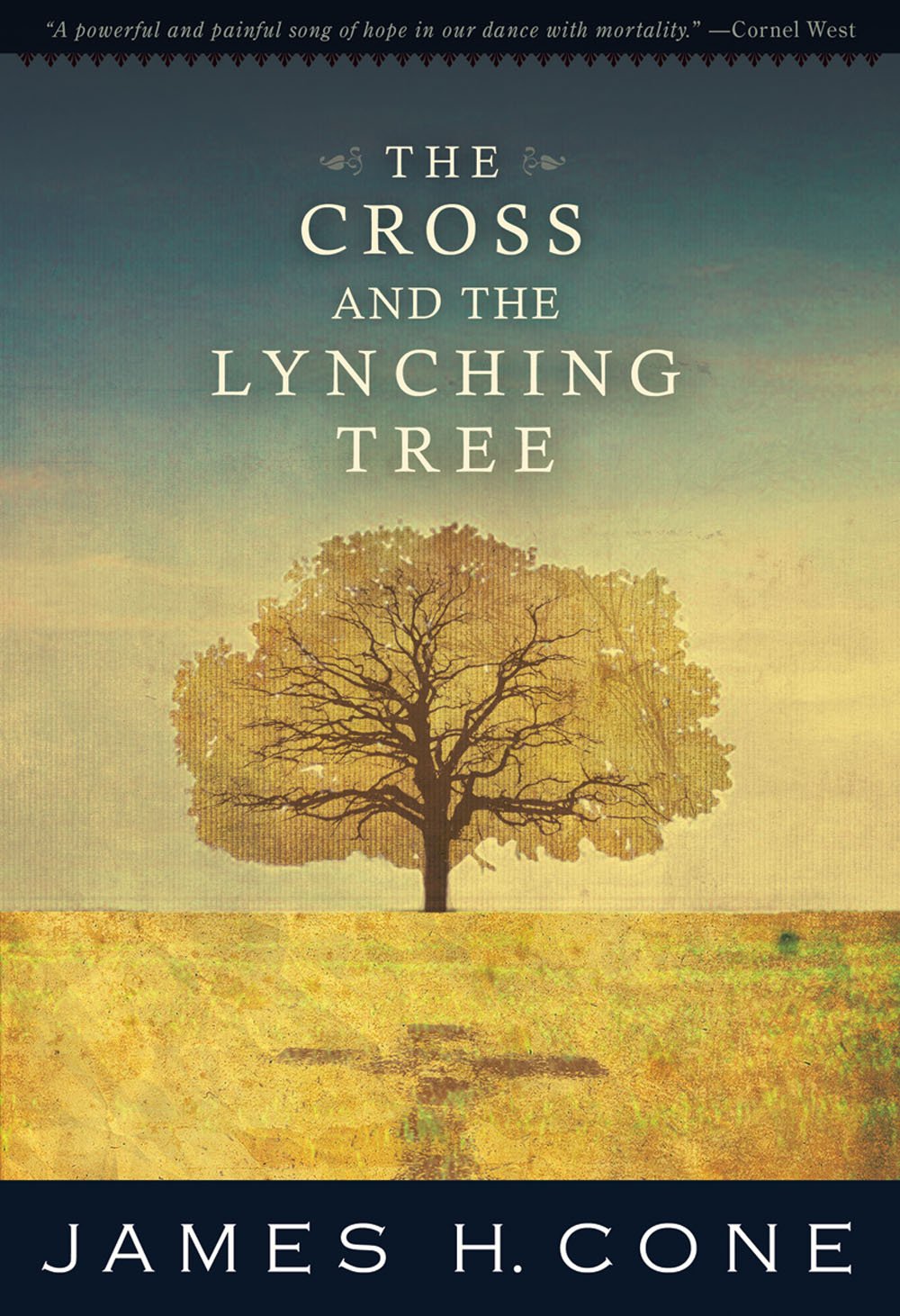
Lent 2015 - The Cross and the Lynching Tree - Chapter 5 and Conclusion
 NOTE: Throughout these blog posts, I will mostly be able to write through the narrow lens of my own experience. I am not well versed in critical theory, the study of race, or the discipline of history. Although I consider myself a practical theologian and a Christian, I would not say that I have the skill set of someone schooled in doctrinal, dogmatic or systematic theology or even ethics. I will probably stumble over ways of talking about what I am reading and my reactions to it. With these caveats, I would like to think that this is an appropriate place from which to engage this book. I would hope that this book would be read in churches and seminaries, classrooms and even homes, by people not well-versed in any of the disciplines I mentioned above. I am reading this book for the first time, and so my words, though I hope reflective and thoughtful, will be first time reactions.
 A general introduction to this blog series can be found here, and an index and schedule for the series can be found here.
*****
Yesterday was Easter Sunday, the yearly celebration that remains central for what it means to be a follower of Christ. Without the resurrection, there would be no Christianity. But the resurrection is inexplicable without the cross. Jesus rose from the dead, but not just from any death. 2000 years on from that event, it can be difficult for some Christians to imagine the paradoxical foolishness of a savior who was crucified (1 Corinthians 1-2). Some of us have become numb to the radical scandal of the cross.
Yesterday was also the first Sunday of the month, which meant that my church celebrated communion, the breaking of the bread. We read the story of the "Walk to Emmaus" (Luke 24). Two of Jesus’ disciples could not recognize the crucified and risen Christ in their midst. It was not until bread was broken that their eyes were opened. This breaking of the bread awoke their memory of a few days earlier, when Jesus had broken bread and said “do this in remembrance of me.” (Luke 22:19)
Throughout The Cross and the Lynching Tree, James Cone has been pulling to the forefront of our collective memories the broken bodies of black people, pointing to them in order to lead us to the cross. Throughout he has been defending the claim that our identities as followers of Christ are incomplete without wrestling with the history of slavery, segregation and lynching in the United States. The cross in our time cannot be understood apart from the suffering of black people.
Monday, March 23, 2015
Lent 2015 - The Cross and the Lynching Tree - Chapter 4
NOTE: Throughout these blog posts, I will mostly be able to write through the narrow lens of my own experience. I am not well versed in critical theory, the study of race, or the discipline of history. Although I consider myself a practical theologian and a Christian, I would not say that I have the skill set of someone schooled in doctrinal, dogmatic or systematic theology or even ethics. I will probably stumble over ways of talking about what I am reading and my reactions to it. With these caveats, I would like to think that this is an appropriate place from which to engage this book. I would hope that this book would be read in churches and seminaries, classrooms and even homes, by people not well-versed in any of the disciplines I mentioned above. I am reading this book for the first time, and so my words, though I hope reflective and thoughtful, will be first time reactions. A general introduction to this blog series can be found here, and an index and schedule for the series can be found here.
*****
It is a miracle that black Americans still believe in Jesus Christ. "It was not easy for blacks to find a language to talk about Christianity publicly because the Jesus they embraced was also, at least in name, embraced by whites who lynched black people. Indeed, it was white slaveholders, segregationists, and lynchers who defined the content of the Christian gospel." (118) Racism has so damaged the image of Christ in our country that Langston Hughes could write:
Listen, Christ,
You did alright in your day, I reckon—
But that day's gone now.
They ghosted you up a swell story, too,
Called it Bible—
But it's dead now.
The popes and the preachers've
Made too much money from it.
They've sold you to many
Kings, generals, robbers, and killers—
Even to the Tzar and the Cossacks,
Even to Rockefeller's Church,
Even to THE SATURDAY EVENING POST.
You ain't no good no more.
They've pawned you
Till you've done wore out. (116, quoted from Arnold Rampersad, Life of Langston Hughes, vol. 1 pp. 252-53)
When Hughes wrote this, he was shamed for blasphemy by both black and white church-going people. But perhaps we should not be discomfited so much by his "blasphemy" as by the sordid history which gave it birth, a history that has obscured the good news of Jesus Christ. Indeed, "Artists force us to see things we do not want to look at because they make us uncomfortable with ourselves and the world we have created." (117)
Yet, James Cone argues in this fourth chapter, it is precisely the artistic imagination that also enabled black slaves, "Cut off from their African religious traditions...to carve out a religious meaning for their lives with white Christianity as the only resource to work with. They ignored white theology, which did not affirm their humanity, and went straight to stories in the Bible, interpreting them as stories of God siding with little people just like them. They identified God's liberation of the poor as the central message of the Bible, and they communicated this message in their songs and sermons [and, as this chapter affirms, poems and short stories]." (118)
This poetic imagination operates differently from "abstract reasoning" that encourages us to "think about the cross as a theological concept or as a magical talisman of salvation." (108) It involves "spiritual wrestling...enduring and confronting the reality of inexplicable suffering." (108) It is a paradoxical imagination, which holds together contradiction, as in the writings of W.E.B. Du Bois (106). It holds together profound doubt and powerful faith, the cross and the resurrection, a dead Jewish man in Rome and black bodies swinging from trees—killed by the followers of that crucified savior.
It is this same poetic imagination that must be employed in living into God's justice and reconciliation today. For those of us who claim to be God's people, we cannot move toward living into our identity of children of God, as Christians without the Holy Spirit's gift of this poetic imagination. It is something we must receive.
But because this imagination sees more clearly than abstract reasoning, it holds before us truths we would rather not see, and sings the grating songs of grief, lament and contrition we would rather not hear. We would rather not believe "the plain facts," as Du Bois presents them, that "The church aided and abetted the Negro slave trade...and the church today is the strongest seat of racial and color prejudice. If one hundred of the best and purest colored folk of the United States should seek to apply for membership in any white church in this land tomorrow, 999 out of every 1,000 ministers would lie to keep them out." (101, quoted from "The Church and the Negro, " Crisis 6, no. 6 [October 1913]). We would rather not consider that, one hundred years after these facts were presented, racism is alive and well and black people are still actively excluded. We want to believe we live in some "post-racial society," or that things are getting better. They aren't. Admitting this can open us to receive the gift of the Spirit's poetic imagination.
It can also help us to listen to that lively imagination as it ignites us to live out our Christian calling as ambassadors of reconciliation. "From now on, therefore, we regard no one from a human point of view [Greek: according to the flesh]; even though we once knew Christ from a human point of view [according to the flesh], we know him no longer in that way. So if anyone is in Christ, there is a new creation: everything old has passed away; see, everything has become new! All this is from God, who reconciled us to himself through Christ, and has given us the ministry of reconciliation; that is, in Christ God was reconciling the world to himself, not counting their trespasses against them, and entrusting the message of reconciliation to us." (2 Corinthians 5:16-19) Of course, none of this is known apart from the cross, "for the love of Christ urges us on, because we are convinced that one has died for all; therefore all have died. And he died for all, so that those who live might live no longer for themselves, but for him who died and was raised for them." (2 Corinthians 5:14-15) It is by looking to the cross that we can see the new creation. And Cone reminds us that our poetic imaginations see rightly when they look to the cross within our present, to those still dying, to Jesus in the lost, the least, the imprisoned, the oppressed, the dying (Matthew 25). Paul commends to the Corinthians a ministry that comes "through great endurance, in afflictions, hardships, calamities, beatings, imprisonments, riots, labors, sleepless nights, hunger...in honor and dishonor, in ill repute and good repute. We are treated as impostors, and yet are true; as unknown, and yet are well known; as dying, and see—we are alive; as punished, and yet not killed; as sorrowful, yet always rejoicing; as poor, yet making many rich; as having nothing, and yet possessing everything." (2 Corinthians 6:4-10) I can think of no better description of the black experience in the United States.
The miracle of the gospel is not only that black Americans still believe in Jesus Christ after "the obstacle" that is the "fault" of Christian ministry under white supremacy in the United States (2 Corinthians 6:3); but also that out of that damaged witness would emerge the vibrant witness of black poetry, story, sermon and song. As Cone has been claiming all along, it is incumbent upon those of us who call ourselves Christians in the United States to confront white supremacy with the truth of black experience, to challenge our racism with the power of the gospel, to listen to those who are witnessing to the gospel in our midst—the oppressed, marginalized, poor, of ill repute and dishonor—and to hear the voice of Christ in them; for without doing so, we will not be able to "explain the meaning of Christian identity" to a watching world. (xvii)
In this book, Cone writes, like Paul, "frankly," with a "wide open" heart (2 Corinthians 6:11). In this book, as uncomfortable as it might make those of us who cannot hear the poetic imagination yet, Cone is writing "with no restriction in [his] affection, but only in yours. In return—I speak as to children—open wide your hearts also." (2 Corinthians 6:12-13)
*****
NOTE: I encourage thoughtful, impassioned conversation in the comments below. I do not say, "civil," because I think this sometimes connotes "dispassionate." But I would ask that those who comment attempt to engage with thought and reflection. I do reserve the right to delete any comment that I consider harmful. The point is a passionate and meaningful conversation, which means, for me, neither stilted dialogue nor combative debate.
Monday, March 9, 2015
Lent 2015 - The Cross and the Lynching Tree - Chapter 2
NOTE: Throughout these blog posts, I will mostly be able to write through the narrow lens of my own experience. I am not well versed in critical theory, the study of race, or the discipline of history. Although I consider myself a practical theologian and a Christian, I would not say that I have the skill set of someone schooled in doctrinal, dogmatic or systematic theology or even ethics. I will probably stumble over ways of talking about what I am reading and my reactions to it. With these caveats, I would like to think that this is an appropriate place from which to engage this book. I would hope that this book would be read in churches and seminaries, classrooms and even homes, by people not well-versed in any of the disciplines I mentioned above. I am reading this book for the first time, and so my words, though I hope reflective and thoughtful, will be first time reactions.
A general introduction to this blog series can be found here, and an index and schedule for the series can be found here.
*****
Near the beginning of this second chapter, James Cone forcefully underlines the deep connections between crucifixion and lynching in a searing and convicting passage that must be quoted in full:
"As Jesus was an innocent victim of mob hysteria and Roman imperial violence, many African Americans were innocent victims of white mobs, thirsting for blood in the name of God and in defense of segregation, white supremacy, and the purity of the Anglo-Saxon race. Both the cross and the lynching tree were symbols of terror, instruments of torture and execution, reserved primarily for slaves, criminals, and insurrectionists—the lowest of the low in society. Both Jesus and blacks were publicly humiliated, subjected to the utmost indignity and cruelty. They were stripped, in order to be deprived of dignity, then paraded, mocked and whipped, pierced, derided and spat upon, tortured for hours in the presence of jeering crowds for popular entertainment. In both cases, the purpose was to strike terror in the subject community. It was to let people know that the same thing would happen to them if they did not stay in their place." (31)
He ends this litany with a quote from NT scholar Paula Frederickson, "The point of the exercise was not the death of the offender as such, but getting the attention of those watching. Crucifixion first and foremost is addressed to an audience." (31) Then he makes the crucial and convicting statement for this chapter: "The crucifixion of Jesus by the Romans in Jerusalem and the lynching of blacks by whites in the United States are so amazingly similar that one wonders what blocks the American Christian imagination from seeing the connection." (31, emphasis mine)
The implication of all of this is that, though lynching was a "public spectacle" with "an audience," the vast majority of people in the United States have turned a blind eye to its reality. Even worse, those of us who call ourselves Christians have failed to ignite our imaginations on behalf of those suffering, in prison, hungry, naked and poor—those in whose midst we find Jesus (Matthew 25).
Monday, March 2, 2015
Lent 2015 - The Cross and the Lynching Tree - Chapter 1
NOTE: Throughout these blog posts, I will mostly be able to write through the narrow lens of my own experience. I am not well versed in critical theory, the study of race, or the discipline of history. Although I consider myself a practical theologian and a Christian, I would not say that I have the skill set of someone schooled in doctrinal, dogmatic or systematic theology or even ethics. I will probably stumble over ways of talking about what I am reading and my reactions to it. With these caveats, I would like to think that this is an appropriate place from which to engage this book. I would hope that this book would be read in churches and seminaries, classrooms and even homes, by people not well-versed in any of the disciplines I mentioned above. I am reading this book for the first time, and so my words, though I hope reflective and thoughtful, will be first time reactions. A general introduction to this blog series can be found here, and an index and schedule for the series can be found here.
*****
I have to admit that I'm struggling to write a blogpost about this first chapter. The main difficulty is that no words of mine could replace the experience of reading these stories of hope in the midst of lynching. And that is the point of this book. As Cone writes in the introduction:
"...my primary concern is to give voice to black victims, to let them and their families and communities speak to us, exploring the question: how did ordinary blacks, like my mother and father, survive the lynching atrocity and still keep together their families, their communities, and not lose their sanity? ... I believe that the cultural and religious resources in the black experience could help all Americans cope with the legacy of white supremacy and also deal more effectively with what is called the 'war on terror.' If white Americans could look at the terror they inflicted on their own black population—slavery, segregation, and lynching—then they might be able to understand what is coming at them from others. Black people know something about terror because we have been dealing with legal and extralegal white terror for several centuries." (xviii-xix)
Monday, February 23, 2015
Lent 2015 - The Cross and the Lynching Tree - Introduction
A general introduction to this blog series can be found here, and an index and schedule for the series can be found here.
*****
Take a moment to read this NYtimes article and these responsive letters. Sit with them for awhile.
Okay. Now gauge your response. Are you shocked? Outraged? Numbed? Unsurprised? What emotions does this information evoke in you? Guilt? Anger? Sadness? Pity? In some ways, your response will be shaped by the extent to which the history of lynching in the United States has been taken up as a part of your own history.
Wednesday, August 18, 2010
A History of Caedmon’s Call and a Review of Their New Album, Raising Up the Dead
It took a Caedmon's Call album to break me out of my blogging silence. Go figure. Of course. Sometime soon I'll update on my life and other things, as well as, hopefully, begin a secondary blog on the Psalms that I've been working on over the summer. What follows is a history of my interaction with the band and a review of their most recent album. If I get some historical facts about the band wrong, it's all my fault (and possibly wikipedia's, which really means mine for using wikipedia).
I have been listening to Caedmon’s Call for nearly a decade. A late-comer to the CC fandom, I only started paying indepth attention to them during my senior year of high school and first year of college (2002-2004), when I was learning to play guitar. For those unfamiliar with the band and its history, this two-year time period was one of dramatic change for the group. Their first three wide-release albums, My Calm, Your Storm (Storm), Caedmon’s Call (CC), and 40 Acres (Acres), were characterized by folk-rock sensibilities, introspectively philosophical lyrics with obscure biblical references, and a deeply Calvinist theology. Their fourth album, Long Line of Leavers (Leaver, 2000), represented a musical experiment, with horns and a more “electronic” sound. It also marked a slight shift in the balance of writing between the two primary lyricists – Aaron Tate (who had always written for the band, but only played with them in the very early days of their formation) and Derek Webb. Tate’s work had dominated Storm, and they had shared about even duties on CC and Acres. Webb’s work became more dominant in Leavers, and Cliff and Danielle Young, two of the band’s lead singers, contributed more explicitly to the lyrics of a couple songs. Webb, rightly or wrongly, became known for his songs about relationship and young adult feelings of alienation.
By the time I started listening, their earlier albums could not be easily found in stores and Amazon.com was not yet in my ken. Caedmon’s also never played in my home state of Utah, as far as I know. Leavers was, therefore, the first album of theirs that I owned. It was followed by In the Company of Angels: A Call to Worship (Angels 1), an album that their record label required in lockstep with the early 2000s worship fad, but which emphasized the band’s unique musical and theological take on praise music. It also marked the beginning of Aaron Tate and Derek Webb’s departures. The group’s next effort, Back Home (Home, 2003), was basically devoid of any of Tate’s work and included only a few songs by Webb. This writing gap was filled by Randall Goodgame, Joshua Moore (who had taken over keyboard and general crazy instrument duties from Randy Holsapple back in the Leavers era), and Webb’s wife Sandra McCracken. Tate’s mythological, philosophical and biblical introspection was replaced by hymn-like language and folk storytelling. Webb left the band at this point to pursue a solo career. This also happened to be the exact time when I first went to see a Caedmon’s Call concert. They had hired an up-and-coming singer-songwriter to fill in for Webb – Andrew Osenga, who had formerly fronted the group The Normals.
I now owned Acres, Leavers, Angels 1, and Home, which meant that my exposure to Caedmon’s basically extended only slightly across the divide between Old Caedmon’s and Emerging Caedmon’s. Some fans of the band see Angels and Home as the band’s low-point. The lyrics were simpler, the sound formulaic and the band’s heart didn’t seem in the music. For me, it was all I knew. Yet I still longed for the tighter lyricism and acoustic sound of Acres. I was thrown for a loop, then, when I purchased the first album in which Osenga had a hand, Share the Well (Well, 2004). At first I hated it. This wasn’t Caedmon’s! Their earthy guitar sound had been replaced by tenor-heavy rhythms and picking, sitar-sounding electric riffs, strange drums and atmospheric background noises. Despite all of this, I decided to acclimate myself to the new sound by playing the CD over and over again. It formed the backbone of my study time for nearly a semester. Soon I fell in love with the “New” Caedmon’s. The urgency of the story in the lyrics, and the otherworldly beauty of the music captured my heart. I learned that the band had actually travelled to India, Brazil and Ecuador, recording and writing on the road, including instruments and vocals from the people and cultures they encountered. Whereas many of their previous efforts had focused thematically on God’s grace, human sin, and the individual soul, Well turned its gaze to God’s love for the whole world and justice for the poor and oppressed. But these were not faceless poor, not statistics. Instead of slamming the message through with overwhelming numbers, Caedmon’s simply told the honest, beautiful stories of the people they encountered. While Home had seemed, in some ways, directionless, a meaningless collection of one-off tales and generic do-overs of the band’s previous themes, Well utilized the same storytelling sensibilities to paint a coherent picture of parts of the world that most folks in America have never seen. Well quickly became my favorite Caedmon’s album. The strange sounds that had been off-putting now became windows into the souls of my fellow brothers and sisters, children of God.
Following this stellar music masterpiece, Caedmon’s record label forced them to produce another worship album, In the Company of Angels II: The World Will Sing (Angels 2, 2006), which also coincidentally fulfilled the band’s contract with the company, allowing them to break ties with a corporation that had pressured them to do things with which they were not comfortable. Very little of the unique, multi-cultural sound that the band had fostered while overseas had been allowed to suffuse the album, most likely do to Well’s underwhelming sales and reception. After all, above everything else, large corporations want consistency and a safe bet (see the recent penchant for sequels and reboots in Hollywood). Despite the album’s compulsory nature, I still found songs to love amidst the general dross. Most of these favorites were written by Osenga, who has become one of my favorite storytellers.
Free of their fetters, the group cast about for a year, while also dealing with the fact that many of their members were now married with children. Touring became more and more difficult and some of their earlier themes of introspective alienation did not resonate in their new family-oriented lives. At this critical juncture, Webb, who had been absent from the band for nearly four years, found himself pulled back into their music-writing field. He had grown as a writer, and as a music producer, finding his voice in social and political criticism as a musical prophet of sorts. His insightful and cutting lyrics paralleled the sense of God’s justice for the oppressed that Caedmon’s had found overseas, but directed their gaze toward the injustice in the United States in a more biting way. In a strange turn, Webb and the rest of the band had gone different routes to arrive at a similar place, which allowed them to come together again to create Overdressed (2007). This album marked another shift for the group. Musically, it was a complete mish-mash. Osenga’s spare rock sensibilities mingled with Webb’s sparse new propheticism and the world music traits from Well. Once again, I found myself put-off by the album at first. Once again I played it non-stop for weeks. Soon I found a beauty in the collision of styles and themes and sounds.
The album title described the place of our souls before God. Trying to hide our sinfulness in our good works and a thin veneer of cultural Christianity, we are overdressed. Yet it also acted as a counter-theme to the state of the band. Utterly fearless and stripped of the constraints of their label, they were laying themselves out for everyone to see. The music was messy and unrefined, yet paradoxically more pure and alive than ever before. Many of the songs ended in unstructured jam sessions, or began with odd snippets of conversation from the recording process. Lyrically, the album laid bare the personal lives of the band members in a way that had been missing since their earlier works. Issues of lust and doubt were placed alongside a recognition of God’s work in the everyday life of laundry and parenthood. Social criticism was coupled with a realization of our culpability in injustice. A grand view of the world and the recognition of the smallness of our efforts at changing it lead to a realization of God’s largness and ability to change the world’s brokenness by the slow, careful work of healing the brokenness of every soul through openness and honesty with each other. Our imperfections become clear in the light of God’s grace and love, which makes us painfully ashamed of our nakedness yet also purifies and cleanses us.
During the tour for Overdressed I was finally able to see the band in concert with both Webb and Osenga. I also purchased their first two albums and one of their Guild CDs, which are fan-centered recordings of special concerts and studio rares from their early career. I began to truly understand what had upset people about Home and the worship albums. “Early” Caedmon’s was a thinking person’s Christian folk-rock group. Their lyrics were labyrinthine and obscure, yet their music was catchy and simplistically rich. You could listen to them and simply enjoy the tight three-part harmonies, thrumming layered guitars and percussive drive. Yet, if you paid attention at all to the lyrics you were nearly forced to look up matters relating to random Old Testament texts, Greek mythology and philosophy, and Reformation theology. New testament metaphors and verses were also reinterpreted in ways that made them fresh and interesting. Take, for instance, this restatement of John 3:16: “For you so loved the unlovable/That you gave the ineffable/That who so believes the unbelievable/Will gain the unattainable,” which not only restates the the verse in terms of rhyming “able” language, but also adds some reformation theology and sets you running toward the dictionary to figure out what “ineffable means.” Or, try this mixture of mythology and hymnology: “I mount up with waxen wings/High to reach the sky/But I am no further than/Than when I first begun.” Icarus and Amazing Grace in one stanza.
After the creative explosion of Overdressed, the band focused once again on their families. Andrew Osenga left the band to pursue his own solo career, much as Webb had done five years earlier. I wondered whether there would be another album. At the end of 2009, I heard whispers that Webb had rejoined the band for another upcoming album, which he was producing, and that the songs were being written by Webb, along with Cliff and Danielle, who had written only a few before, and the bassist Jeff Miller, who had one previous writing credit. For the first time in the band’s history the songs were all being written by people who were actually performing with the band. I was stoked. Raising Up the Dead was to be a unique album. Only 1000 physical copies of the work were being produced, and were going to be sold as collector’s items. Most people would have to download the album off of the group’s website, not even through channels like iTunes. In subtle and not-so-subtle ways, then, this was bascially a “fans-only” album. Unless you already knew about Caedmon’s, you wouldn’t know about this album.
In early August 2010, I downloaded Raising Up the Dead and even purchased the $50 deluxe edition, which included a t-shirt, the Guild CDs that I had missed, a Guild DVD and a physical copy of the CD, signed by the band, with lyric sheet. All of the physical materials wouldn’t arrive until September 14, so I simply listened to the CD on my computer. As with Share the Well and Overdressed, I was initially extremely disappointed. The album felt slow to me, with only medium-tempo songs. The world music influence had been laid completely by the wayside, along with some of the rock orchestration that Osenga had brought to the group. As much as I could tell from trying to catch the lyrics, much of the focus on God’s justice had also faded away. Essentially, the Caedmon’s that I had known for much of my experience with the band was gone.
Yet, once again, I decided to work through repeat listens. Once again, I was rewarded. In many ways, Raising Up the Dead feels like the Caedmon’s album that should have followed Long Line of Leavers. Themes of sin and grace have returned in strength as well as obscure lyrics and slight references to verses of scripture and even mythological notes. Despite the inclusion of some of Webb’s recent experiments with electronica and production, the album is also much more acoustic and folksy than the last few. And yet. And yet it is also feels like their most mature output to date. Instead of viewing sin and grace through college-age alienation and singleness, the songs focus on finding grace in imperfect community. Family comes through as the most important hermeneutical lens through which the band contemplates theology. The music is also extremely dense. It is not showy. It is not “radio-single” worthy. Instead it is intimate music, pondering music, music that makes you think as much as the lyrics do. It is music that requires the listener to work. It isn’t music to be memorized, like the earlier hits that hooked themselves instantly into the brain. It is music that engenders relationship. It is not the exuberance of first love, when every moment is alive and bright and memorable, but the slow beauty of marriage, when even the subtle moments mean something and the quiet rest of the other’s arms means more than flashy jewelry. It is music made of mystery, whose beauty is that you will never fully understand it, but every day you will want to learn more.
In these and numerous other ways, Raising Up the Dead represents the culmination of Caedmon’s Call’s wandering journey. Once again the title expresses both the themes of the work and the state of the band and its music. The introspection and theological heft of their early albums is combined with the themes of honesty and family from their later years. The old acoustic sound is filtered through the patience and naked dedication of Overdressed and the intricate musicality of Share the Well. The comfortable three part harmony is now sung through voices that are rougher, grainier and more expressive than the pop sound favored in their middle work. I want to follow up this post with one going through each song and what I'm currently experiencing through it. Look for that possibly tomorrow.
I regret that many will not know about this album. If you're reading this, download it from their website (caedmonscall.com). Tell your friends. Listen to it five times in a row at least. Let yourself fall in love with it. This is an album worth putting on repeat.
Thanks, as always, for your time and love, faithful readers.
Wednesday, January 6, 2010
Thoughts on Issues in the Theology of Scripture Part 1: The Initial Essay
Greetings again, faithful readers. Reprinted below you can find my initial essay for my course in Issues in the Theology of Scripture. If you want to know more about the impetus behind this series of posts and the course that inspired them, please read this post.
Our professor assigned us a 1500 word essay (approximately 4 and 1/2 pages) addressing the topic "What do we mean when we say that the Bible is true and what methods of interpretation help us to appreciate its truthfulness" as if we were discussing it with an educated layperson. This assignment, to be blunt, was agonizing. So many thoughts ran through my head, I didn't know where to start. How could I address this huge topic in four pages?
I ended up starting with a blank slate, as it were, answering the question by simply picking up the Bible and looking at it, then slowly weaving in historical and theological questions as they arose from my ponderings. This ended up producing what I think is a coherent, self-contained essay, but it also left me feeling strange. Only after being in conversation with others this morning in class did I realize that I had left out two of the most important things about the Bible to me: a) story and b) a relationship with Jesus Christ, the cornerstone and primary revelation of God. Wow! What an oversight. But somehow they didn't arise in the flow of the essay and, as I had already written 1900 words and had to cut down, I couldn't shove them in without breaking the essay. I will write a post, possibly this weekend, containing my thoughts on these two very, very important things to me and I also might include them in my final paper for the course, which is a revision of this initial essay. I will post that final paper here as well.
For now, peruse my thoughts as derived from a broad-based view of just picking up the Bible and thinking about it organically. Please leave comments below. (Be nice if these comments happen to lead to strenuous discussion).
Thanks in advance faithful readers! Oh, and if you want another version of this essay, please read the one posted by my friend Jeff over at his blog: Theological Mishaps.
-----------------------------
"What do we mean when we say the Bible is 'true,' and what methods of interpretation help us to appreciate its truthfulness?"
The Beginning of a New Blog Cycle: Thoughts on Issues in the Theology of Scripture
Well, it has been a long time since I've blogged. Life became extremely crowded last semester, what with a 15-hour a week job, a 15-hour a week internship and three intense classes (oh, and living life and loving my wife as well). Right now I'm taking a month-long course on Issues in the Theology of Scripture, which meets for three hours in the morning, leaving a little bit more time on my schedule. I've decided that this class, which so far has been wonderfully thought-provoking, might provide some good fodder for blogging. What I'm proposing to do is to post thoughts on the course (which began on Monday and so far has involved writing a 1500 word essay) every day that I can. I've asked my professor -- who will be referred to as Shane in the posts -- if I can quote him, or refer to his ideas if they are the seeds of my thought for these posts, and he has agreed that I can refer to him as long as the references are not wholesale transcriptions of his lectures or audio files (which they won't be) and that I accurately represent his views.
I hope to ponder the theme of the course, which Shane put before us on Monday, of wandering around in the gap between theology and biblical studies. I will go more into detail of what this gap entails and why it exists as Shane explains it to us in class, but in brief, let's just say that in higher education there exists a separation of disciplines. In most higher ed institutions divisions are placed between the sciences and the arts and the humanities, and also within each of these between history and english or philosophy, for instance. In Seminary, you often see this division of disciplines into: Biblical Studies, Practical Theology, Theology and Church History. The difficulty that sometimes arises in pursuing these studies is that the folk in the Biblical Studies department take very seriously the questions that have come from a historical-critical way of looking at the Bible: reading texts in original languages, studying their cultural, historical and political contexts, trying to work out how the texts were written, formed, passed down, etc. This method is a product of the Enlightenment. Meanwhile, the Theology department spends perhaps a class period on a theology of scripture, often avoiding questions that deal with the difficulties presented by the historical-critical method. These problems sometimes involve the inerrancy or infallibility of the Bible, the contradictions that can be found in the Bible (or seeming contradictions, I'm sure we'll get into this later), the grammatical differences between different copies of the Bible, what it means for the Bible to be divinely inspired and how this bears out when the Bible gets into human hands or when it is translated into different languages. So, the Biblical Studies department takes these questions seriously, but they are often in the background and understanding why these questions are important and what they mean for the life of faith and everyday living is not considered. Or, on the other hand, the Theology department discusses briefly a theology of scripture but does not consider how this might come to bear in practice or what a theology of scripture that takes into account the questions might look. This course tries to put these background questions into the foreground and to address them in a thoughtful and sensitive way.
It also attempts to equip students with tools to read what Shane calls the "Barnes and Noble School of Theology and Ancient Scriptures." By this he means the popular books that are widely available in major bookstores and have entered the general culture and conversation: Bart Ehrman's Misquoting Jesus, or Dan Brown's The DaVinci Code, for instance. While these books bring up interesting points that speak to the Historical-Critical method, the outcomes of their discussion can be misleading and they do not always speak to the theological or practical outcomes of the difficulties they mention. If you want a good introduction to this debate, check out Stephen Colbert's interview with Bart Ehrman, which Shane used as a catalyst for his initial lecture. The video is embedded below:
| The Colbert Report | Mon - Thurs 11:30pm / 10:30c | |||
| Bart Ehrman | ||||
| ||||
So, now that you know a bit about the course, you can follow along on this blog for the next few weeks as I share with you what I'm learning and what I'm thinking. I'll begin with the essay that we had for the course, which answers the question: "What do we mean when we say that the Bible is true, and what methods of Biblical interpretation help us to appreciate its truthfulness." This essay will be revised at the end of the semester. I'll post it in a separate post from this.
Thanks, as always, for sticking with me faithful readers!
Saturday, September 12, 2009
Confidence and Completion
"I am confident of this, that the one who began a good work among you will bring it to completion by the day of Jesus Christ." - Philippians 1:6
Last weekend, Sarah and I went back up to our Alma Mater, Alma College (somehow it seems redundant), to participate in the wedding of two wonderful friends. We laughed, some people cried, we played music, we danced, we talked with old friends. The weather was beautiful, the sky a bright blue, the temperature warm enough for sleeveless dresses and cool enough to forestall sweat. After the happy couple left for their honeymoon cruise, we helped the wedding party clean the reception hall. Then we went to chapel.
Alma's chapel service, if you haven't been, starts at 9:00 at night on Sundays. It's a rather odd affair: drums and guitars and piano blaring out the good news to old teens and young twenty-somethings dressed in everything from pajamas pants and slippers to khakis and nice shirts. Sometimes the soon-to-retire sixty-something-year-old president of the college attends with her husband, a professor at a seminary in Detroit. She smiles and shakes hands during the boisterous passing of the peace, where some people hug, others give high-fives and folk run around to greet each other with such energy that the worship leader always has to call them back with a shout. Chapel worship is robust and energetic, with clapping and singing at the top of lungs. The music ranges from spirituals, folk songs and old hymns to straight up rock. The preaching is done by students and professors and local ministers. It can also be reflective, with prayer and silence, and sometimes weeping. It is not an experience for the faint of heart. Or perhaps it is, because through it your heart might be strengthened. It certainly expands hearts and opens arms in fellowship.
It was not always this way. Ten years ago, long before I attended Alma, the Chapel program was dying. I heard, from Alums, that Chapel attendance once consisted of the chaplain and five students listening to hymns recorded on tape and played on a stereo. Two years before I landed a few students decided to change that. They formed a small band and started playing more upbeat music - live. To advertise the change, they played at the college's annual song competition. A few people took notice and attendance rose to fifteen or twenty people. The chaplain, who was supportive of this, was also nearing retirement. So, the year before I came to Alma, he retired.
I came to Alma at the same time as a new chaplain. Having lead worship at my church for a few years, I knew that I wanted to participate in any way I could. The band leader at that point, one of the founders of the chapel band, was in his senior year. The band needed a keyboardist, and he felt like he could train someone to replace him leading the band on guitar and vocals. I took up the charge and played every week. He bolstered my guitar skills, playing for hours after every service with me. Soon I became confident enough to sing and strum at the same time, if not often in rhythm. Sometimes I slowed down. Other times I sped up. The rest of the band at that time (all extremely competent musicians who either had separate bands of their own or who were part of our college's award winning percussion ensemble), dealt with the transition as well as could be expected and taught me a lot about how to lead a band and how to work with people. They also taught me rhythm (mostly). Other part-time folk were brought into the band as well, and we developed a rotating roster of singers and keyboardists and guitar players. We added occasional flute and violin and harmonica and tin whistle too.
The then out-going worship leader was also the chapel intern. He worked ten to twenty hours a week at the chapel, helping the chaplain with whatever she needed and developing the worship life. He knew that not every Alma student would want to take over the position of chapel intern, but the program was growing. They started an Alternative Break program that year, in conjunction with the college's Discovering Vocation office. Worship attendance had grown to an average of thirty people per week. And more and more students seemed interested in Christian leadership. So the chapel intern and the chaplain devised a plan. They divided the work of the intern into six areas with twelve positions: music and worship, technology, clerical, liturgical, worship and the arts, and hospitality. Then they hired twelve students, including myself, as test pilots for a new group: the Student Ministry Coordinators. Half of us were considering some type of graduate work in religion, the other half were very dedicated chapel goers, or people who had worked sound and other things with the chapel program.
Over the next three years the roster of SMCs changed, with a core of five or six of us. The chaplain broke her leg and was out for half a year, then moved on to a position at a Seminary. We went through a year with an interim chaplain, then found a new one for my senior year. Ever year seemed in flux. Sometimes we were barely keeping ourselves upright. We fought each other. Divisions flared up. Some people who came into the program were just looking for a campus job. Others had problems at home. We were all over-busy, over-stressed and sometimes over-worked. Sometimes all twelve of us (thirteen including the chaplain) came to meetings, sometimes less than half. We changed the order and style of worship over and over and over again. The only constant was the worship. Sunday after sunday. Rain or shine. Sometimes there were only ten people in the pews. Sometimes there were almost sixty. Somehow, in all of this turmoil, by the grace of God, the program grew. Three chaplains in three years. Twenty-or-so over-stressed students. Varying quality of music (often my fault, sometimes because no one came to practice). Yet, by my senior year, our average attendance had grown to over sixty people per week.
That senior year we realized that most of us SMCs were...well...seniors. We had grown up together, shared our lives together, cried and laughed and struggled together. But we were moving on. What would the future hold? Should we disband the SMCs? Should we pare it down to only six? How do you pass the torch? We put out a search for first and second year students to join us, to apprentice us. We left as much information as we could in their hands (I sent six CDs full of music back so the new band leaders could listen to most of the songs in our catalogue). Still, two of those we were training were going to be in semester over seas programs, and our chaplain was going to go on sabbatical for a year. It seemed that the program was going to be in flux even more than before. And the elusive stability that we had sought, the stability that we thought we could provide by being there, was going to be lost.
Would the chapel program survive us? (I admit this is a prideful and obviously stupid thought. I wish I could say I'm a better person than one who would think that, but I can't.) The six or seven students in whose hands we were leaving the SMCs had a huge mountain to overcome. Not only were they small in number and newly trained with another interim chaplain with whom they must deal, but the expectation of those who had come to chapel regularly and who would still be attending the next year was like a thick fog in the air. It's always hard not to compare. I could understand if the students buckled under the weight of it all. I could understand if many of them gave up. I almost had several times. Life is much easier without stress.
I paint a dire picture of course. But, in talking with several of the SMCs the year after I left, I discovered that they were having a difficult time. Attendance had dropped. The interim chaplain was sometimes hard to deal with. Some of them did end up quitting.
And yet.
And yet. It is a testimony to God's strength and grace that the Chapel program survived. And not just survived. Thrived. After the initial drop in attendance, a quiet revolution began. The SMCs knew what all good torch-bearers know, what all those running a relay know. When the torch is passed, you can only run as you can run. You can only breath as you can breath. If you think too much about imitating the previous runner, you're sunk. If you think too much about how desperate the situation is, you're sunk. If you dwell on the past instead of running into the future, the race is already over. You must run the race you've been given and set your eyes on the finish line. The SMCs made the program their own. They found their voice.
By the second year after I graduated, average chapel attendance was edging close to one hundred. I came back to preach in January, the first Sunday of the second semester. During my tenure as an SMC, first Sundays of second semester were notoriously low. Something about the winter cold and coming back from break and the rigors of the first semester that always depleted our attendance usually brought down the numbers to just between fifteen and twenty. Certainly not sixty. Certainly not eighty. Certainly not one hundred. But that January night I preached to one hundred people. On a low Sunday.
And now back to last weekend. Sarah and I walked into chapel early. She went downstairs and I stayed up in one of the pews to listen to the new chapel band. Only one of the members had even been a student at Alma when I had been an SMC. But they sounded good. Different. They had their own style. And yet there was something familiar about it. I even heard one of the worship leaders ask after a song: "Any questions, concerns, or problems?" which is a slight variation on something I used to say: "Questions, concerns, comments, queries?" I guess I'm more into alliteration. Slowly the chapel started to fill. Sarah and I were expecting low numbers. This was the Sunday of Labor Day weekend, after all. Although many first year students were already on campus, upperclassfolks didn't have to start until Tuesday. Monday was a holiday. Labor Day Sundays were notoriously low. But the chapel filled. And filled. Eighty-nine people, not including the six or seven SMCs who were there (some of them hadn't come back to campus yet).
Worship was exhilarating. The music was uplifting and just as flawed as it had been when I was leading the band. I discovered during my four worship-leading years that the time when the band was the least prepared and when the music often sounded the worst was the time when I reached out to God the most and found that I was truly worshipping. So I rejoiced that some songs were too fast and that you couldn't always hear the singers. Worship is never about the band anyway. It's about God. Passing of the Peace was even more boisterous than I remembered; the fellowship more deep. The college president even gave me an informal hug and asked how I was doing with a bright, cheery smile. The SMCs had added a ministry to worship. Some of them stayed in the back afterward to offer anyone who needed it a shoulder to cry on and a hand to hold in prayer.
And the message. The message was prayerful and heartfelt and chocked-full of scriptures and genuine. The student who preached gave a message about Growth. And she used the scripture passage at the head of this blogpost. She talked about how growth was hard, but how God was with us. And how God had a plan, even if we could not see it. And as I sat in that pew, some of the doubts about what I'd done in college faded away. Some of the tension and emptiness slipped back to the darkened corner of my mind from where, someday, they might creep back again. But for now, they were silenced and gone. And I got a glimpse of that elusive plan of God, that stretches all throughout history and is more like a woven blanket with an intricate pattern of warp and woof than a simple straight line. I saw that God had used me despite me, and that God was growing the chapel despite me too. I saw that it was true that the good work that God began at the Chapel among my generation, and even before us, was being carried on to completion. I saw that sometimes this means that God will complete something started in us, even when we are no longer there. The verse is ambiguous about this, of course. It doesn't say that we will complete the work, or that the work will be completed in us, but that God will complete the work that was begun in us. Nevertheless, this confidence that God was completing a work that I helped to inaugurate gave me confidence for my own life. If God could complete this, surely God can complete me.
Subscribe to:
Posts (Atom)