For Part 1 of this post, which explores the character-driven structure of Agents of SHIELD, see this post. Part 2, below, explores how the showrunners experiment with differently structured plots each season.
2) Gradually More Complex Narrative Arcs
Part 1 demonstrated that the Agents of SHIELD showrunners have been playing with the structure of their seasons since the beginning, largely through the dynamics of protagonists and antagonists. The reality of “pods” for each season can also be determined through the actual plot that the seasons run through. Sometimes these pods are defined by subtitles (as in seasons 3 and 4). Other times they can only be seen through particular turns in the overarching plot. Within each larger pod the showrunners, even from the very beginning, have inserted “mini-arcs” that pay off particular characters, themes, and questions while pivoting to new ones. These pods and mini-arcs can best be discerned through outlines of the plots for each season. Those outlines are below. The titles for the Pods and mini-arcs (except for some for seasons 3 and 4) are my own.

Thursday, May 17, 2018

Agents of SHIELD - A Structural Analysis - Part 1
My partner and I only watch one or two TV shows. With two kids and a lot of other things going on, there isn’t much time for anything else. One of our current must-see shows is Marvel’s Agents of S.H.I.E.L.D. (and that’s the last time I’ll use the periods). ABC recently renewed SHIELD for a sixth season. In both the week leading up to that decision and in the days since, many have written about SHIELD’s remarkable transition from a show that shed viewers like a molting starling into a vital (but little-watched) phoenix program, renewed every year.
One article on the subject caught my eye both for its attention to one of the show’s much-heralded innovations -- the use of “pods” in its creatively rich season 4 -- and for the ways in which I realized that the articles’ analysis of the seasons missed the mark. The article traces a trajectory of development from a mostly procedural first season, through a serialized second season, into a subtitled third season, and a “pod-ed” fourth season. What this narrative does not see is the way that the showrunners -- Jed Whedon, Maurissa Tancharoen and Jeff Bell -- have been playing with structure and narrative since the very beginning. In reality, SHIELD has been doing "mini-arcs" with internal, compounding climaxes since the very beginning. It's just experimented with seasonal structure in several different ways.
SHIELD's experimentation with structure can be observed through two lenses: 1) the use of protagonists and antagonists; and 2) gradually more complex narrative arcs from season to season. Let’s explore both lenses. In order to reduce the amount of scrolling, I've divided this into two posts. You can access the second post through a link at the end of this first one. Obviously, there are spoilers for all five seasons of Agents of SHIELD.
One article on the subject caught my eye both for its attention to one of the show’s much-heralded innovations -- the use of “pods” in its creatively rich season 4 -- and for the ways in which I realized that the articles’ analysis of the seasons missed the mark. The article traces a trajectory of development from a mostly procedural first season, through a serialized second season, into a subtitled third season, and a “pod-ed” fourth season. What this narrative does not see is the way that the showrunners -- Jed Whedon, Maurissa Tancharoen and Jeff Bell -- have been playing with structure and narrative since the very beginning. In reality, SHIELD has been doing "mini-arcs" with internal, compounding climaxes since the very beginning. It's just experimented with seasonal structure in several different ways.
SHIELD's experimentation with structure can be observed through two lenses: 1) the use of protagonists and antagonists; and 2) gradually more complex narrative arcs from season to season. Let’s explore both lenses. In order to reduce the amount of scrolling, I've divided this into two posts. You can access the second post through a link at the end of this first one. Obviously, there are spoilers for all five seasons of Agents of SHIELD.
Tuesday, August 8, 2017
Satisfied?
_-_stained_glass%2C_loaves_%26_fishes.JPG)
Recently, I have become preoccupied by a particular kind of music: the Disney song.
Months ago, my daughter Abby learned a few songs from the Disney film Moana as part of a “Music Together” program. She loved the songs, even though she hadn’t seen the movie. So, about a week ago, we watched Moana together and I found myself quietly tearing up.
I was so moved that I spent some time reading about the making of the movie. Eventually, I read an interview with the man who wrote the lyrics to most of the songs. His name is Lin-Manuel Miranda, and he is most famously known for writing the Broadway musical Hamilton, which adapts the story of Alexander Hamilton, one of the founders of the United States, through a mixture of hip-hop and traditional Broadway music.
In the interview with Lin-Manuel Miranda, he talks a little bit about one of the most well-known songs from Moana, “How Far I’ll Go.” The interviewer brings up the fact that serious fans of Disney films have a specific name for the kind of song that “How Far I’ll Go” represents. They call them “I want” songs.
Sunday, May 7, 2017
In the Midst - Psalm 23
 |
| http://images.fineartamerica.com/images-medium-large/christ-asleep-in-his-boat-jules-joseph-meynier.jpg |
A couple of years ago, I was helping to teach a class about prayer. We were teaching lectio divina, which means “sacred reading.” In lectio divina, a short selection of scripture is read several times. Each time the scripture is read, those who are praying dive deeper into prayer. They choose a word or a phrase and chew on it, slowly turning it over in their hearts and minds. Sometimes, lectio divina leads into what is known as Imaginative Prayer. In imaginative prayer, the participants imagine themselves having a conversation with Jesus. They imagine not only what they would say to Jesus, which is what we often do in prayer, but also how Jesus would reply.
That day, as I was praying, I imagined that I was on a boat. I realized that I was imagining Matthew chapter 8, when Jesus and the disciples are out on the water and Jesus is asleep in the bottom of the boat. Suddenly, a terrible storm arises. The disciples are doing everything in their power to keep the boat from sinking. And Jesus keeps sleeping. There is a terrible storm, and Jesus is sleeping! The waves are crashing, the thunder is rolling, and Jesus is sleeping! The disciples wake Jesus up and ask him to help. Jesus gets up and says to his disciples, “Why are you afraid, you of little faith?” Then, he calms the storm.
Sunday, February 14, 2016
The Way of Love
1500 years ago, Christians began to celebrate the life of a priest. This priest had died as a martyr, that is, a witness to Christ. He had died sometime in the 300s CE.
Many stories were told about this saint. Some said he married Christian women and men in secret, in the days when it wasn't popular to follow Christ. Others claimed that he healed a blind girl, with whom he later exchanged letters. Still others recount that his martyrdom came about because he tried to convince Emperor Claudius II to follow Christ. Claudius, furious over what he considered an exploitation of their burgeoning friendship, had this priest beaten with clubs and stoned outside of Rome.
Friday, February 12, 2016
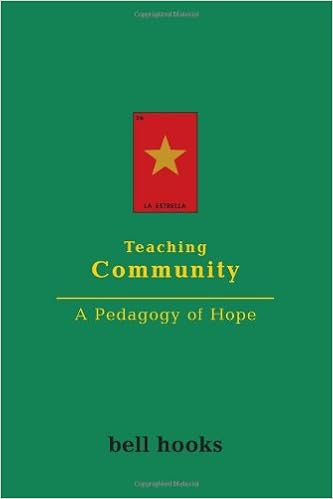
LENT 2016 - TEACHING COMMUNITY - Preface
***
The first thing to love about bell hooks is her passion for education. It bleeds through every page, trickles out of every word. It is her passion for pedagogy that leads her to write:
"There are certainly moments in the classroom where I do not excel in the art of teaching. However, it is crucial that we challenge any feeling of shame or embarrassment that teachers who do their job well might be tempted to indulge when praising ourselves or being praised by others for excellent teaching. For when we hide our light we collude in the overall cultural devaluation of our teaching vocation." (xi)
I know that, all too often, I am tempted to undercut the love and passion that I have for teaching and to undervalue what I do well in service to an idol of false humility and a (normally generative but sometimes destructive) self-critique.
LENT 2016 - TEACHING COMMUNITY - INDEX
bell hooks, TEACHING COMMUNITY: A PEDAGOGY OF HOPE.
Here's the reading schedule:
Friday, Feb. 12 - Preface
Tuesday, Feb. 16 – Teach 1 and 2
Friday, Feb. 19 – Teach 3
Tuesday, Feb. 23 – Teach 4
Friday, Feb. 26 – Teach 5
Tuesday, Mar. 1 – Teach 6
Friday, Mar. 4 – Teach 7 and 8
Tuesday, Mar. 8 – Teach 9
Friday, Mar. 11 – Teach 10 and 11
Tuesday, Mar. 15 – Teach 12
Friday, Mar. 18 – Teach 13 and 14
Tuesday, Mar. 22 – Teach 15
Friday, Mar. 25 – Teach 16
I've read select chapters from this book before and I am going to be engaging with some of hooks' writing for my dissertation. I have a feeling that this book is vital not just for me, but for our time. hooks is very readable, but that does not mean the reading will be easy. She continually challenges me. This is a good thing.
Join me!
Friday, February 5, 2016
A Week in the Hospital Part 8: Tuesday – Psalm 84
Last week (January 26-February 2, 2016), I ended up in the hospital. Something simple spiraled out of control. While in the hospital, I kept up with the daily reading of psalms that I’ve been practicing since the first of the year. The psalms I read were chosen by the Presbyterian Daily Prayer Lectionary. The psalms are sent to my e-mail every morning and I often read them on my phone, then again in my bible. These psalms helped to frame my experience. The following is an account of my hospital stay for friends and family who want to know what happened. [NOTE: This contains some graphic depictions of medical problems. No pictures, just words.]
To see the previous post, click here.
***
(By a “programming fluke,” this psalm was sent to my e-mail instead of the scheduled Psalm 12)
How lovely is your dwelling place,
O Lord of hosts!
My soul longs, indeed it faints
for the courts of the Lord;
my heart and my flesh sing for joy
to the living God.
Even the sparrow finds a home,
and the swallow a nest for herself,
where she may lay her young,
at your altars, O Lord of hosts,
my King and my God.
Happy are those who live in your house,
ever singing your praise. (84:1-4)
Another round of doctor check-ins in the morning. All of them said I should go home.
To see the previous post, click here.
***
(By a “programming fluke,” this psalm was sent to my e-mail instead of the scheduled Psalm 12)
How lovely is your dwelling place,
O Lord of hosts!
My soul longs, indeed it faints
for the courts of the Lord;
my heart and my flesh sing for joy
to the living God.
Even the sparrow finds a home,
and the swallow a nest for herself,
where she may lay her young,
at your altars, O Lord of hosts,
my King and my God.
Happy are those who live in your house,
ever singing your praise. (84:1-4)
Another round of doctor check-ins in the morning. All of them said I should go home.
A Week in the Hospital Day 7: Monday – Psalm 62
Last week (January 26-February 2, 2016), I ended up in the hospital. Something simple spiraled out of control. While in the hospital, I kept up with the daily reading of psalms that I’ve been practicing since the first of the year. The psalms I read were chosen by the Presbyterian Daily Prayer Lectionary. The psalms are sent to my e-mail every morning and I often read them on my phone, then again in my bible. These psalms helped to frame my experience. The following is an account of my hospital stay for friends and family who want to know what happened. [NOTE: This contains some graphic depictions of medical problems. No pictures, just words.]
To see the previous post, click here.
***
For God alone my soul waits in silence;
from him comes my salvation.
He alone is my rock and my salvation,
my fortress; I shall never be shaken. (62:1-2)
The doctors all checked in on me. Everything was looking good. My blood pressure was elevated, but they hadn’t yet found bacteria in my blood—the surest sign of infection outside of the TEE. My white blood cell levels had barely ticked up, a possible sign, but nothing sure. Still, they wanted to treat me with a six-week course of antibiotics. Three hours a day for six weeks. They would have to insert a PICC line, a semi-permanent IV threaded through a vein in my arm with the tip almost touching my heart. There were risks, the doctors assured, though minimal. I was wary, since my body had already betrayed me once.
To see the previous post, click here.
***
For God alone my soul waits in silence;
from him comes my salvation.
He alone is my rock and my salvation,
my fortress; I shall never be shaken. (62:1-2)
The doctors all checked in on me. Everything was looking good. My blood pressure was elevated, but they hadn’t yet found bacteria in my blood—the surest sign of infection outside of the TEE. My white blood cell levels had barely ticked up, a possible sign, but nothing sure. Still, they wanted to treat me with a six-week course of antibiotics. Three hours a day for six weeks. They would have to insert a PICC line, a semi-permanent IV threaded through a vein in my arm with the tip almost touching my heart. There were risks, the doctors assured, though minimal. I was wary, since my body had already betrayed me once.
A Week in the Hospital Day 6: Sunday – Psalm 71:1-6
Last week (January 26-February 2, 2016), I ended up in the hospital. Something simple spiraled out of control. While in the hospital, I kept up with the daily reading of psalms that I’ve been practicing since the first of the year. The psalms I read were chosen by the Presbyterian Daily Prayer Lectionary. The psalms are sent to my e-mail every morning and I often read them on my phone, then again in my bible. These psalms helped to frame my experience. The following is an account of my hospital stay for friends and family who want to know what happened. [NOTE: This contains some graphic depictions of medical problems. No pictures, just words.]
To see the previous post, click here.
***
For you, O Lord, are my hope,
my trust, O Lord, from my youth.
Upon you I have leaned from my birth;
it was you who took me from my mother’s womb.
My praise is continually of you. (71:5-6)
More visits from friends and pastoral counselors. In fact, I called for pastoral care.
It seems to me that most of life can be experienced in at least two ways. The first way encounters every moment as a potential threat. The second sees every moment as a potential gift. This is an oversimplification, of course. But I think most of us encounter life primarily in one of these two ways.
To see the previous post, click here.
***
For you, O Lord, are my hope,
my trust, O Lord, from my youth.
Upon you I have leaned from my birth;
it was you who took me from my mother’s womb.
My praise is continually of you. (71:5-6)
More visits from friends and pastoral counselors. In fact, I called for pastoral care.
It seems to me that most of life can be experienced in at least two ways. The first way encounters every moment as a potential threat. The second sees every moment as a potential gift. This is an oversimplification, of course. But I think most of us encounter life primarily in one of these two ways.
A Week in the Hospital Part 5: Saturday – Psalm 122
Last week (January 26-February 2, 2016), I ended up in the hospital. Something simple spiraled out of control. While in the hospital, I kept up with the daily reading of psalms that I’ve been practicing since the first of the year. The psalms I read were chosen by the Presbyterian Daily Prayer Lectionary. The psalms are sent to my e-mail every morning and I often read them on my phone, then again in my bible. These psalms helped to frame my experience. The following is an account of my hospital stay for friends and family who want to know what happened. [NOTE: This contains some graphic depictions of medical problems. No pictures, just words.]
To see the previous post, click here.
***
For the sake of my relatives and friends
I will say, “Peace be within you.” (122:8)
A day of recovery. I moved out of the ICU quickly. Sarah and the kids visited. A dear member of my church visited and assured me that they had everything in hand. Other church members and friends started stepping up to help Sarah. I talked to my family. The doctors and nurses watched me with wary eye. By the evening, I was already strong enough to walk to the bathroom on my own. My blood pressure was still high, but I was out of the danger zone. Though anxious, I still felt a small measure of peace. I was alive. I wanted—I still want—to stay alive.
To see the previous post, click here.
***
For the sake of my relatives and friends
I will say, “Peace be within you.” (122:8)
A day of recovery. I moved out of the ICU quickly. Sarah and the kids visited. A dear member of my church visited and assured me that they had everything in hand. Other church members and friends started stepping up to help Sarah. I talked to my family. The doctors and nurses watched me with wary eye. By the evening, I was already strong enough to walk to the bathroom on my own. My blood pressure was still high, but I was out of the danger zone. Though anxious, I still felt a small measure of peace. I was alive. I wanted—I still want—to stay alive.
A Week in the Hospital Part 4: Friday – Psalm 88
Last week (January 26-February 2, 2016), I ended up in the hospital. Something simple spiraled out of control. While in the hospital, I kept up with the daily reading of psalms that I’ve been practicing since the first of the year. The psalms I read were chosen by the Presbyterian Daily Prayer Lectionary. The psalms are sent to my e-mail every morning and I often read them on my phone, then again in my bible. These psalms helped to frame my experience. The following is an account of my hospital stay for friends and family who want to know what happened. [NOTE: This contains some graphic depictions of medical problems. No pictures, just words.]
To see the previous post, click here.
***
Every day I call on you, O Lord;
I spread out my hands to you.
Do you work wonders for the dead?
Do the shades rise up to praise you?
Is your steadfast love declared in the grave,
or your faithfulness in Abaddon?
Are your wonders known in the darkness,
or your saving help in the land of forgetfulness?
But I, O Lord, cry out to you;
in the morning my prayer comes before you.
O Lord, why do you cast me off?
Why do you hide your face from me?
Wretched and close to death from my youth up,
I suffer your terrors; I am desperate.
Your wrath has swept over me;
your dread assaults destroy me.
They surround me like a flood all day long;
from all sides they close in on me.
You have caused friend and neighbor to shun me;
my companions are in darkness. (88:9-18)
I have almost died several times in my life. I was born near death. I was a premature baby in a time when the odds for premature babies were much more grim. Despite being more than six weeks early, enduring significant time in an incubator, having surgery at 1 month old for peloric stenosis (a closing a the bottom of the stomach), battling pneumonia 4 times during my first year of life, suffering regular asthma attacks and several more severe pneumonia episodes during my elementary and teenage years—despite all of these near brushes with death, I had not yet died. Nevertheless, I have always been able to relate to this verse: ‘Wretched and close to death from my youth up, I suffer your terrors.’
I almost died again on Friday morning.
To see the previous post, click here.
***
Every day I call on you, O Lord;
I spread out my hands to you.
Do you work wonders for the dead?
Do the shades rise up to praise you?
Is your steadfast love declared in the grave,
or your faithfulness in Abaddon?
Are your wonders known in the darkness,
or your saving help in the land of forgetfulness?
But I, O Lord, cry out to you;
in the morning my prayer comes before you.
O Lord, why do you cast me off?
Why do you hide your face from me?
Wretched and close to death from my youth up,
I suffer your terrors; I am desperate.
Your wrath has swept over me;
your dread assaults destroy me.
They surround me like a flood all day long;
from all sides they close in on me.
You have caused friend and neighbor to shun me;
my companions are in darkness. (88:9-18)
I have almost died several times in my life. I was born near death. I was a premature baby in a time when the odds for premature babies were much more grim. Despite being more than six weeks early, enduring significant time in an incubator, having surgery at 1 month old for peloric stenosis (a closing a the bottom of the stomach), battling pneumonia 4 times during my first year of life, suffering regular asthma attacks and several more severe pneumonia episodes during my elementary and teenage years—despite all of these near brushes with death, I had not yet died. Nevertheless, I have always been able to relate to this verse: ‘Wretched and close to death from my youth up, I suffer your terrors.’
I almost died again on Friday morning.
A Week in the Hospital Part 3: Thursday – Psalm 143
Last week (January 26-February 2, 2016), I ended up in the hospital. Something simple spiraled out of control. While in the hospital, I kept up with the daily reading of psalms that I’ve been practicing since the first of the year. The psalms I read were chosen by the Presbyterian Daily Prayer Lectionary. The psalms are sent to my e-mail every morning and I often read them on my phone, then again in my bible. These psalms helped to frame my experience. The following is an account of my hospital stay for friends and family who want to know what happened. [NOTE: This contains some graphic depictions of medical problems. No pictures, just words.]
To see the previous post, click here.
***
Answer me quickly, O Lord;
my spirit fails.
Do not hide your face from me,
or I shall be like those who go down to the Pit.
Let me hear of your steadfast love in the morning,
for in you I put my trust.
Teach me the way I should go,
for to you I lift up my soul. (143:7-8)
When I woke in the morning, I was visited by a cardiologist. He was there to prepare me for the TEE. A simple procedure. He’d performed dozens over the last ten years. I wasn’t so sure. Why was I getting this done?
To see the previous post, click here.
***
Answer me quickly, O Lord;
my spirit fails.
Do not hide your face from me,
or I shall be like those who go down to the Pit.
Let me hear of your steadfast love in the morning,
for in you I put my trust.
Teach me the way I should go,
for to you I lift up my soul. (143:7-8)
When I woke in the morning, I was visited by a cardiologist. He was there to prepare me for the TEE. A simple procedure. He’d performed dozens over the last ten years. I wasn’t so sure. Why was I getting this done?
A Week in the Hospital Part 2: Wednesday – Psalm 65
Last week (January 26-February 2, 2016), I ended up in the hospital. Something simple spiraled out of control. While in the hospital, I kept up with the daily reading of psalms that I’ve been practicing since the first of the year. The psalms I read were chosen by the Presbyterian Daily Prayer Lectionary. The psalms are sent to my e-mail every morning and I often read them on my phone, then again in my bible. These psalms helped to frame my experience. The following is an account of my hospital stay for friends and family who want to know what happened. [NOTE: This contains some graphic depictions of medical problems. No pictures, just words.]
To see the previous post, click here.
***
By awesome deeds you answer us with deliverance,
O God of our salvation;
you are the hope of all the ends of the earth
and of the farthest seas.
By your strength you established the mountains;
you are girded with might.
You silence the roaring of the seas,
the roaring of their waves,
the tumult of the peoples. (65:5-7)
A primary care doctor visited me in the morning. So did a gastroenterologist (stomach doctor) and a pulmonologist (lung doctor). They took x-rays of my lungs—a little fluid, but nothing that couldn’t be overcome. They performed an ultrasound on my stomach—my hiatal hernia (a bulging stomach issue related to my ongoing problems with Gastro-Esophageal Reflux) was no larger than it had been when I they discovered it during middle school. My liver was burdened with a little fatty tissue, but nothing that losing 15 pounds couldn’t solve.
But my heart. Wait?! My heart? The primary care doctor heard a murmur, a little gallop on my heart. A tiny tumult. This could be caused by dehydration, or fighting the pneumonia infection, or a host of other things, the doctor said. But, just in case, let’s do a heart ultrasound. To be safe.
To see the previous post, click here.
***
By awesome deeds you answer us with deliverance,
O God of our salvation;
you are the hope of all the ends of the earth
and of the farthest seas.
By your strength you established the mountains;
you are girded with might.
You silence the roaring of the seas,
the roaring of their waves,
the tumult of the peoples. (65:5-7)
A primary care doctor visited me in the morning. So did a gastroenterologist (stomach doctor) and a pulmonologist (lung doctor). They took x-rays of my lungs—a little fluid, but nothing that couldn’t be overcome. They performed an ultrasound on my stomach—my hiatal hernia (a bulging stomach issue related to my ongoing problems with Gastro-Esophageal Reflux) was no larger than it had been when I they discovered it during middle school. My liver was burdened with a little fatty tissue, but nothing that losing 15 pounds couldn’t solve.
But my heart. Wait?! My heart? The primary care doctor heard a murmur, a little gallop on my heart. A tiny tumult. This could be caused by dehydration, or fighting the pneumonia infection, or a host of other things, the doctor said. But, just in case, let’s do a heart ultrasound. To be safe.
A Week in the Hospital Part 1: Tuesday – Psalm 54
Last week (January 26-February 2, 2016), I ended up in the hospital. Something simple spiraled out of control. While in the hospital, I kept up with the daily reading of psalms that I’ve been practicing since the first of the year. The psalms I read were chosen by the Presbyterian Daily Prayer Lectionary. The psalms are sent to my e-mail every morning and I often read them on my phone, then again in my bible. These psalms helped to frame my experience. The following is an account of my hospital stay for friends and family who want to know what happened. [NOTE: This contains some graphic depictions of medical problems. No pictures, just words.]
***
But surely, God is my helper;
the Lord is the upholder of my life. (54:4)
The East Coast Blizzard of 2016 had ended. Our little family of four had been cooped up cozily from Friday through Monday. On the whole, we enjoyed our time together, though our snow-bonding was hindered a bit by a stomach bug that our one-year-old Matthijs had caught at school. By Monday evening, Matthijs seemed mostly better. It also appeared that the rest of us had escaped unscathed.
Until Tuesday morning.
Tuesday, September 1, 2015
Mark 7:1-30 - Do You Kiss Your Mother with Those Lips?
 |
| from http://www.servicioskoinonia.org/ cerezo/dibujosB/51ordinarioB22.jpg |
*****
Mark 7:1-30New Revised Standard Version (NRSV)
Now when the Pharisees and some of the scribes who had come from Jerusalem gathered around him, they noticed that some of his disciples were eating with defiled hands, that is, without washing them. (For the Pharisees, and all the Jews, do not eat unless they thoroughly wash their hands, thus observing the tradition of the elders; and they do not eat anything from the market unless they wash it; and there are also many other traditions that they observe, the washing of cups, pots, and bronze kettles.) So the Pharisees and the scribes asked him, “Why do your disciples not live according to the tradition of the elders, but eat with defiled hands?” He said to them, “Isaiah prophesied rightly about you hypocrites, as it is written,
‘This people honors me with their lips,
but their hearts are far from me;
in vain do they worship me,
teaching human precepts as doctrines.’
You abandon the commandment of God and hold to human tradition.”
Thursday, August 27, 2015
Psalm 11: When The Foundations Are Destroyed

This is a lightly edited version of a sermon I delivered last year at the opening worship gathering for Koinonia, the fellowship for Princeton Theological Seminary's PhD students. From 2011-2015, I served as Chaplain for the Koinonia fellowship. I felt urged to post it today, because not much has changed in the last twelve months, and my words convict me more than ever.
*****
If the foundations are destroyed, what can the righteous do?
In the Lord I take refuge; how can you say to me,
“Flee like a bird to the mountains;
for look, the wicked bend the bow,
they have fitted their arrow to the string,
to shoot in the dark at the upright in heart.
If the foundations are destroyed,
what can the righteous do?”
The Lord is in his holy temple;
the Lord’s throne is in heaven.
His eyes behold, his gaze examines humankind.
The Lord tests the righteous and the wicked,
and his soul hates the lover of violence.
On the wicked he will rain coals of fire and sulfur;
a scorching wind shall be the portion of their cup.
For the Lord is righteous;
he loves righteous deeds;
the upright shall behold his face.
Saturday, August 8, 2015
God's Own Heart
 |
| Image found at: http://blogs.crikey.com.au/ culture-mulcher/files/2010/09/my-son1.jpg |
Friday, August 7, 2015
Insert Clever Title Here
I haven’t been posting often. Mostly because my writing attention has been going toward a dissertation (a book-length academic paper necessary to graduate from many PhD programs). But a post has been building up in me that begged to be written. I’ve learned to heed that voice. While writing this post, I also learned to kind of ignore it.
A few days ago, I read this article about yet another large PCUSA church leaving the denomination for the Evangelical Covenant Order of Presbyterians. I have reconciled myself to the fact that nearly 200 churches have left the PCUSA to join ECO. What bothers me is not that they are leaving, but rather a consistent and ongoing claim made by many (not all, but many) of those who are doing so. Here are a few quotes from the article and from the letter written by the Session explaining their decision. From the article:
“The majority of those in support of the split say the national denomination is no longer consistent with their beliefs, chief of which they say is that Jesus Christ is the one path to salvation and the Bible is God's authoritative word.”
A few days ago, I read this article about yet another large PCUSA church leaving the denomination for the Evangelical Covenant Order of Presbyterians. I have reconciled myself to the fact that nearly 200 churches have left the PCUSA to join ECO. What bothers me is not that they are leaving, but rather a consistent and ongoing claim made by many (not all, but many) of those who are doing so. Here are a few quotes from the article and from the letter written by the Session explaining their decision. From the article:
“The majority of those in support of the split say the national denomination is no longer consistent with their beliefs, chief of which they say is that Jesus Christ is the one path to salvation and the Bible is God's authoritative word.”
Monday, April 6, 2015
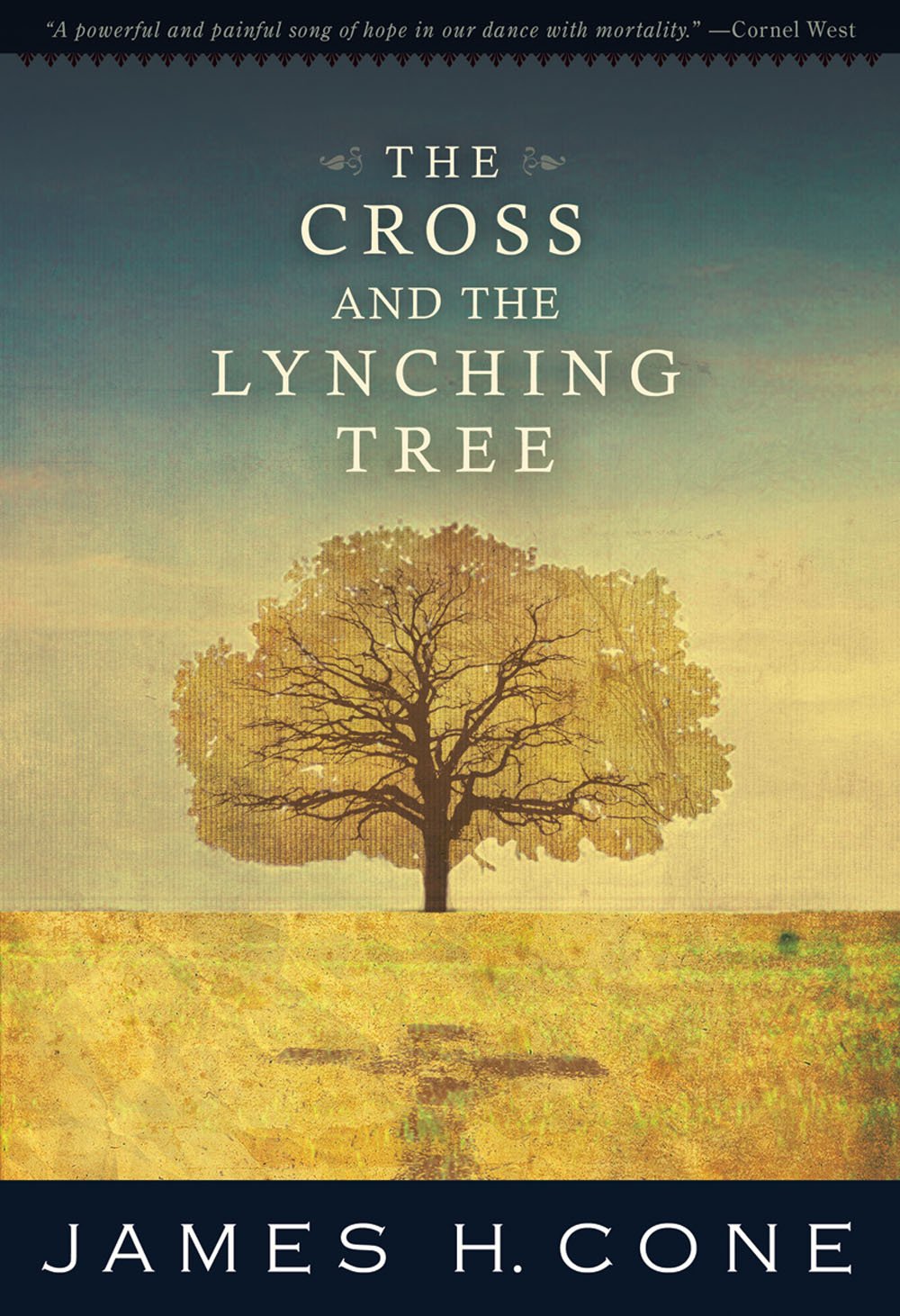
Lent 2015 - The Cross and the Lynching Tree - Chapter 5 and Conclusion
 NOTE: Throughout these blog posts, I will mostly be able to write through the narrow lens of my own experience. I am not well versed in critical theory, the study of race, or the discipline of history. Although I consider myself a practical theologian and a Christian, I would not say that I have the skill set of someone schooled in doctrinal, dogmatic or systematic theology or even ethics. I will probably stumble over ways of talking about what I am reading and my reactions to it. With these caveats, I would like to think that this is an appropriate place from which to engage this book. I would hope that this book would be read in churches and seminaries, classrooms and even homes, by people not well-versed in any of the disciplines I mentioned above. I am reading this book for the first time, and so my words, though I hope reflective and thoughtful, will be first time reactions.
 A general introduction to this blog series can be found here, and an index and schedule for the series can be found here.
*****
Yesterday was Easter Sunday, the yearly celebration that remains central for what it means to be a follower of Christ. Without the resurrection, there would be no Christianity. But the resurrection is inexplicable without the cross. Jesus rose from the dead, but not just from any death. 2000 years on from that event, it can be difficult for some Christians to imagine the paradoxical foolishness of a savior who was crucified (1 Corinthians 1-2). Some of us have become numb to the radical scandal of the cross.
Yesterday was also the first Sunday of the month, which meant that my church celebrated communion, the breaking of the bread. We read the story of the "Walk to Emmaus" (Luke 24). Two of Jesus’ disciples could not recognize the crucified and risen Christ in their midst. It was not until bread was broken that their eyes were opened. This breaking of the bread awoke their memory of a few days earlier, when Jesus had broken bread and said “do this in remembrance of me.” (Luke 22:19)
Throughout The Cross and the Lynching Tree, James Cone has been pulling to the forefront of our collective memories the broken bodies of black people, pointing to them in order to lead us to the cross. Throughout he has been defending the claim that our identities as followers of Christ are incomplete without wrestling with the history of slavery, segregation and lynching in the United States. The cross in our time cannot be understood apart from the suffering of black people.
Subscribe to:
Posts (Atom)